How to Sell on TikTok Shop: Seller Requirements and Setup
Few sales channels have earned a place in brand expansion plans as fast as TikTok Shop. The platform sold roughly $64 billion of products globally in 2025, double the year before, and it did it by collapsing the distance between seeing a product and buying it: a customer watches a 30-second video and checks out without ever leaving the app. That changes the economics of entering a new channel. You do not need existing search demand, a known brand name, or years of accumulated reviews the way you do on Amazon, because one creator video can put an unknown product in front of millions of buyers overnight.
To sell on TikTok Shop, you must be 18 or older, register through TikTok Seller Center with a valid ID, tax details, and a bank account in a supported market, and pass verification. Complete applications are typically approved within one to six business days.
That is the short answer. The longer answer involves choosing between an individual and a business account, getting your paperwork to match down to the letter, and understanding a fee structure that looks simple on the surface and gets more layered the closer you look. This guide covers all of it, including the parts most registration guides skip: what changes when you sell into the UK or EU, and what to do if TikTok Shop is not open in your home country.
Key takeaways
- Sellers need to be 18+, based in a supported market, with matching ID, address, tax, and bank details. There is no follower minimum to open a shop.
- TikTok Shop Seller Center is live in 17+ markets as of mid-2026, and TikTok added eight more European countries, including Poland, the Netherlands, and Greece, in June 2026.
- Referral fees run about 6% in the US and a flat 9% in the UK and EU. Creator commissions, ads, and fulfillment come on top.
- Most rejected applications fail on paperwork mismatches, not eligibility.
- EU listings must meet GPSR rules, which means an EU-based Responsible Person for every product from a non-EU manufacturer.
What is TikTok Shop and why does it matter in 2026?
TikTok Shop is TikTok's built-in commerce layer. Products are sold directly inside the app through shoppable videos, livestreams, a product showcase on your profile, and a central Shop tab. The buyer never leaves TikTok, which is exactly why conversion runs so much higher than on other social platforms: around 4.7% on TikTok Shop against roughly 1.9% elsewhere in social, according to Social Commerce Club's 2025 review.
The scale has stopped being a curiosity. Global GMV roughly doubled from $33.2 billion in 2024 to about $64–66 billion in 2025, and trackers project the platform to pass $100 billion in 2026. In the US alone, eMarketer's first TikTok Shop forecast put 2025 sales at $15.82 billion, up 108% year over year, giving TikTok Shop 18.2% of all US social commerce with a projected 24.1% share by 2027.
Rachel Wolff, retail and ecommerce analyst at eMarketer, describes the platform as a hyper-effective product discovery and recommendation engine. That discovery engine is the reason brands treat TikTok Shop differently from a normal marketplace. Demand is generated inside the platform by creators and content, not captured from existing search traffic the way it is on Amazon.
One more number worth knowing before you register: roughly 42% of US TikTok Shop GMV is driven by affiliate creators. You can run a shop without creators, but the sellers winning on the platform generally do not.
Who can sell on TikTok Shop?
The baseline requirements are the same across markets, with local variations in documents:
- Age: 18 or older.
- Location: you (or your legal entity) must be based in a market where Seller Center operates. A US shop requires US residency or a US entity; a UK shop requires a UK establishment, and so on.
- Identity: a valid government ID. For the US, TikTok accepts a US passport, driver license, state ID, or permanent resident card, per the official Seller Center registration guide.
- Banking and tax: a local bank account and tax information that match your ID or business registration exactly.
- Products: nothing on the prohibited list. Alcohol, tobacco, vaping products, and several regulated categories are banned outright in the US, and restricted categories (supplements, cosmetics in some markets) require extra documentation.
Two things people consistently get wrong. First, there is no follower requirement to open a shop. The 1,000-follower threshold applies to creators who want to tag products as affiliates, not to sellers. Second, you do not need a registered company to start in the US. Individual seller accounts exist precisely for testing the channel, though a business account is the right call if you already run an LLC or plan to sell regulated products.
As of mid-2026, Seller Center operates in the US, Mexico, and Brazil in the Americas; the UK, Ireland, Spain, Germany, France, and Italy in Europe, with Poland, the Netherlands, Greece, and five more European markets added in June 2026; Japan; and six Southeast Asian countries including Indonesia, Malaysia, Philippines, Singapore, Thailand, and Vietnam. If your country is not on the list, skip ahead to the cross-border section, because there is a workable route.
What documents do you need to register?
The document set depends on your seller type.
Individual sellers (US and select markets) need a government ID, proof of residential address, tax information (SSN or ITIN in the US), and a personal bank account.
Business sellers need the company registration document, the ID of the legal representative and, in many markets, of significant shareholders, the company's tax number (EIN in the US, VAT number in Europe), and a business bank account in the company's legal name.
Here is the part that decides whether you get approved in two days or stuck in review loops for two weeks: everything has to match. Canopy Management, an agency that has processed hundreds of these applications, notes that most rejections come down to paperwork inconsistencies rather than actual eligibility failures. "Robert Smith" on the driver license and "Bob Smith" on the bank account is enough to trigger a manual review. The same goes for an old address on your proof-of-residence document. Fix the mismatches before you submit, not after the rejection email.
Upload quality matters too. Photos of documents must be clear, complete, unaltered, and under 10 MB. Cropped corners and glare are a surprisingly common rejection reason.
How do you set up a TikTok Shop step by step?
The full flow, from zero to first listing:
- Pick your market and structure. Decide which country shop you are opening and whether you register as an individual or a business. If you already operate an entity, register as a business from day one so payouts, tax reporting, and team access are clean from the start.
- Create a Seller Center account. Go to the Seller Center for your market and sign up with a fresh email or phone number, or through an existing TikTok account. Credentials already tied to another shop will be blocked.
- Submit verification documents. Choose your seller type, upload ID and business documents, and fill in address and tax details. Resolve every warning the form shows before submitting.
- Set up your shop profile. Shop name, logo, primary product category, and your warehouse and return addresses. The category choice matters because restricted categories route you into an additional document review that takes 3 to 10 business days.
- Add bank details and pass tax verification. Payouts will not release until this clears, so do it during setup rather than after your first sales.
- Link your TikTok account and list products. Connect the TikTok account that will front the shop, then build your first listings: clear photos, honest descriptions, correct pricing. In EU markets, listings also require manufacturer and Responsible Person data (more on that below).
- Choose your fulfillment and commission setup. Decide between Fulfilled by TikTok and shipping orders yourself, set your affiliate commission rate, and open your shop to creators through the affiliate program.
Approval on a clean application usually lands within one to three business days in the US, and up to six in some markets. Once live, plan your first 90 days around creators rather than your own posting schedule. Sellers typically set affiliate commissions between 10% and 20% depending on category, with beauty at the high end, and let dozens of small creators test the product on camera. On TikTok Shop, that spread of authentic content is the traffic engine.
How much does it cost to sell on TikTok Shop?
There is no monthly subscription, which makes TikTok Shop cheaper to enter than most marketplaces. The costs sit in the transaction and in growth spend.
For comparison, the 6% US referral fee sits well under Amazon's typical 8 to 15%. The catch is what stacks on top. Industry data from Social Commerce Club puts the true all-in platform take for active sellers between 30% and 45% of GMV once creator commissions, fulfillment, and returns are counted. Well-run programs land at the bottom of that range. Programs bleeding on returns land at the top.
The fee direction has also been one-way so far. The UK moved from 5% to 9% in September 2024, and the EU5 followed in January 2026. Model your margins on the assumption that platform economics tighten as the channel matures, because that is what every marketplace before TikTok has done.
How does fulfillment work: FBT or ship it yourself?
You have two options in most markets: seller-fulfilled shipping through TikTok's approved carriers, or Fulfilled by TikTok (FBT), the platform's equivalent of Amazon FBA. With FBT, you send inventory to TikTok's partner warehouses and they handle pick, pack, and delivery.
FBT was briefly headed toward becoming mandatory in the US, but TikTok reversed that mandate on February 17, 2026, and adoption sat at roughly 22% of sellers as of April 2026. The single-unit FBT fee starts at $3.58 under the January 2026 US rate card, with storage tiers and hub placement fees (from $0.31 per unit) on top for multi-warehouse distribution.
The practical decision comes down to speed and margin. FBT wins on delivery speed badges and simpler operations during viral spikes, which matter on a platform where one creator video can 50x your daily order volume overnight. Seller-fulfilled wins on per-unit cost for heavier or slower-moving products, and it lets you run one inventory pool across channels. Many brands selling on multiple marketplaces at once keep stock in their own 3PL for exactly that reason.
What are the compliance requirements in the UK and EU?
This is where TikTok Shop stops being a five-day setup and becomes a real market-entry project, especially for non-European brands.
Since December 13, 2024, every consumer product sold to EU buyers falls under the General Product Safety Regulation (GPSR). For TikTok Shop sellers, that means three concrete obligations. Every product from a manufacturer based outside the EU needs an EU-based Responsible Person, whose name and contact details must appear on the product or its packaging. Listings must carry traceability data: manufacturer details, a model or batch identifier, warnings in the right language. And TikTok enforces this at the listing level. Products missing safety or Responsible Person data get rejected or removed, and restricted categories go through a documentation review of 3 to 10 business days before they can sell.
Then comes tax. Prices shown to EU buyers must include VAT, and depending on your setup, you may need VAT registrations, OSS or IOSS schemes, and fiscal representation. Add EPR (extended producer responsibility) registrations for packaging in markets like Germany and France, and the compliance workload for one country can exceed the shop setup itself. The rules shifting under sellers' feet in 2026 are covered in more depth in our guide to what's changing in EU market entry.
None of this should scare you off the European TikTok Shop opportunity. The June 2026 expansion into eight new markets shows where TikTok is investing, and early sellers in new markets historically capture outsized share before category competition fills in. It just means Europe rewards brands that treat compliance as part of the launch plan, not an afterthought.
Can you sell on TikTok Shop without a local entity?
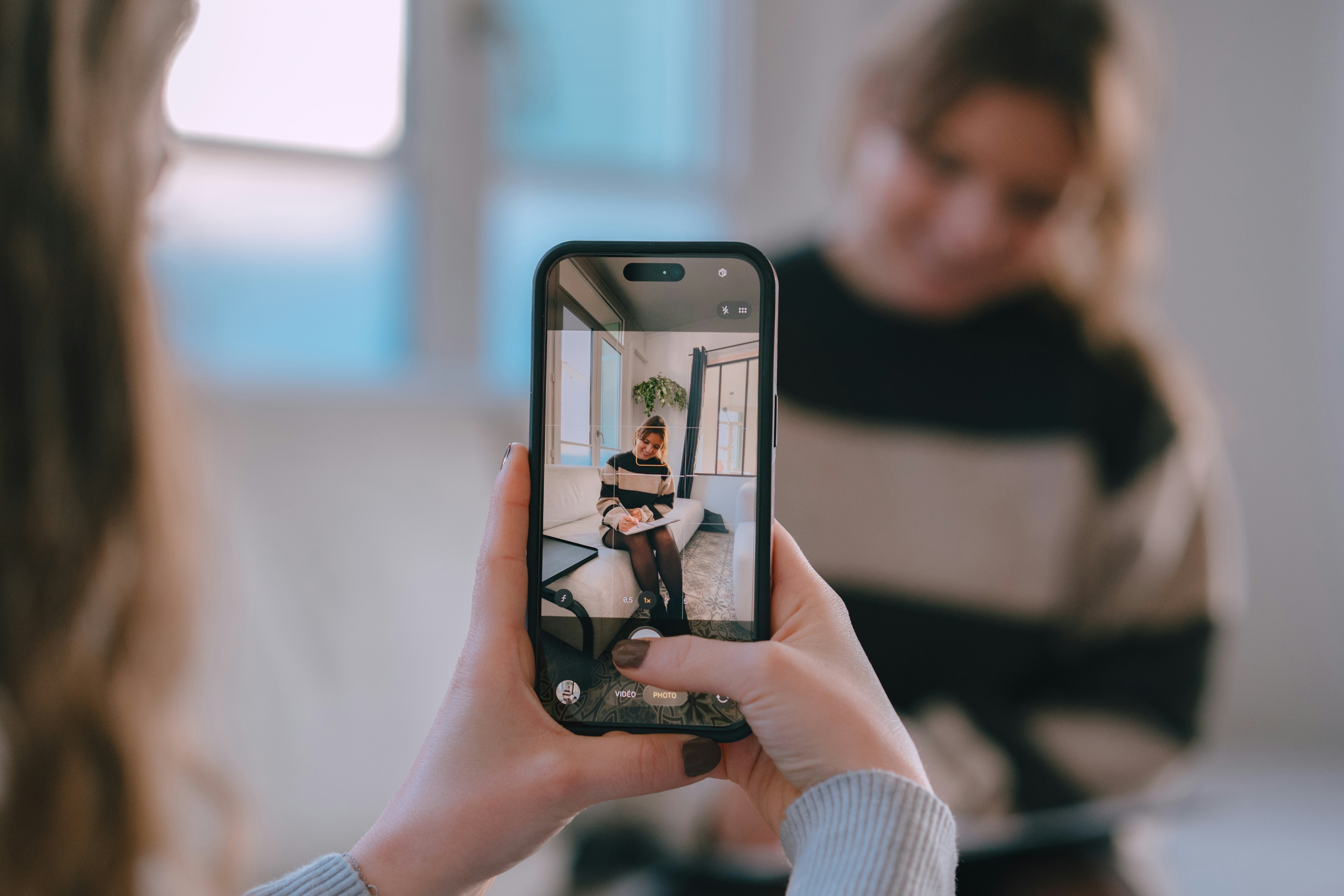
Here is the constraint that catches most international brands: TikTok Shop registration is national. A US shop wants a US entity or resident. A German shop wants a German or EU establishment, plus GPSR and VAT compliance. TikTok does run a structured cross-border program through its Global Seller Center, but it works on specific source-to-destination lanes with approved logistics providers, and several lanes, including direct-ship into the US, went invitation-only in 2026.
So a Nordic or Australian brand that wants to sell on TikTok Shop US, or an American brand eyeing TikTok Shop Germany, has three routes. Incorporate locally and build the tax, compliance, and logistics stack yourself, which typically takes months per market. Wait for an invitation to the cross-border program, which you do not control. Or sell through a partner that already operates local entities as the legal seller in each market.
That third route is the Merchant of Record model. The MoR becomes the registered seller on the platform, handles VAT and sales tax, acts as Importer of Record for your inventory, and takes on GPSR and EPR obligations, while you keep ownership of the brand, the pricing, and the inventory. It is the difference between a market entry measured in weeks and one measured in quarters, and it is how brands can sell on TikTok Shop US without operating in the US at all.
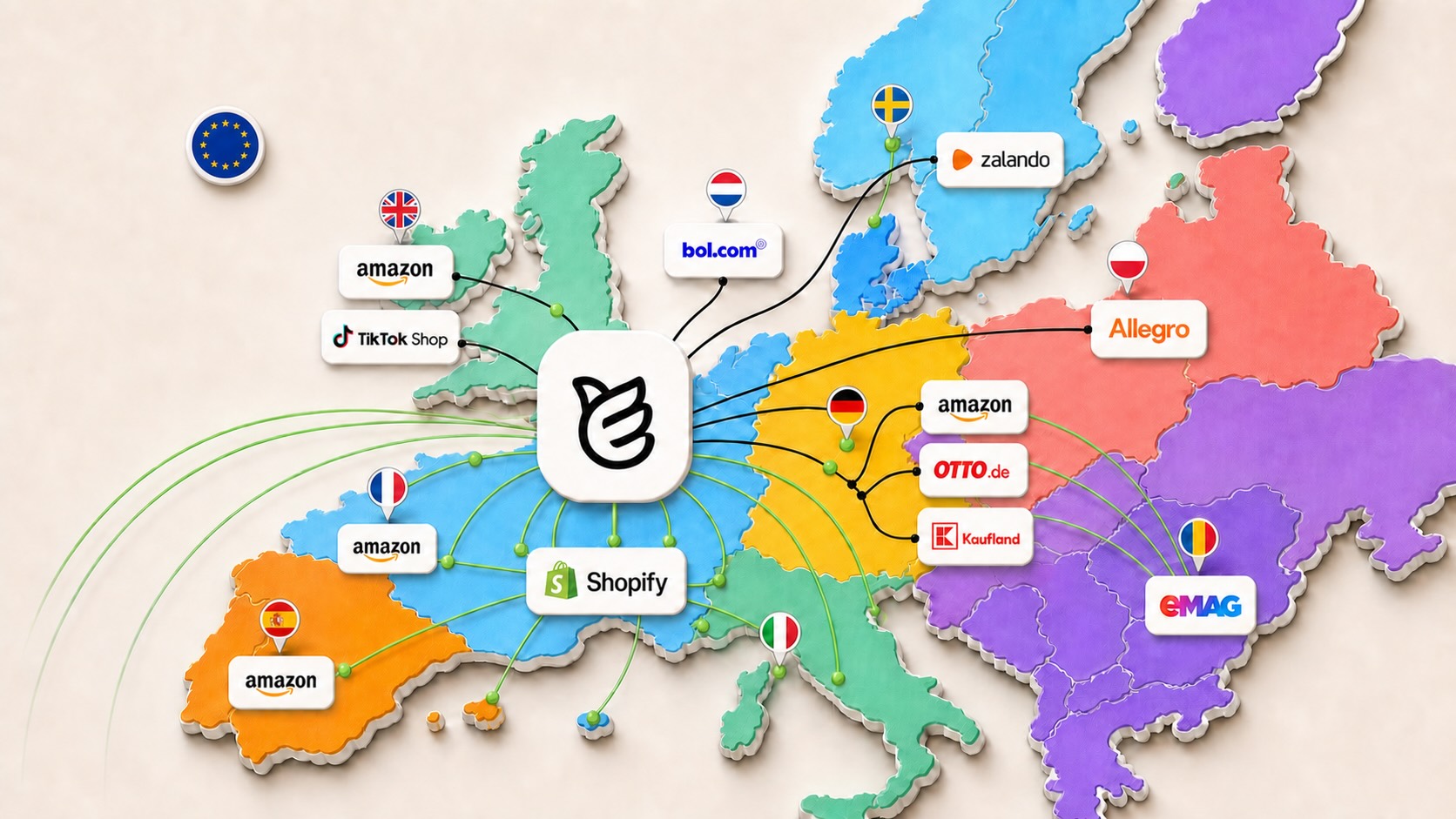
eBrands runs TikTok Shop as a managed channel across the US, UK, and EU, from shop registration and compliance through creator programs and fulfillment. If you want to see what your brand's route into TikTok Shop would look like, our playbook for zero-friction TikTok Shop expansion walks through the model, or you can talk to our team directly for a market-by-market plan.
Frequently asked questions
Do I need followers to sell on TikTok Shop? No. Sellers have no follower requirement. The 1,000-follower minimum applies to creators joining the affiliate program to tag and promote products.
How long does TikTok Shop approval take?Most complete US applications are approved in one to three business days, and up to six in other markets. Restricted product categories add a separate document review of 3 to 10 business days.
Do I need a business license to sell on TikTok Shop?Not to start as an individual seller in the US. You will need a registered business for regulated categories like supplements and cosmetics, for full advertising features, and for selling in most European markets.
Is Fulfilled by TikTok mandatory?No. TikTok reversed the FBT mandate in February 2026. Sellers can choose FBT, ship orders themselves through approved carriers, or mix both by SKU.
Can I sell on TikTok Shop in Europe from outside the EU?Yes, but you need an EU establishment or a partner acting as one, an EU-based Responsible Person for GPSR, VAT-inclusive pricing, and EPR registrations where required. A Merchant of Record covers all of these under one setup.
“ We are dedicated to assisting you; please contact us for any information or inquiries you may have. ”








%2520-%2520Copy.jpeg)
_Nick_Fancher_Photos_ID6071.jpeg)
.jpeg)