
Engineered for sustained performance Built to run consistently under pressure.
From the legal framework to last-mile delivery, our Merchant of Record solution covers the full stack.
Multi-currency transactions, secure fund routing, fraud protection, and financial compliance.
From VAT registration and filings in Europe to sales tax remittance in the US — every transaction compliant and traceable.
Fulfillment hubs across North America and Europe. Real-time tracking, carrier integration, and route optimization.
Real-time inventory sync, regional stock distribution, and dynamic allocation based on demand.
Multilingual email and chat, region-specific return handling, and integrated issue resolution.
GDPR, product safety, labeling standards, certification requirements — proactively managed.
The legal seller layer
that makes international ecommerce actually work
If you're a consumer brand looking to sell internationally, you've probably hit the same wall most brands hit. VAT registrations in five countries. Customs paperwork in three. A payment gateway that won't accept European cards. A returns policy that doesn't work in Germany. Months of legal and compliance work before the first sale lands.
The fix is a Merchant of Record. The category is real and the operational impact is significant. The label is also confusing, because it's been used by SaaS payment companies for years and they mean something narrower than what consumer brands actually need.
Here's what a Merchant of Record actually does, and how it works for physical goods brands.
What a Merchant of Record is
A Merchant of Record (MoR) is the legal entity that sells your products to the end customer in each market. Their name is on the receipt. They collect the tax. They handle the refund. They take the chargeback. They carry the regulatory liability for every transaction.
For a consumer brand expanding through cross-border ecommerce, the Merchant of Record becomes your local seller in each country. You don't incorporate. You don't register for VAT. You don't set up a payment gateway in every market. The MoR does all of that and uses its existing infrastructure to sell on your behalf.
Brand stays yours. IP stays yours. Inventory stays yours. The legal seller in front of the customer is the MoR.
What an MoR for physical goods covers
The job covers four operational layers, all running continuously once a brand is live in a market.
Legal and tax. Local entity, VAT registration, sales tax remittance, customs clearance, EPR for packaging and electronics, product compliance. The layer that determines whether your goods can legally be sold in each market.
Payments. Card processing, fraud handling, chargeback management, currency conversion, settlement. Local payment methods that customers actually use in each market. iDEAL in the Netherlands, Bancontact in Belgium, Klarna across the Nordics, BLIK in Poland.
Operations. Warehousing, fulfillment, returns, customer service in local languages, channel management on Amazon and the marketplaces that matter in each country. The day-to-day operational work behind every order.
Commercial. Listing optimization, advertising on Amazon and Google, pricing strategy per market, performance reporting. The growth layer that turns operational compliance into actual revenue.
Most providers calling themselves Merchants of Record handle one or two of these layers. Consumer brand MoRs handle all four.
Why eBrands operates as your MoR
Three reasons brands move to us specifically.
The first is speed to market. Setting up the MoR layer yourself takes 6-12 months per market and €100K-€300K in setup and first-year operating costs. Through eBrands, you're typically live in 4-6 weeks because the legal entity, customs accounts, payment infrastructure, and channel relationships already exist.
The second is operational integration. Most MoRs are payment-layer wrappers — they handle the legal seller piece and stop there. Brands then have to bolt on a 3PL, a marketplace agency, an ad agency, a customer service provider, and a compliance consultancy. Each handoff creates margin leakage and operational friction. eBrands runs the full stack as one operator.
The third is the Apollo intelligence layer. Real-time visibility into SKU economics, channel performance, inventory positioning, and compliance status across every market. Brands that operate with us see the whole P&L in one place rather than rebuilding it from spreadsheets every month.
When the MoR model fits and when it doesn't
The model works well for consumer brands selling physical goods who want to scale into 3+ international markets without setting up local entities. It works particularly well for brands that already have product-market fit in their home market and need international expansion to be operational rather than experimental.
It's a poor fit for brands with very few SKUs and low ASPs where the operational overhead exceeds the margin available, or for brands that need absolute pricing control on every channel down to the country level. Some MoRs require pricing alignment across regions to prevent arbitrage.
The decision usually comes down to three questions: how many markets do you want to operate in, how much internal headcount do you have for international operations, and how much regulatory complexity are you willing to take on yourself. The brands that answer those questions with "many," "limited," and "not much" are the brands the MoR model was designed for.
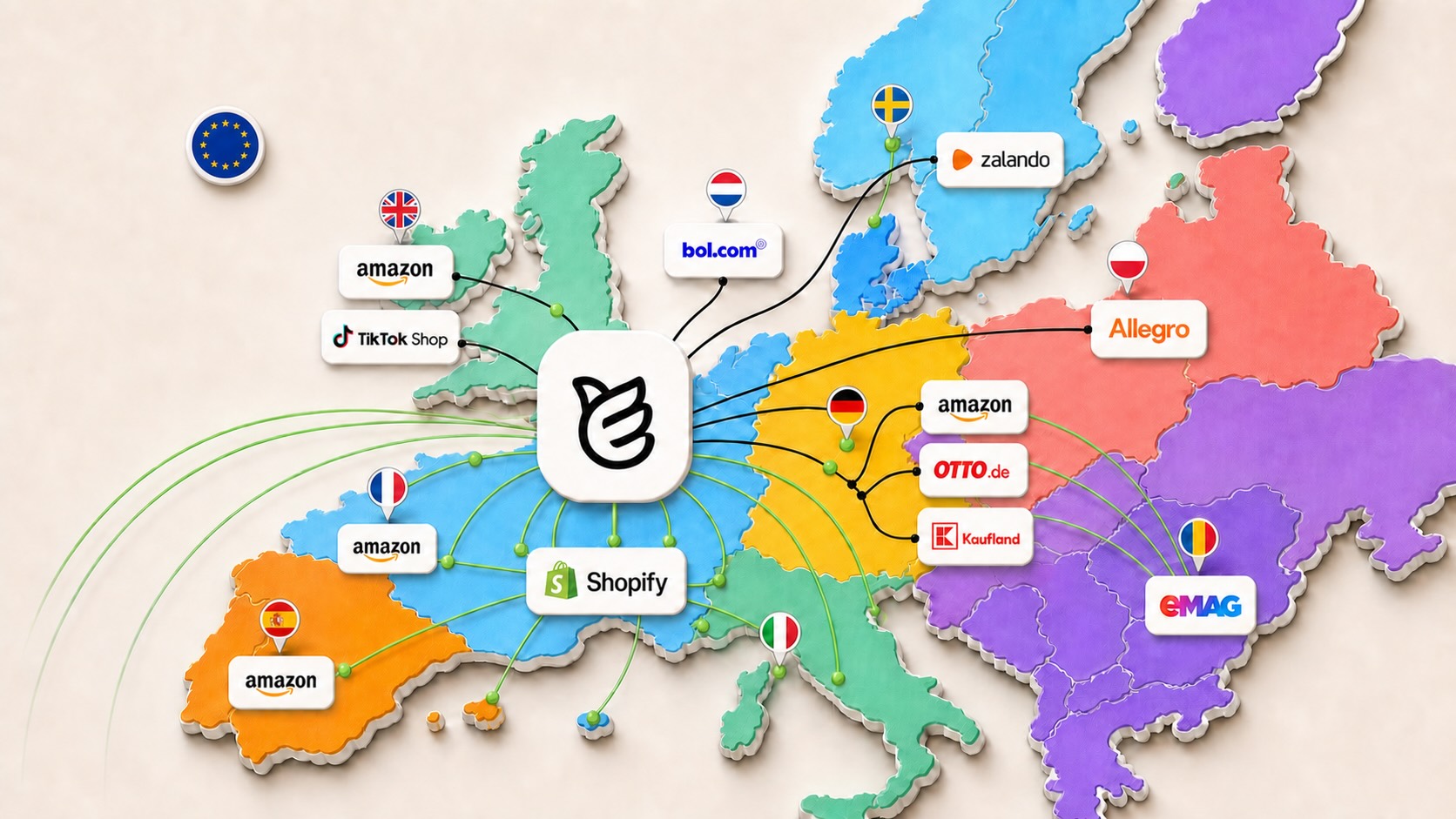
Integrated with leading global platforms
%2520(1).png)
.png)
.png)





















.svg)








.png)






.png)



.png)
.png)























Ready to go global?
Let us show you how eBrands can take your brand to every market that matters.