Retail Merchant of Record: How to Run Pop-Ups and Sell In-Store Across Europe Without a Local Entity

Most brands now understand the online Merchant of Record model. You sell across borders, someone else becomes the legal seller, and VAT, payments, and compliance stop being your problem. But the moment a brand decides to do something physical in another country, the model people have in their heads quietly stops working. A pop-up in Copenhagen, a three-week residency in Milan, a shop-in-shop in Paris, a stand at a trade fair in Berlin: in-store retail in a foreign market is a different compliance problem, and almost nobody explains why before a brand has already committed to the venue.
This article covers what a retail Merchant of Record actually is, why selling in person abroad is harder than selling online, and how a brand can run physical retail across Europe without registering a company, hiring a local team, or buying a single piece of fiscal hardware in its own name.
What a Merchant of Record does, and where retail changes the picture
A Merchant of Record (MoR) is the legal entity responsible for a sale. The MoR is the seller on the receipt, collects the payment, charges and remits the correct tax, issues the invoice, and carries the legal and product-liability responsibility for the transaction. For online cross-border sales, that scope is well understood, and we cover it in depth in our Merchant of Record for Consumer Brands guide.
Physical retail keeps every one of those obligations and then adds a layer that online never touches: the point of sale itself is regulated. In much of Europe, the law does not simply care that you remit VAT at the end of the quarter. It cares about the exact device the customer pays on, whether that device is certified by the tax authority, what the receipt looks like, and whether the sale was transmitted to the government in something close to real time. A card tap at a market stall in Italy is a regulated fiscal event in a way that the identical online order never is.
That single difference is why "we already have an MoR for our webshop" does not mean a brand is ready to sell in-store abroad. The legal-seller function carries over. The fiscalisation function — which means certified hardware or software, mandated receipts, and daily reporting — is new, and it is country-specific.
The one-line version. An online MoR makes someone else the legal seller of your cross-border orders. A retail MoR does the same thing for transactions that happen on a physical terminal in another country. It also owns the certified point-of-sale setup, the local receipt rules, and the in-person permitting that physical retail triggers.

Why selling in-store abroad is harder than it looks
Five things change the moment the sale moves from a website to a sales floor in another country.
1. The transaction is local, so the tax is local
Online, cross-border B2C sales into the EU can often be handled through One Stop Shop (OSS) and reported from a single home registration. A sale that physically takes place on the ground in another country generally does not qualify for that simplification. It is a domestic supply in that country. Storing goods, running a stand, or selling over a counter usually creates a taxable presence and a local VAT registration requirement, regardless of turnover. The threshold that protects small online sellers does not protect an in-person event.
2. The point of sale is regulated hardware or certified software
This is the part brands almost never see coming. Several EU countries require that the device or software issuing receipts is certified by the tax authority, signs every transaction, and either stores it tamper-proof or transmits it to the government. Italy requires a certified telematic recorder; Germany requires a certified security element; France is moving to accredited-body certification only; Portugal requires AT-certified billing software with coded receipts. A standard card reader and a notebook of sales is not compliant in these markets. We map this country by country in our EU Pop-Up Compliance Map.
3. Receipts are a legal document, not a courtesy
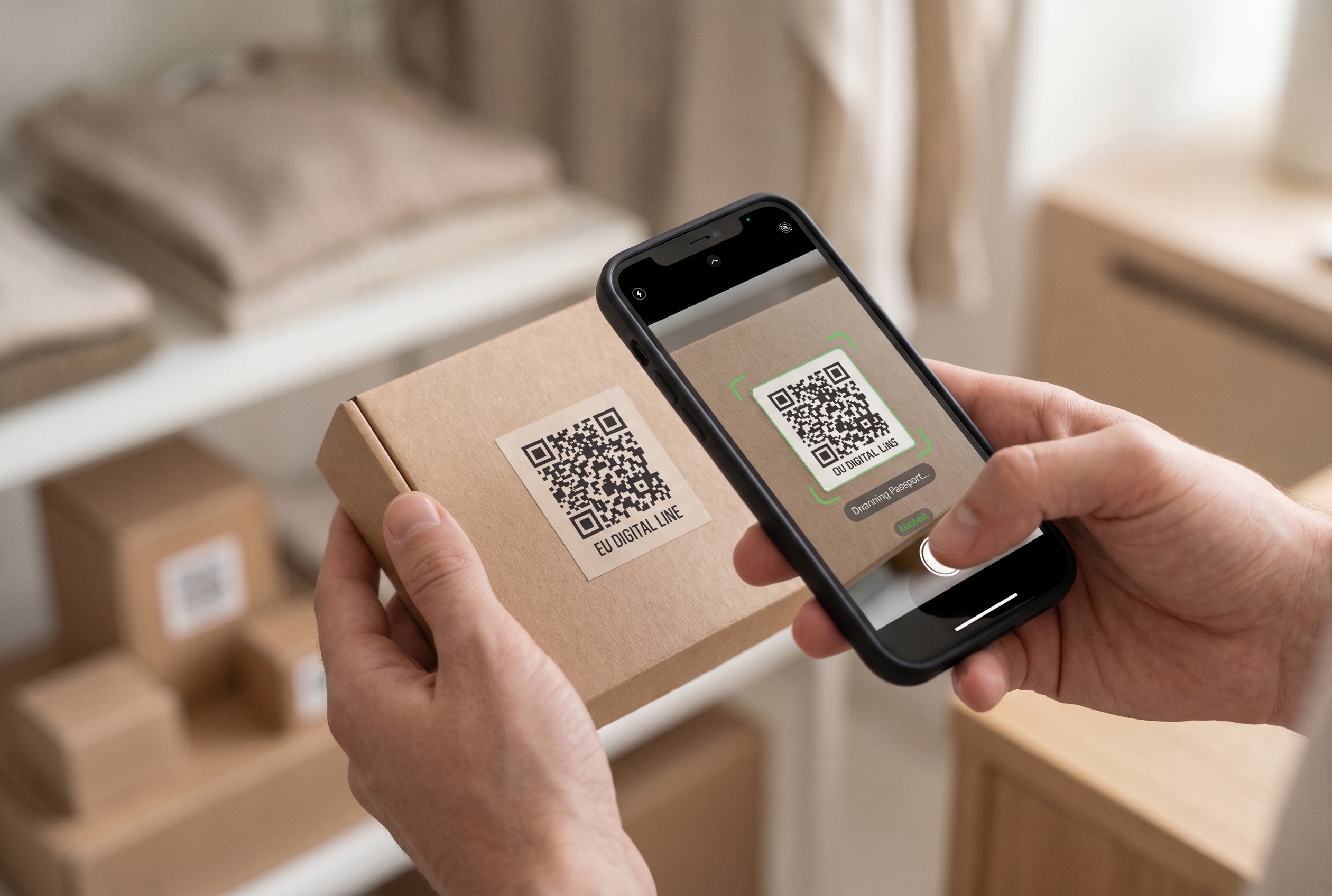
In fiscalised markets the receipt must carry specific elements such as QR codes, fiscal identifiers, and sequential codes, and it must be issued at the moment of sale. The receipt is the proof the transaction was declared. Getting it wrong is not a customer-experience issue; it is a compliance failure that surfaces in an audit.
4. The space itself can require permits
Physical retail happens somewhere, and that somewhere has rules. The practical legal trigger is usually private land versus public land, not whether the event is invite-only or open to the public. A pop-up inside a leased private unit is a very different permitting question from a stand on a public square or street, which typically needs municipal authorisation. Brands routinely assume "it's a private guest-list event, so no permits." That is the wrong test.
5. Hardware, settlement, and returns all have to physically work on the day
Online, the stack is abstract. In retail it is a terminal that has to be provisioned, linked, and certified before doors open; a settlement flow that has to reconcile cash and card; and a returns process where money may have already moved. None of this can be fixed retroactively after a weekend pop-up has ended.

How a retail MoR makes it work
The retail MoR model resolves all of this by moving the legal and operational weight off the brand and onto an operator that is already set up to be the seller on the ground. In practice it looks like this.
The operator is the legal seller on every terminal
The MoR provides the local legal standing for the sale, handles the in-market VAT treatment, and is the entity of record on the receipt. The brand never has to register a company or a VAT number in the destination country to run the event. The operator brings that capability as part of the setup, and the brand simply plugs in.
The POS runs on the operator's stack, not the brand's
A practical but important detail: the point-of-sale system, the payment terminal, and any market-specific compliance apps live on the operator's store and accounts, not the brand's. The brand's products, prices (inclusive of local VAT), and stock sync into that environment through a product-sync layer. This is what makes multi-market retail actually repeatable: the compliance configuration for each country is built once on the operator side and reused, rather than being stood up and torn down on the brand's own systems for every event.
The till layer is flexible. Shopify POS, SumUp, or another terminal that connects into the Shopify back end can all serve as the physical point of sale. What matters is that whatever is used is certified for the market and feeds the operator's compliant back end. We unpack exactly what that software does and does not cover in Shopify POS for Cross-Border Retail.
Stock moves on consignment, and invoicing follows the sale
The brand does not wholesale its inventory to the operator. Goods move on a consignment / right-of-return basis, so the brand keeps ownership until a unit actually sells. When a unit sells, the operator issues an invoice for that unit. This keeps the brand's capital from being locked up in a one-off retail bet and means the brand only settles on what the market actually bought.
Hardware and market compliance are passed through at cost
Where a market genuinely requires specific fiscal hardware or a certified software licence, that cost is passed through to the brand at actual cost, with the invoice shared, at zero markup. The operator does not turn compliance into a profit centre. The brand pays what the market costs and nothing more.
What stays with the brand. Full control of product, pricing, brand presentation, and the customer-facing experience stays with the brand and its event team. The operator provides the legal seller status, the compliant POS and fiscal setup, settlement, reporting, and on-location operational support. Staffing the event itself is typically the brand's or its event company's responsibility; the venue and permits sit with whoever controls the space.
When a retail MoR is the right call
This model earns its place in a specific set of situations:
- Pop-ups and brand residencies abroad — short-duration physical retail where standing up a local entity would cost more than the event earns.
- Pan-European roadshows — a sequence of cities across multiple countries, where the compliance complexity multiplies with every border and doing it in-house becomes a full-time job.
- Testing retail before committing — a brand that wants real sell-through data from a market before signing a lease or a distributor.
- Trade shows and seasonal activations — high-intent, time-boxed selling where the setup has to be compliant from day one and gone by month two.
It is less suited to a brand opening a single permanent flagship it intends to staff and run itself for years; at that point a local entity may eventually make sense. The retail MoR is built for speed, optionality, and multi-market reach without sunk cost. For the underlying economics of the model, see The Economics of the eBrands Model.
The bottom line
Online MoR removed the need to form a company to sell across borders on the web. Retail MoR does the same thing for the sales floor, and it absorbs the part that catches brands out: certified points of sale, country-specific receipt rules, in-person permitting, and the operational reality of making a terminal work on the day. A brand can run a pop-up in one European city or a roadshow across six, keep full control of product and price, and never register an entity in a single one of those markets.
Talk to an expert. Planning a pop-up, residency, or roadshow in Europe? Talk to an eBrands expert and we'll map the legal seller setup, the per-market fiscal requirements, and the timeline before you commit to a venue.

“ We are dedicated to assisting you; please contact us for any information or inquiries you may have. ”







.jpg)









.jpeg)