Merchant of Record for Consumer Brands: The Definitive Guide (2026)

If you're a consumer brand looking to sell internationally, you've probably hit the same wall most brands hit. VAT registrations in five countries. Customs paperwork in three. A payment gateway that won't accept European cards. A returns policy that doesn't work in Germany.
The fix is a Merchant of Record. The category is real. The label is also confusing, because it's been used by SaaS payment companies for years and they mean something narrower than what consumer brands need.
Here's the full picture.
What is a Merchant of Record?
A Merchant of Record (MoR) is the legal entity that sells your products to the end customer in each market. Their name is on the receipt. They collect the tax. They handle the refund. They take the chargeback. They carry the regulatory liability for every transaction.
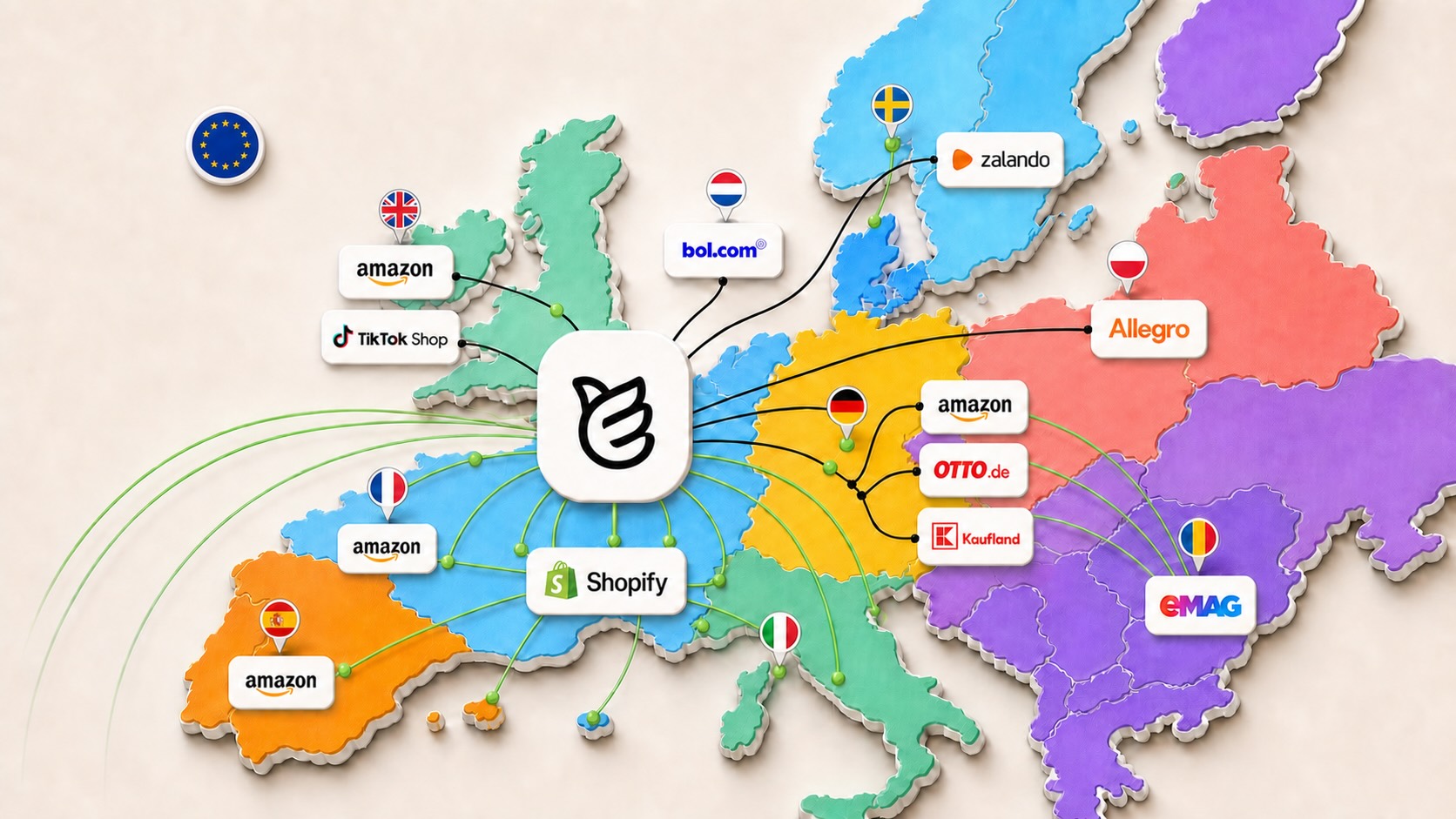
For a consumer brand expanding through cross-border ecommerce, the Merchant of Record becomes your local seller in each country. You don't incorporate. You don't register for VAT. You don't set up a payment gateway in every market. The MoR does all of that and uses its existing infrastructure to sell on your behalf.
Brand stays yours. IP stays yours. Inventory stays yours. The legal seller in front of the customer is the MoR.
Where the term came from
SaaS companies got there first. Paddle, FastSpring, Lemon Squeezy and a few others built MoR services for software sellers in the 2010s. Their job was simple: charge the right tax on a digital download in every country, remit it correctly, and make a Stripe-style integration that any developer could plug in.
That's the model most search results show you when you look up "Merchant of Record." It's also a poor fit for physical goods brands, because digital MoRs don't touch fulfillment, customs, EPR registration, marketplace listings, or any of the operational work that consumer brands actually need.
Consumer goods MoRs are a different category. They include the legal/tax wrapper, plus the operational stack to sell physical products on Amazon, in D2C, on European marketplaces, and through retail.
What a consumer-brand MoR actually does
The job covers four layers.
Legal and tax. Local entity, VAT registration, sales tax remittance, customs clearance, EPR for packaging and electronics, product compliance.
Payments. Card processing, fraud handling, chargeback management, currency conversion, settlement. Local payment methods in each market. IDEAL in the Netherlands, Bancontact in Belgium, Klarna across the EU.
Operations. Warehousing, fulfillment, returns, customer service in local languages, channel management on Amazon and the marketplaces that matter in each country.
Commercial. Listing optimization, advertising on Amazon and Google, pricing strategy per market, performance reporting.
SaaS MoRs handle one layer. Consumer brand MoRs handle all four.
How the costs work
You'll see three components. A monthly retainer for ongoing operations. A performance fee on revenue, usually 6 to 10% depending on whether you're using the MoR for marketplaces only or full operations including fulfillment. One-time setup fees per channel and market. Operational pass-throughs. Ad spend, fulfillment per order, shipping. Go through at cost with no markup at the better operators.
Versus building it yourself, the math usually works out somewhere between break-even and a 30% saving in the first two years, plus a 6 to 12 month time-to-market difference per market.
When you need one
The MoR model fits if at least two of these are true:
- You're selling physical products and want to expand into 3+ international markets
- You don't already have entities, VAT numbers, and channel teams in those markets
- You don't want to hire 10-15 people internally to run it
- You want one operator across channels. Amazon, D2C, marketplaces. Instead of a different partner per channel
It's a poor fit if you have fewer than 5 SKUs, sell at a low ASP, or want absolute pricing control on every channel down to the country level. Some MoRs require pricing alignment across regions to prevent arbitrage.
Choosing one
The market is fragmented. Some operators only do payments. Some only do marketplaces. A few do the full stack. The right pick depends on whether you want a payment-layer wrapper or a complete commerce operator.
If you want to go deeper, we've written comparison articles on MoR vs Seller of Record, MoR vs Payment Facilitator, and 11 MoR companies compared.
eBrands operates as a Merchant of Record for consumer brands across Europe and North America. If that's relevant to where you are, the platform overview walks through what we run and the contact page is the fastest way to get a scoped conversation started.

“ We are dedicated to assisting you; please contact us for any information or inquiries you may have. ”

.jpg)
.jpg)