Shopify POS for Cross-Border Retail: What the Software Handles vs What It Doesn't

Shopify POS is excellent software. It rings up a sale, takes a card, syncs inventory back to the same catalogue that powers the webshop, and gives a clean view of what sold. For a brand running a pop-up or a stand in another country, it feels like the whole problem is solved: install the app, pair a reader, sell. The trouble is that the software solves the commerce problem brilliantly and the compliance problem not at all. In cross-border retail, the compliance problem is the one that gets brands fined.
This article draws the line clearly: what Shopify POS (and connected terminals like SumUp) genuinely handle, and what sits outside the software entirely and has to be solved another way.
What Shopify POS does well
The software layer is genuinely strong, and none of what follows is a criticism of the product. Within its scope it does the job:
- Transactions and checkout — ringing up items, applying discounts, splitting payments, handling cash and card.
- Inventory sync — the same product catalogue and stock count across online and in-person, so a unit sold at the stand drops from available inventory everywhere.
- Hardware flexibility — Shopify's own readers, and through the back end, terminals like SumUp and other connected providers, so the physical till can be assembled from whatever suits the event.
- Unified reporting — in-person and online sales in one commercial view, which is genuinely useful for understanding sell-through.
The mental model. Think of Shopify POS as the till and the catalogue. It records what was sold and moves the money. It does not, and was never designed to, make you the legal seller in a foreign country or satisfy that country's tax-authority requirements for how a sale is certified and reported.
What it does not handle abroad
It does not make you the legal seller in the market
Selling in person in another country generally creates a local taxable presence, which means a local VAT registration is required regardless of turnover. Shopify POS will happily process the sale, but it does not register you for VAT, file the return, or take on the legal-seller responsibility. Someone has to be the Merchant of Record for that transaction, and the app is not it.
It is not, by itself, a certified fiscal device
This is the big one. Several European markets require that the system issuing receipts is certified by the tax authority: Italy's telematic recorder, Germany's TSE security element, France's accredited software (self-certification ends September 2026), Portugal's AT-certified software. "Running Shopify POS" does not automatically satisfy these. Compliance in these markets depends on the specific certified configuration, fiscal middleware, or hardware in use, not on the POS app alone. We map which markets require what in the EU Pop-Up Compliance Map.
It does not produce country-specific compliant receipts on its own
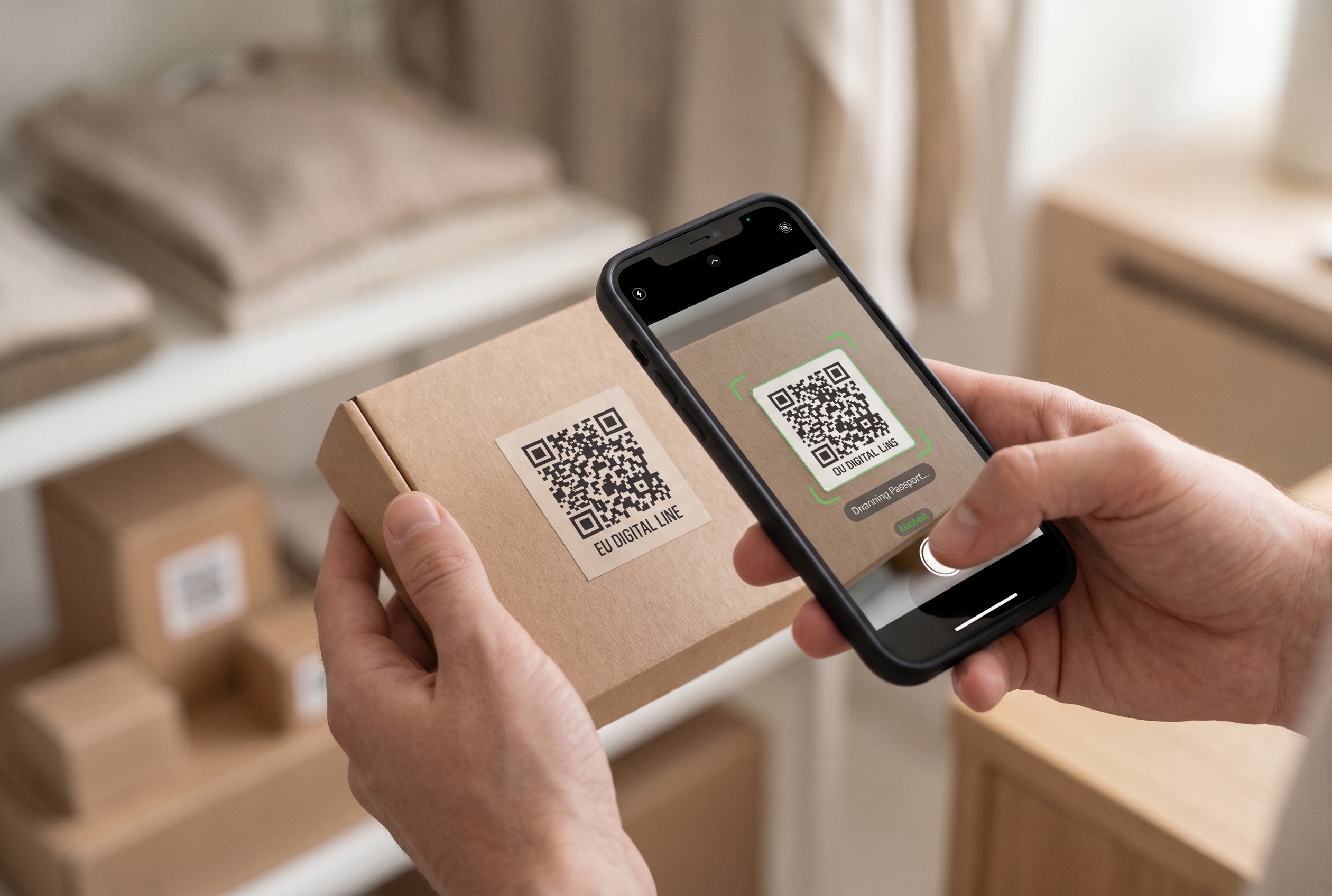
In fiscalised markets the receipt must carry QR codes, fiscal identifiers, or sequential codes generated by a certified process. A standard POS receipt is not the same legal document. Getting the receipt right is a tax-authority requirement, not a formatting preference.
It does not handle the 2026 connection and registration mandates
New obligations are landing in 2026 that live entirely outside the POS app. Italy now requires the payment terminal to be linked to the telematic recorder through a government portal, with per-device fines for non-compliance. Germany requires devices to be registered with the tax authority via ELSTER. These are procedural, market-specific steps that no checkout app performs for you.
It does not own customs, duties, or getting the stock there
Before anything can be sold at a pop-up, the goods have to physically arrive: cleared through customs, with duties handled, and someone acting as Importer of Record. That is upstream of the till entirely. See What Is an Importer of Record?

The two layers, side by side
How the two layers fit together
The clean setup uses both, with the POS running on top of a compliant back end. In a retail Merchant of Record model, the point-of-sale system, the payment terminal, and the market-specific compliance apps all live on the operator's store and accounts. The brand's products, prices, and stock sync in. The till the staff actually tap on can be Shopify POS, SumUp, or another connected terminal, but it is feeding an environment where the legal-seller status, VAT treatment, fiscal certification, and receipt rules for that specific country are already handled.
This is why the compliance configuration belongs on the operator side. Built there once per market, it is reused for every brand and every event. If each brand tried to bolt fiscal compliance onto its own Shopify store for a single weekend pop-up, it would be standing up, and then tearing down, country-specific apps and registrations every time, with billing and configuration headaches on both ends. The retail MoR model exists precisely to keep that complexity off the brand.
The takeaway. Use Shopify POS. It is the right software. Just don't mistake it for the compliance layer. The app runs the till; a Merchant of Record makes the sale legal in the market. Cross-border retail needs both, and the layer that makes the sale legal is the one no app store sells.
Talk to an expert. Running Shopify POS at a pop-up abroad and not sure where the software stops and compliance starts? Talk to an eBrands expert.

“ We are dedicated to assisting you; please contact us for any information or inquiries you may have. ”








.jpg)











.jpeg)