How to Pick a Merchant of Record Provider: 12 Questions to Ask

Most merchant of record provider sales conversations sound the same. A slick deck. Names of impressive brand partners. Claims about "end-to-end commerce solutions." A quick pivot to pricing.
The hard work of figuring out which provider actually fits your specific scenario falls on you.
This is a list of 12 questions to ask any merchant of record provider before you sign. Asking these in order, and pushing for specific written answers, will tell you within a single 30-minute call whether a provider is a fit, a partial fit, or not the right tool for your problem. Use them to evaluate any MoR provider against your specific scope, market, and growth needs.
Section 1: Merchant of Record provider scope questions (the deal-breakers)
1. Are you registered as Merchant of Record AND Seller of Record in every market I want to enter?
The answer should be a country-by-country list, not a region. "We cover Europe" is not an answer. Ask which markets they're MoR in, which they're SoR in, and where they're neither (because some providers only handle the payment layer in some countries).
2. Do you handle Importer of Record duties?
If they don't, you still need to figure out IoR yourself. Customs accounts, EORI numbers, HS code classifications, duty payment. Many MoRs leave this gap. Worth knowing upfront.
3. Which sales channels do you actually operate?
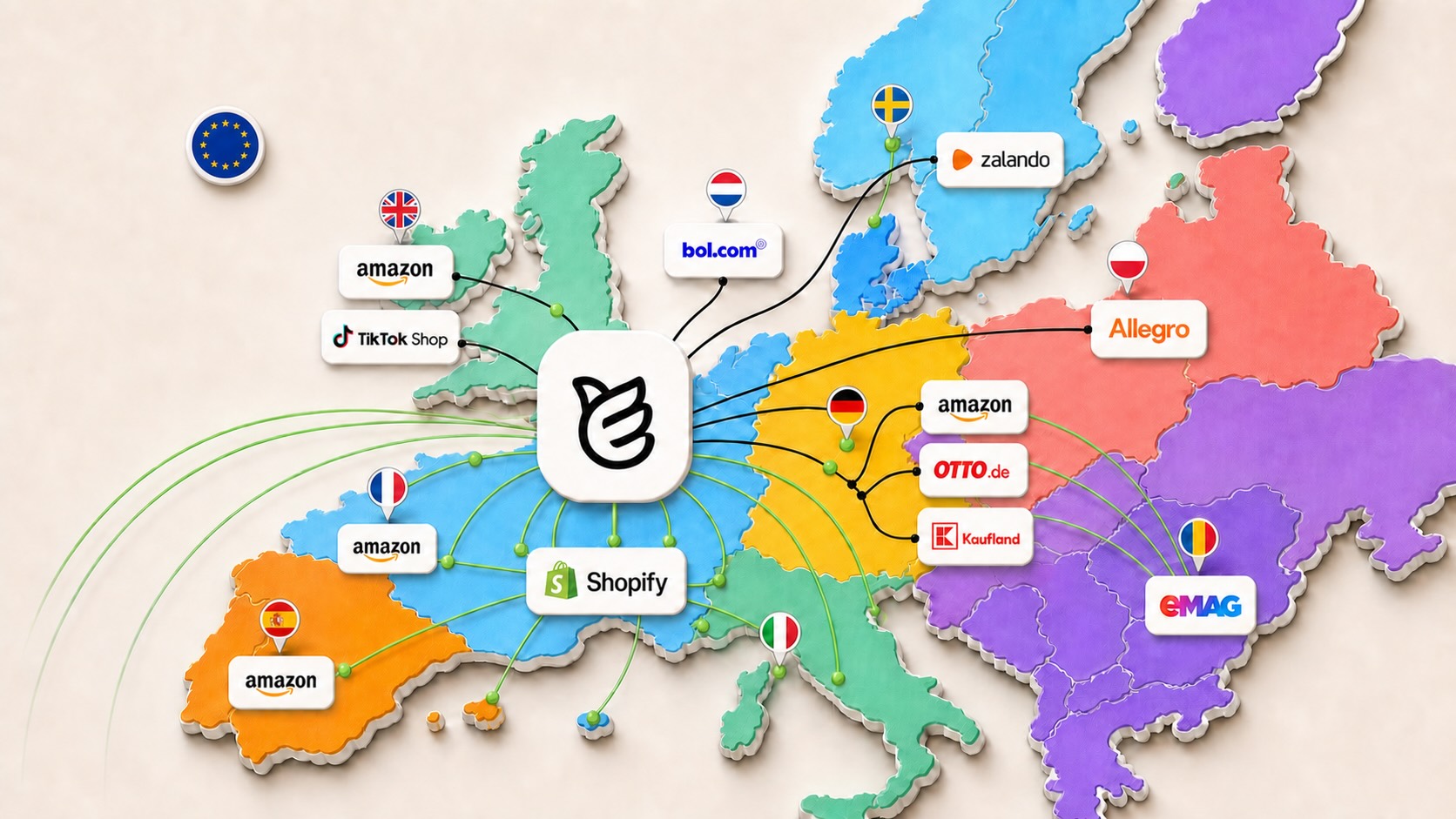
Amazon Seller Central or Vendor Central. eBay. Bol, Allegro, Kaufland, Cdiscount, Decathlon, Shop Apotheke. D2C Shopify. TikTok Shop. Retail. Get the channel list per market. Don't accept generic claims like "we cover all major channels."
4. Do you own or operate fulfillment in my key markets?
Some MoRs outsource fulfillment to a 3PL. Fine, but ask which 3PL and what the SLA is. Some operate their own warehouses (the deeper integration usually beats the outsourced model on cost and speed).
Section 2: Compliance questions
5. Are EPR registrations included or extra?
EU EPR. Extended Producer Responsibility for packaging, electronics, and batteries. Costs €5K-€20K per market per year if handled separately. Should be in scope, not added later.
6. Who handles product safety compliance. CE marking, REACH, country-specific labeling?
If the answer is "that's on you," you're not getting a full MoR service.
7. What about Amazon's Responsible Person requirement for EU listings?
Amazon requires an EU-based responsible person for product safety. Either the MoR is your responsible person or you need a separate provider. Confirm.
Section 3: Merchant of Record provider pricing questions
8. What's the full pricing structure. And what costs are passed through at cost vs marked up?
Three components are normal: setup fee per channel/market, monthly retainer, performance commission on revenue. The tell is what happens with operational pass-throughs. Ad spend, fulfillment, shipping. Pass-through at cost is the honest answer. "Bundled into the commission" usually means there's margin built in everywhere.
9. Are there any fees not in the proposal?
Direct question. Make them list every fee category, including ones not active today but that could be triggered later.
Section 4: Ownership and exit terms to evaluate in any MoR provider
10. Do I retain 100% ownership of my brand, IP, inventory, and customer data?
This should be a clean yes. If the MoR claims any portion of brand equity, IP rights, or, critically, customer data, that's a deal-shaping issue. Inventory should stay on your balance sheet.
11. What does the exit process look like? How long does it take? What's returned to me?
Listings, customer data, channel accounts, inventory. Get the timeline and the deliverables in writing. The good operators will give you a 30-90 day exit clause with everything returned. The bad ones bury you in a 12-month notice period.
Section 5: Merchant of Record provider operational reality check
12. What's your typical onboarding timeline from signed agreement to first live sales?
14-28 days is fast and indicates pre-built infrastructure. 60-90 days suggests they're building in real time. 6+ months means they're really an agency that calls itself a MoR. Match the timeline to what you actually need.
Bonus question: Do you operate any of your own brands?
If a MoR runs their own brand portfolio, they've validated the infrastructure on their own P&L before they sold it to you. If they're a pure services agency that's never operated a brand, the gap between the pitch and the operational reality is usually wider.
How to use these Merchant of Record provider questions
The good providers will answer all 12 in a single call without flinching. The bad ones will dodge 3-4, often with marketing-speak. The pattern of answers matters as much as the content.
Get the answers in writing. Emailed summary or term sheet. Before signing anything. Vague verbal commitments don't hold up six months in.
For the comparison side: 11 MoR companies compared.
For a scoping conversation with eBrands' team: /contact-us.

“ We are dedicated to assisting you; please contact us for any information or inquiries you may have. ”

.jpg)
.jpg)