Why Paddle, Stripe, and Lemon Squeezy Don't Work as MoRs for Physical Goods Brands

The SaaS Merchant of Record mismatch nobody talks about
Search "Merchant of Record" today and the top results are dominated by SaaS Merchant of Record providers. Paddle. Stripe (with Stripe Tax). Lemon Squeezy. FastSpring. PayPro Global. These are excellent products for software companies.
They're also being marketed in ways that lead physical goods brands to assume they're a fit.
They're not. Here's why, and what to use instead.
What a SaaS Merchant of Record is designed to solve
A digital goods company faces three operational challenges when going international:
- Charging the right tax (VAT in EU, sales tax in US states with economic nexus)
- Processing payments in local currencies
- Handling chargebacks and fraud across borders
A SaaS MoR solves all three with a Stripe-style integration. Drop in their checkout, get back tax-compliant payments globally. Subscription billing, dunning, refunds, fraud. All handled.
That's the entire scope. For SaaS, that's enough. The product is digital, instant delivery, no inventory, no customs, no warehouse, no returns logistics, no marketplace.
For physical goods, that scope covers maybe 15% of the operational reality.
What SaaS MoRs don't do
Six categories that physical goods brands need but SaaS MoRs don't include:
1. Customs and import (Importer of Record)
Cross-border physical goods need customs clearance, duty payment, HS code classification, and EORI numbers. Paddle doesn't handle any of this. Stripe doesn't either. The brand has to set up customs accounts and pay duties in every market.
2. Warehousing and fulfillment
Physical inventory needs to be stored, picked, packed, and shipped. SaaS MoRs don't operate warehouses. The brand needs separate 3PL contracts in every market. Typically €30K-€100K per market in setup and minimum monthly fees.
3. Marketplace operations
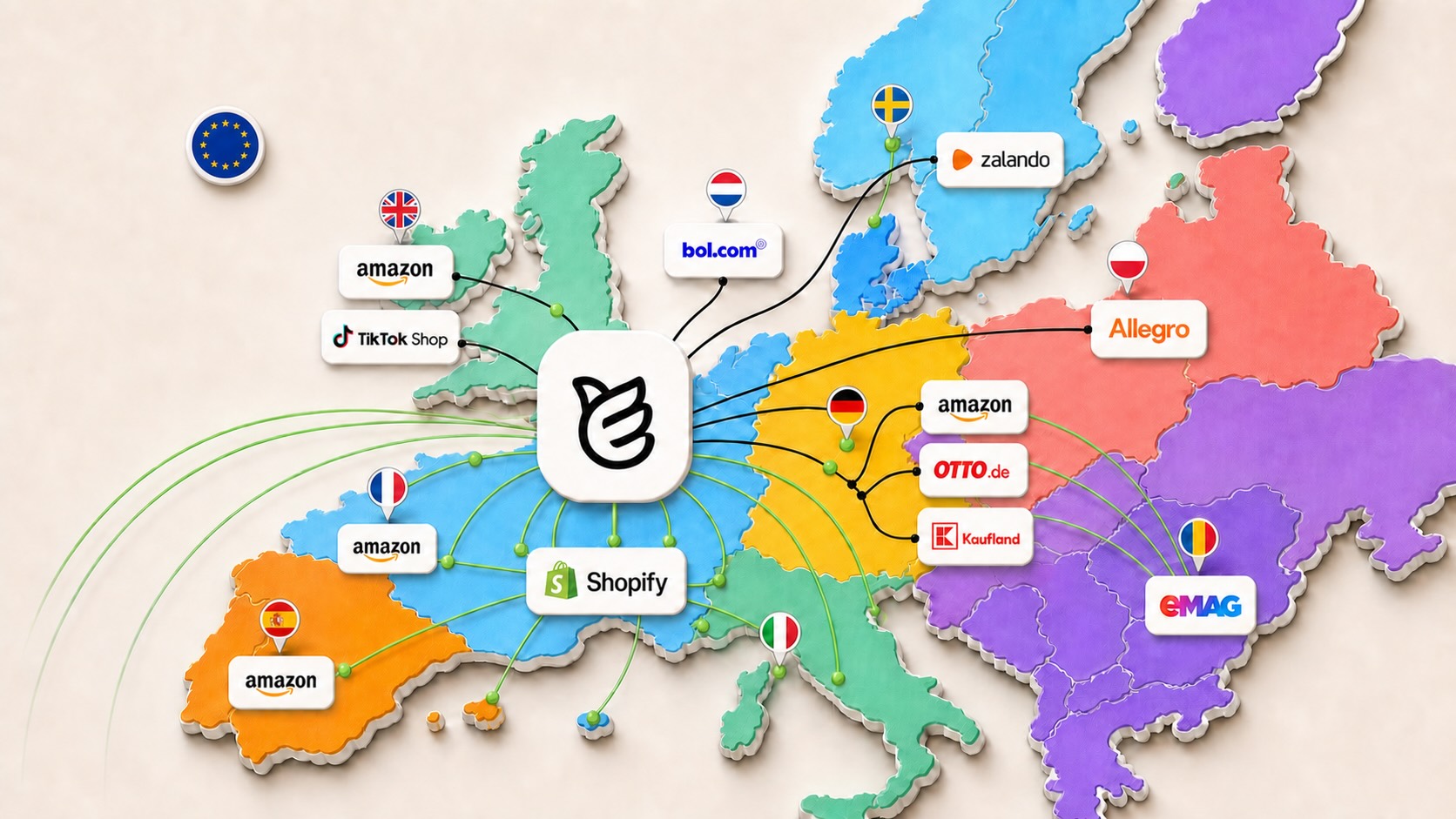
Amazon, eBay, Bol, Allegro, Kaufland, Cdiscount, Shop Apotheke. Each marketplace has its own listing requirements, content rules, advertising platform, and account management work. SaaS MoRs don't operate marketplace seller accounts.
4. EPR (Extended Producer Responsibility)
EU markets require EPR registration for packaging, electronics, batteries, and other categories. Costs €5K-€20K per market per year if managed separately. Required by law. SaaS MoRs don't handle EPR.
5. Product compliance
CE marking, REACH (chemical compliance), country-specific labeling requirements, GPSR (General Product Safety Regulation in EU), Amazon's Responsible Person requirement. SaaS MoRs don't touch product compliance because they sell digital goods.
6. Returns and reverse logistics
Physical returns require warehouses, refurbishment, restocking. Cross-border returns require customs paperwork in reverse. SaaS MoRs handle digital refunds in seconds. Physical returns are a 4-7 day process across multiple operational layers.
What does work for physical goods
Two categories of provider can act as MoR for physical goods brands.
Cross-border ecommerce platforms (Global-e, ESW, Reach). These handle the legal seller layer for D2C cross-border, including localized checkout, payments, taxes, and shipping. They're typically used on top of an existing Shopify or proprietary D2C site. They don't operate marketplaces.
Full commerce operators (eBrands, Pattern, Operator One). These handle the full operational stack: MoR + IoR + marketplaces + D2C + fulfillment + compliance + advertising + customer service. The closest match to "a SaaS MoR but for physical goods," except the operational scope is 5-10x larger.
The mismatch in pricing
SaaS MoR pricing looks attractive on the rate card. Paddle is 5% + $0.50 per transaction. Stripe is roughly 3% on the payment layer. Compared to a 6-10% MoR commission for a physical goods operator, that looks cheap.
It's not cheap once you add what's missing. A physical goods brand that uses Paddle as MoR would still need to build separately: customs accounts (€10K-€30K setup per market), 3PL contracts (€30K-€100K per market), marketplace account setup (€20K-€50K per market), EPR registrations (€5K-€20K per market per year), product compliance (varies), customer service infrastructure (€60K-€150K per year for a small in-house team).
Stack those costs and the SaaS MoR rate is the smallest line on the page. The actual cost of physical goods cross-border is dominated by operational layers that SaaS MoRs don't touch.
The decision rule
If you sell digital goods, use a SaaS MoR. Paddle, FastSpring, and Lemon Squeezy are good products and competitive on price.
If you sell physical goods, you need a different category of provider. Either a cross-border ecommerce platform (D2C-focused) or a full commerce operator (multi-channel including marketplaces).
The signal that you've matched poorly: 18 months in, you're still building 80% of the operational infrastructure yourself, and the MoR fee is a small percentage of your total cross-border cost. That's the moment when the rate card you signed turns out to be misleading.
For a comparison of physical goods MoR providers: 11 MoR companies compared.
For eBrands' specific scope: /merchant-of-record.

“ We are dedicated to assisting you; please contact us for any information or inquiries you may have. ”

.jpg)
.jpg)