What is a Merchant of Record? A Complete Guide for Global Brands

You've built something people love. Now you want to take it global.
But here's what most founders discover too late: shipping products to new countries isn't the hard part. The hard part is everything behind the shipping—tax compliance that varies by jurisdiction, payment processing that fails in certain regions, and customer support in languages you don't speak.
Most brands handle this one of three ways: hiring a team to manage it, partnering with a distributor, or using a software tool and hoping compliance just works. All three break down when you scale to 5+ markets.
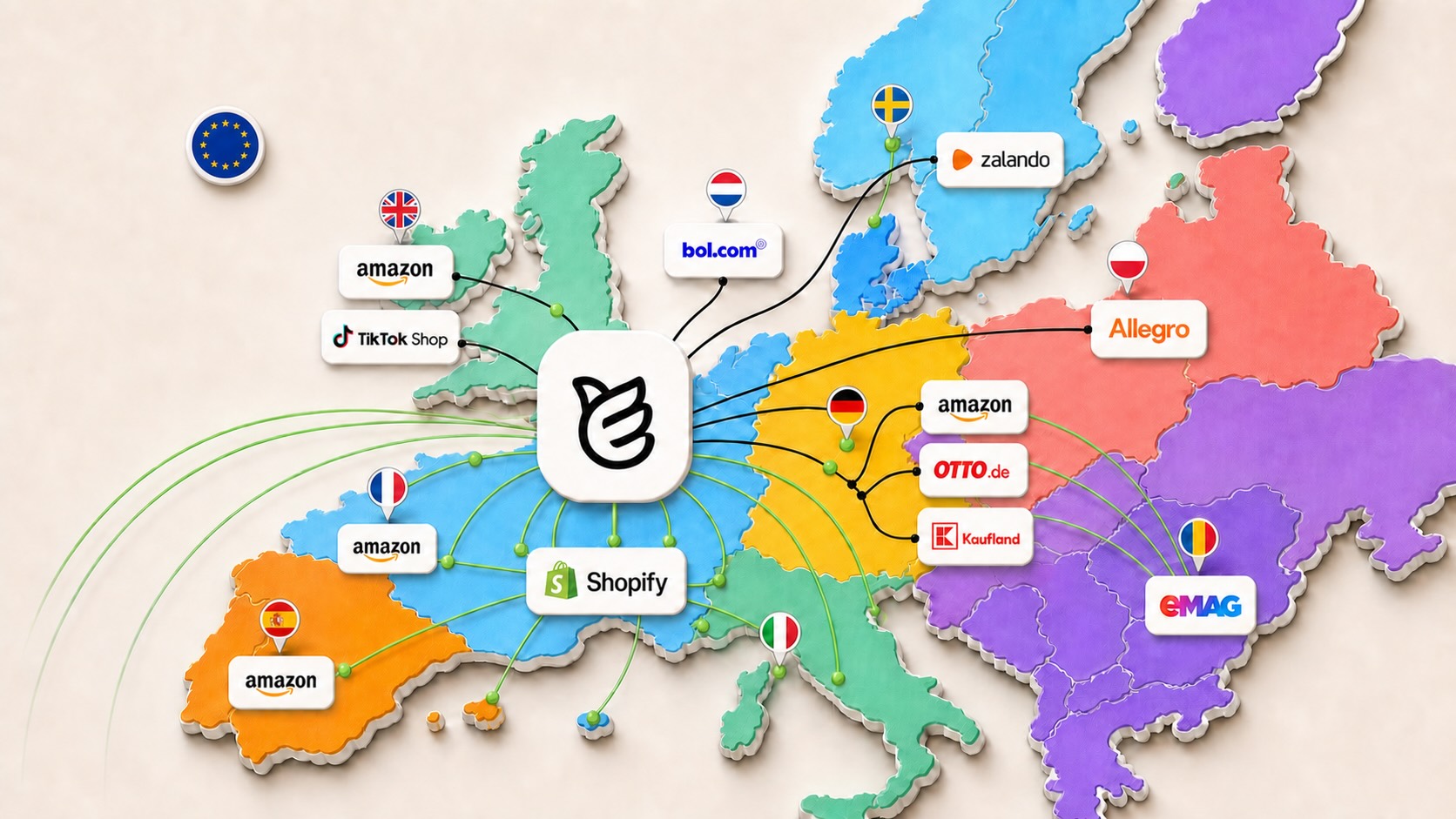
There's a better way. It's called having a Merchant of Record. In this guide, we're going to break down what a Merchant of Record actually is, why it matters for your scaling business, how it compares to other models, and most importantly, how eBrands can serve as your Merchant of Record to unlock global growth.
What Exactly is a Merchant of Record?
A Merchant of Record (MoR) is the business entity legally responsible for a sale. That means the MoR accepts customer payments, calculates and remits taxes, handles chargebacks, and takes legal responsibility if something goes wrong.
Think of it this way: when a customer sees a charge on their credit card, the name that appears, that's the merchant of record. That entity is "on the record" with regulators, payment processors, and tax authorities.
When you sell domestically, this is straightforward. You're the merchant of record. You accept payment, you handle local tax, done.
But the moment you sell internationally, complexity explodes. Selling to Germany means you need a German tax ID, must calculate 19% VAT, handle payment in Euros, and comply with EU data laws. Multiply that by ten countries, and you have ten different tax systems, payment methods, and regulatory requirements happening simultaneously.
The Three Responsibilities Every MoR Must Handle
i. Payment Processing & Currency Management
The MoR accepts payments across multiple payment methods and converts currencies fairly. They manage fraud detection, chargeback disputes, and settlement timing. Here's what makes it complex: Germany prefers bank transfers, Brazil prefers installment payments, and Kenya prefers mobile money. A good MoR supports all of these. A brand going solo often supports only credit cards and misses 5-15% of potential sales.
Ii. Tax Compliance & Regulatory Obligations
The MoR calculates, collects, and remits taxes across every jurisdiction where sales occur. This includes VAT in the EU, sales tax in US states, and equivalent taxes globally. Tax rules vary by country, product category, customer type, and even platform. A brand selling to 10 countries faces potentially 50+ different tax scenarios. Get it wrong, and you face audit exposure, penalties, and back-tax liability of $50K-$500K+.
Iii. Customer Support & Dispute Resolution
The MoR handles chargebacks, returns, and customer disputes. When a customer in Sweden disputes a charge, the payment processor gets involved, returns need to happen across borders, and your brand reputation is affected. A professional MoR team manages this in multiple languages across timezones, so your team stays focused on growth.
How MoR Compares to Other Models
You have options. Let's be honest about each one.
Agent Model (You're the MoR)
You stay the merchant of record, keep all control and margins, but manage everything yourself. This works for a single market. The moment you enter a second country with different tax rules and payment systems, one person becomes two, two becomes three, and suddenly 40% of your organization is managing operations instead of building product. You also carry all legal risk. If you mess up VAT in Germany, you face the audit, owe the back taxes, and pay the penalties.
Reseller Model (Distributor is the MoR)
A distributor buys your inventory, becomes the merchant of record, and handles everything. It's fast and hands-off. But you lose pricing control, customer data, and brand narrative. The distributor's incentives don't align with your long-term growth, they optimize for their margins, not your brand's value.
Software-Only Model (You're the MoR with Tools)
You use Shopify or WooCommerce but remain the merchant of record. The software helps with payments and basic tax calculations, but it's just a tool. If something goes wrong a tax audit, a chargeback dispute, a regulatory issue you're on your own. Software can't guarantee compliance accuracy across 20 countries. One brand we know got audited after EU expansion and owed €80K in back taxes because their software underestimated VAT liability.
MoR Partnership (Partner is the MoR)
You get the best of everything: you set pricing, own customer data, and control strategy, but a partner handles compliance, payments, and legal responsibility. You keep the decisions that matter and give up the operational burden. This is built for scale.
The Hidden Costs of DIY Expansion
Let's talk about what DIY actually costs.
Compliance Risk
One tax audit can cost €80K-€200K in back taxes, penalties, and legal fees. A brand we know expanded to Germany without proper MoR support. After 18 months, an audit revealed VAT mistakes. They owed €50K in back taxes, plus penalties. Almost killed the business.
Operational Headcount
You'll hire a compliance person: $100-150K salary plus $30-40K in benefits and tools. That's $130-190K all-in. As you scale from 3 markets to 5 to 10, one person becomes two becomes a whole department. Suddenly you have 3-4 people whose entire job is managing the complexity you created.
Lost Revenue from Payment Friction
Payment declines happen invisibly. Industry average: 2-5% of transactions fail due to payment processing issues. For a $10M revenue brand, that's $200K-$500K in lost revenue per year that you never see.
Opportunity Cost
Setting up tax IDs, payment processors, and customer support takes 3-6 months per market. That's time you could spend on fundraising, product development, or marketing. Meanwhile, your competitors are already selling in those markets.
How an MoR Partnership Solves This
Payments become seamless. You don't think about payment processing. A customer in Brazil pays in Real, currency converts fairly, and you see clean settled revenue in USD. Approval rates go up because local payment methods are supported.
Compliance becomes automatic. Your product catalog maps to tax jurisdictions automatically. Every sale calculates the correct tax. The MoR handles remittance on schedule. You get audit-ready records without thinking about it. One brand expanded to 8 new countries. Going alone, they estimated 4-6 months of setup and $50-80K in fees. With an MoR, they were live in 3 weeks.
Support scales professionally. Customer disputes, chargebacks, and returns get handled by professionals in multiple languages across timezones. Your brand stays involved, but you're not fighting with a Swedish customer about return shipping at 2 AM.
You keep strategic control. You set pricing, own customer data, and control expansion strategy. The only thing you give up: the operational burden of compliance infrastructure. Which is exactly what you wanted to avoid.
The Economics: Does It Actually Work?
eBrands pricing is flexible based on your needs. Basic MoR services start from 5% of sales. When you add IoR and operational services, pricing goes up to 10% of sales, depending on volume, channel, and services included. Setup fees and ongoing monthly charges apply.
What do you avoid? Hiring compliance staff (€130-190K/year), hiring ops headcount (€50-100K/year), back-tax exposure (€50K-€500K+ in audits), and 3-6 months per market just to launch.
Real example: €5M revenue brand
- DIY path: €150K (compliance) + €100K (ops) + risk exposure = €250K/year + 6 months to enter next market
- eBrands path: 5-10% of sales depending on services = €250K-€500K/year + setup fees + monthly charges + 3 weeks to go live
The trade: You pay for what you need, and you gain:
- Speed: 5-6 months faster per market (you launch in 3 weeks instead of 6 months)
- Headcount saved: 1-2 fewer people managing operations (€100K-€150K in salary savings)
- Risk eliminated: Zero compliance audits (worth €50K-€500K+ in avoided back taxes)
Real ROI: If you enter 2 new markets in year one, you gain ~10 months of selling time. For a €5M brand expanding, that's €3M-€5M in incremental revenue. The investment pays for itself many times over.
Why eBrands is Different
There are MoR providers who process payments. Then there's eBrands.
We're MoR + IOR + operating partner. We don't hand you a login and disappear; we embed with your team and help you scale your brand.
We've scaled 60+ brands globally. We know which channels drive margin, how to optimize inventory across markets, and how to move fast without compliance disasters. Our Apollo platform connects all your data: sales, inventory, fulfillment, and compliance in one dashboard.
The result: brands enter 5+ new markets in 3 months (would take 12+ months alone), achieve 2-3x faster growth, and reduce ops headcount by 1-2 people.
Ready to Scale?
If you're generating $500K+ annually and serious about global expansion, let's talk. We'll map your expansion roadmap, identify quick wins, and outline your path to 10+ markets.
Start a conversation. No pressure, no commitment. Just 30 minutes to explore what's possible.
Your next market is waiting. Let's go get it.

“ We are dedicated to assisting you; please contact us for any information or inquiries you may have. ”