EU vs UK Cross-Border Ecommerce: Which Market to Enter First

Every consumer brand planning international expansion runs into the same fork: EU first, or UK first? They look like comparable markets on the surface — large, English-tolerant, regulated, ecommerce-mature. Underneath, they behave very differently. The decision shouldn't be made on gut feel.
Here's the framework we use with the brands we operate.
The size and shape of each market
The EU is bigger but more fragmented. The UK is smaller but more concentrated.
EUUKPopulation~448M~67MEcommerce market size (2025)~€900B~£200BLanguages24 official, 3+ critical1CurrenciesEuro + 7 othersGBPVAT regimes27 + intra-community + OSS/IOSS1Customs entry pointsEU customs union (single)UK customs (single, post-Brexit)Dominant marketplaceAmazon DE, FR, IT, ES, NL + regionalAmazon UK + TikTok Shop UKSetup complexityHighMedium
Where the EU wins
- Larger addressable market — four of the world's top ten ecommerce countries are in the EU
- Once your operating model is set up, adding markets is incremental, not stepwise
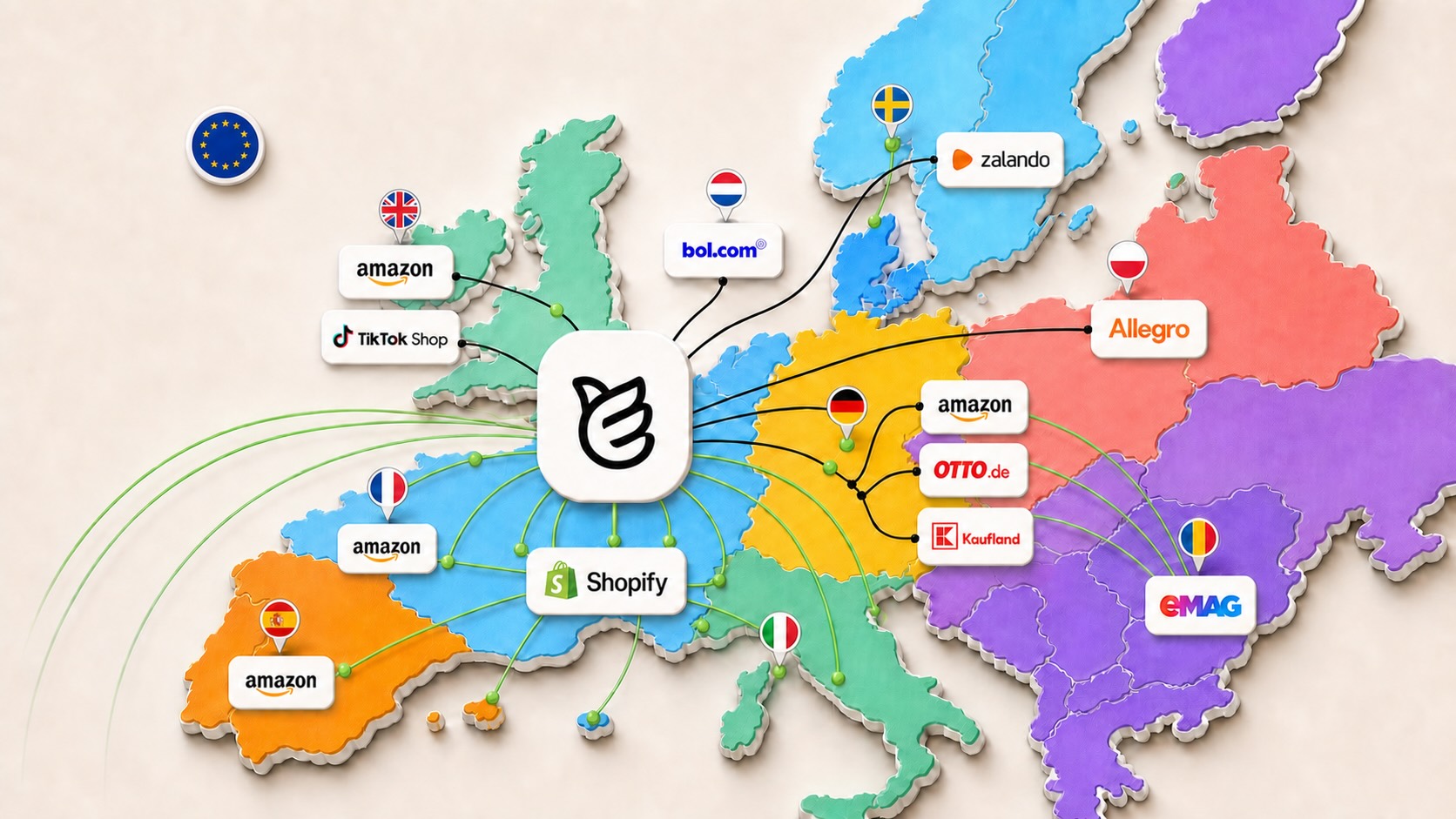
- Marketplaces like Allegro (Poland), Bol (Netherlands), and Zalando (DACH) offer distribution at scale with relatively low CAC
- For categories with European cultural fit (beauty, food, wellness, sport), local relevance compounds across markets
Where the UK wins
- Single-language, single-currency, single-VAT — dramatically simpler launch
- Amazon UK is a tier-one Amazon market with a clean buyer base
- TikTok Shop UK is the most developed TikTok Shop market in Europe and one of the fastest-growing channels globally
- UK retail (John Lewis, Selfridges, Boots, Currys, B&Q, Sainsbury's, Tesco) is more concentrated, so a small set of relationships unlocks large volume
- English-language content and reviews compound here without translation friction

A category-by-category view
Category Usually start in Why Beauty & wellnessEU (DACH first) DACH is the largest beauty market in Europe; strong specialty retailSports & lifestyleUKRetail concentration (Sports Direct, JD, Decathlon UK) + early TikTok Shop tractionHome & kitchenUK + DEAmazon dominates both; Bol gives a strong NL beachheadBaby & kidsEU (NL, FR, DE)Compliance bar is high; once you pass it, EU markets scale togetherPetUKUK pet ecommerce is the most mature in EuropeFood & supplementsEU (DE, NL)Regulatory frameworks are more navigable than UK FSA in some sub-categoriesPremium / luxuryUKConcentration of high-end retail and affluent buyers
This isn't prescriptive. It's where we typically see brands get traction faster based on what we run today.
The decision questions
- Where is the demand? If you already have organic UK customers, start there. If your social audience skews DACH or French, start in the EU.
- What's your channel mix? Amazon-heavy = either works. Marketplace diversification (Allegro, Bol, Zalando) = EU. TikTok Shop = UK.
- What's your capital position? EU launches need 30–60% more upfront working capital to cover multi-market stock, VAT registration in several countries, and longer payback. UK launches are cheaper to start.
- How regulated is your category? Some categories (kids, food, beauty) face complex compliance — work through which region's framework you can clear faster.
- What's your team's bandwidth? The EU needs more internal coordination unless you have an operating partner running it for you.
The both/and answer
For most brands at €5M+ with credible international demand, the right answer is to enter both within 12–18 months. Sequencing matters, but the gap shouldn't be too long — the brand-building and content investment in one market compounds in the other.
The setup most consumer brands underestimate is the operational layer underneath both: legal entities, VAT registrations, customs and Importer of Record for each region, payments, fulfilment networks, marketplace accounts, and unified analytics. Building that twice — once for the UK, once for the EU — is what makes most brands stall at one region.

How eBrands handles both regions in parallel
We operate as the Merchant of Record and Importer of Record across both the EU and the UK, with a single operating relationship for the brand. That means:
- One contract, one onboarding, both regions live
- Local legal entities, tax registrations, and customs handled — in each region's regime
- Channel ops across Amazon, marketplaces, D2C, and retail in both
- Apollo — unified analytics across UK and EU so cross-region performance is visible in one view
For the broader operating model, see How the eBrands Model Works: From Onboarding to Global Revenue.
If you have to pick one
Start where your demand is. If you don't know where your demand is yet, start in the UK — it's faster, cheaper, and gives you data that informs the EU launch. If you already know your customer is European, go EU and use the UK as a follow-on once the operating model is proven.
The wrong answer is to wait until you've picked the perfect first market. Twelve months of "deciding" costs more than a misallocated launch.
Talk to us about EU and UK cross-border ecommerce →

“ We are dedicated to assisting you; please contact us for any information or inquiries you may have. ”

.jpg)
















_Nick_Fancher_Photos_ID6071.jpeg)