Cross-Border Ecommerce in the UK: When a Distributor Still Makes Sense (and When It Doesn't)

The UK looks like a single market — one country, one language, one currency, no internal trade friction. For consumer brands entering from outside, that simplicity is the trap.
Post-Brexit, every non-UK seller pushing physical goods into the UK is dealing with VAT registration, customs declarations, an EORI number, and a retail and marketplace landscape that doesn't behave like the EU one. The choice between a distributor and a commerce operator looks similar to the EU question, but the answers come out differently. Here's why.
What Brexit actually changed for distribution
Before 2021, an EU-based brand could sell into the UK on the same VAT logic as any other intra-community shipment. Post-Brexit, every cross-border consignment is now an import. That changed the economics for distributors in three ways:
- Distributors had to build customs and EORI capability that didn't exist in 2020
- The £135 low-value consignment rule made small shipments more painful, not less
- UK retailers and marketplaces started preferring suppliers with UK-resident legal status — forcing distributors to be the legal entity in market
The result: distributors who survived Brexit raised their margin spread to cover the new complexity. Most consumer brands in the EU now pay more to access the UK via a distributor than they paid pre-2021 — while getting less control.
The traditional UK distributor model
UK distributors operate the same model as their EU counterparts: they buy wholesale, take title, handle import and customs, and sell into UK retail and marketplaces. They take the VAT and IoR risk in exchange for a margin spread.
The trade-offs:
- 25–40% off your wholesale margin (slightly higher than EU because of Brexit complexity)
- No customer data
- One distributor across UK retail — they pick the accounts
- Hard to add Amazon UK + D2C in parallel without channel conflict
- Long contracts with the leverage in their favor
What a commerce operator does instead
A commerce operator handles the same operational layer — customs, VAT, fulfilment, retail relationships, marketplace operations — but doesn't take title to your goods. You stay the brand owner. They sit underneath as your Merchant of Record and Importer of Record so the legal complexity stops at their balance sheet, not yours.
For the UK specifically, that means:
- UK Ltd legal entity provided — no need to set one up yourself
- UK VAT registration handled, including the £85K threshold logic for new sellers
- EORI number issued, customs declarations filed
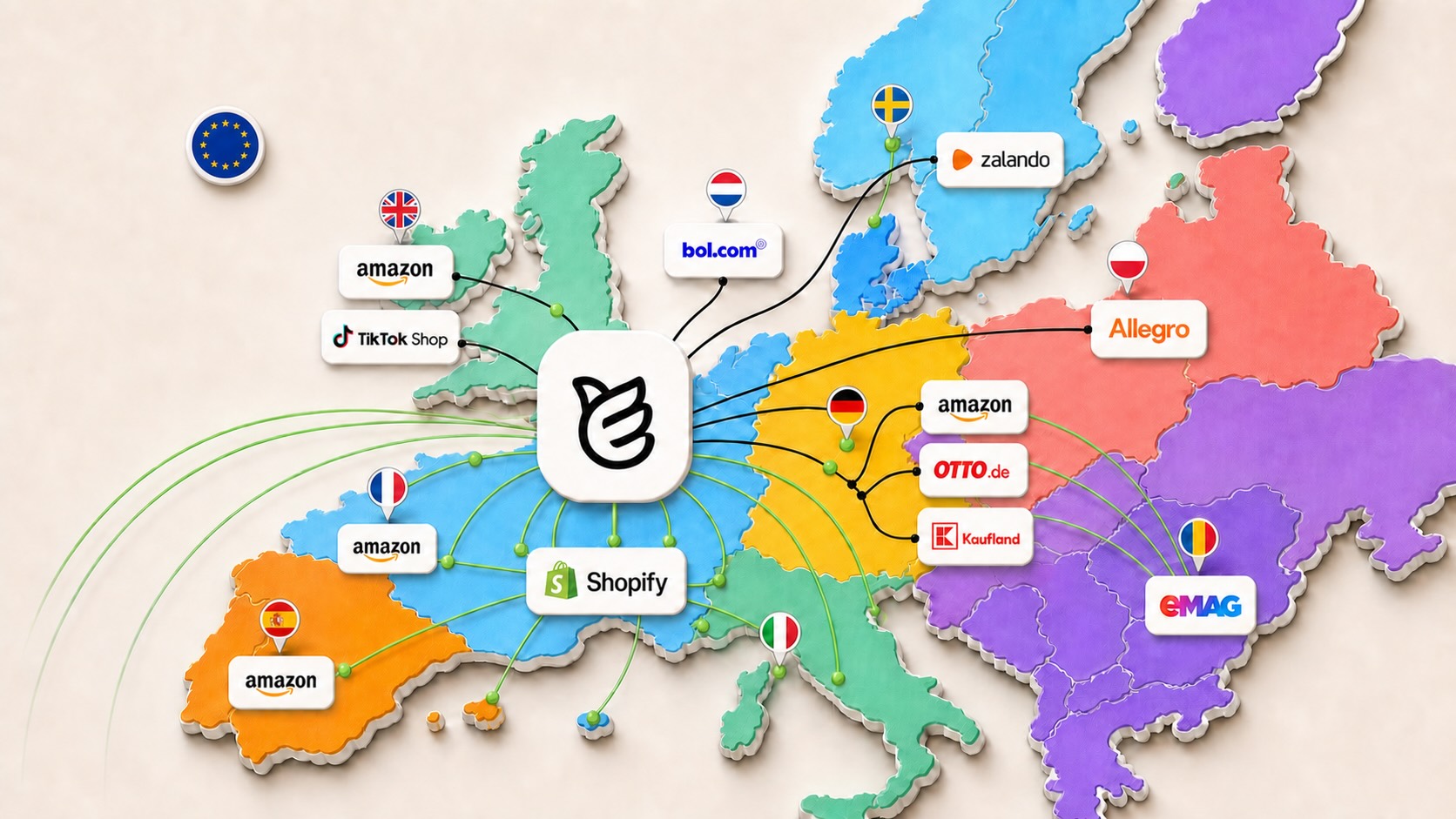
- Direct relationships with Amazon UK, TikTok Shop UK, eBay UK, John Lewis, Selfridges, Currys, B&Q and others depending on category
- No wholesale spread — we're paid on performance, not on a buying margin

UK distributor vs commerce operator
DimensionUK distributorCommerce operatorWholesale margin taken25–40%None (performance-based)VAT / EORI / customsDistributor's riskOperator's riskAmazon UK optimisationLimited — not their coreNative channel opsTikTok Shop UKRarely supportedYesRetail (John Lewis, Currys etc)Yes, if relationship existsYesD2C in parallelUsually blocked by contractYes, additiveCustomer dataDistributor keeps itYours Speed to first GBP4–9 months2–4 weeks
When a UK distributor still wins
- Your category is restricted (medical devices, certain supplements, alcohol) and you need a distributor with the right licensing
- You have one major UK retail account you've already negotiated and the buyer demands a UK distributor counterparty
- You're sub-£2M and want zero operational lift
- You're using the UK as a small test before committing to EU scale
When a commerce operator is the better fit
- You want Amazon UK to be a real channel, not an afterthought
- You want TikTok Shop UK as part of the launch — a category that didn't exist when most UK distributors built their playbook
- You're already running EU operations and want the UK to plug into the same operating model
- You want to keep retail and D2C options open simultaneously
- You're moving more than £1M of GMV and the distributor margin is now material to your P&L

How eBrands runs UK cross-border ecommerce
We act as the legal and operational layer for consumer brands selling into the UK. That includes:
- UK Ltd legal entity
- UK VAT and EORI registration and ongoing compliance
- Customs and HS classification via our Importer of Record service
- Channel operations across Amazon UK, TikTok Shop UK, eBay UK, other marketplaces, retail, and D2C
- Performance marketing in-house
- Apollo — our AI commerce engine that runs unified analytics across every UK channel
You keep your brand, your IP, your customer relationships. We sit underneath. For the broader picture of how this replaces the typical distributor and agency stack, see How the eBrands Platform Replaces Distributors, Agencies, and Marketplace Managers.
Quick decision check
- Is Amazon UK or TikTok Shop UK part of your plan? If yes, the distributor model fights you here.
- Are you moving more than £1M GMV in the UK? Distributor margin becomes a real cost.
- Do you want customer data and D2C as options? The distributor model usually takes both off the table.
Two yeses out of three and the commerce operator path is almost always the better answer.
The shorter version
Brexit didn't kill the UK distributor model. It just raised the price and narrowed the cases where it's the right choice. For most consumer brands at £2M+ with real UK ambition, the commerce operator model now wins on margin, speed, and channel coverage.
Talk to us about UK cross-border ecommerce →

“ We are dedicated to assisting you; please contact us for any information or inquiries you may have. ”

.jpg)

















_Nick_Fancher_Photos_ID6071.jpeg)