HS Codes Explained: How to Classify Your Products for Customs

Six digits decide more about your import costs than almost any other number in your operation. They set the duty rate, determine whether a trade agreement gives you a preference, trigger licences and restrictions, and tell every customs authority in the world what is inside the box. Most brands inherit those digits from a supplier's invoice, paste them into a template, and never look again. That works until a customs officer disagrees, at which point the reassessment covers every shipment you have sent under the wrong code, not just the one in front of them.
The short answer: an HS code is a six-digit number from the World Customs Organization's Harmonized System that identifies a product for customs purposes, used by more than 200 countries and extended nationally to eight or ten digits for duty and statistics.
Key takeaways
- Only the first six digits are global. Everything beyond that is national, which is why the same product has different full codes in the US and the EU.
- Classification follows the six General Rules of Interpretation, applied in order. It is a legal process, not a keyword search.
- The importer of record carries liability for the code, even when a supplier or broker supplied it.
- Binding rulings turn a defensible guess into a documented decision, free in both the US and the EU.
- HS 2028 lands on 1 January 2028 with 299 sets of amendments, and the correlation tables are already published.
What is an HS code?
The Harmonized System is the World Customs Organization's product nomenclature, in force since 1988 and used by more than 200 countries and economies as the basis of their tariff schedules. It sorts effectively all traded goods into 21 sections and 96 chapters, which break down into 1,228 headings and 5,612 six-digit subheadings in the current HS 2022 edition. When you declare goods anywhere in the world, this is the shared language the declaration is written in.
The six digits are hierarchical, and reading them in order tells you exactly how specific the classification is:
That last row is the part that catches brands out. A supplier in Asia sends six digits, the brand assumes the job is done, and the customs entry still cannot be filed because the destination country needs four more.
HS, HTS, CN, TARIC: what is the difference?
These are not competing systems. They are the same six digits with different national tails attached:
As the US government's own guidance at trade.gov explains, the first six digits of a product's HTS number are its HS subheading, and the same six digits open its Schedule B number. So a brand selling into both the US and the EU maintains one HS core per product and two national tails, not two unrelated classifications.

How do you find the right HS code for your product?
Classification is a legal exercise governed by the six General Rules of Interpretation, applied in strict order. Skipping to rule three because rule one looked inconvenient is exactly how classifications fail an audit. In practice the process runs like this:
- Describe the product properly. Material, function, state, and how it is presented for sale. "Bottle" classifies nothing; "double-walled stainless steel vacuum flask, 500ml, with screw cap, retail packed" classifies itself almost automatically.
- Find the candidate heading using the schedule text. Lookup tools and AI classifiers suggest options, but the legal answer comes from the wording of the heading, not from a search box.
- Read the section and chapter notes. This is the step most people skip and the step that decides most disputes, because notes routinely exclude goods that the heading text appears to cover.
- Apply the GRIs in order. The most specific description wins over the general one; composite goods classify by essential character; if two headings remain equally valid, the one appearing later in numerical order takes it. Digicust's classification guide sets out the sequence clearly, and the discipline is the same whether a human or a machine is doing the work.
- Repeat the whole exercise at subheading level. The rules apply again when choosing between subheadings within your heading.
- Add the national digits. Ten for the US, ten for TARIC on EU imports, and check both separately, because a code that is correct in one market may not exist in another.
- Write down your reasoning. Keep the description, the notes you relied on, and any ruling reference. A defensible classification is one you can still explain two years later, when the officer asking is not the one who cleared the shipment.
For anything genuinely borderline, both major markets offer a free way to remove the doubt entirely. In the US, CBP issues binding rulings and publishes past decisions in the CROSS database. In the EU, Binding Tariff Information gives you a decision valid for three years across all member states. Both take weeks rather than days, and both are worth requesting before a high-volume product launches rather than after a container is held.
What happens if the code is wrong?
Misclassification runs in two directions and both cost money. Declare a code with a lower duty rate than the correct one and you have underpaid, which means back duty, interest, and penalties when it is found. Declare one with a higher rate and you have simply been overpaying, sometimes for years, on every unit.
The immediate consequences are delays while customs queries the entry, reassessed duty across historical shipments rather than just the current one, penalties that vary by jurisdiction, and in serious or repeated cases seizure and heightened audit attention. Classification errors also break things that depend on the code: a wrong code can void a trade agreement preference you were entitled to, or hide a licence requirement until the goods are already at the border.
Here is the part that decides who pays. Responsibility for the declared code sits with the importer of record, not the supplier who suggested it and not the broker who typed it. A customs broker is a licensed agent filing on your behalf, and the distinction between the importer of record and the customs broker is precisely that the broker executes while the importer carries the liability. That is why "our supplier gave us the code" is an explanation rather than a defence, and why incorrect import paperwork lands on the importer's account. Your commercial invoice and your customs declaration have to tell the same story, and the code is the sentence they both hinge on.
What is changing with HS 2028?
The Harmonized System is revised roughly every five to six years, and the next edition is confirmed. The World Customs Organization adopted HS 2028 in late 2025, published the recommendation in January 2026, and it enters into force on 1 January 2028 with 299 sets of amendments and six new headings. According to AEB's summary of the changes, the correlation tables mapping current codes to the new structure have been available since April 2026, which means the reclassification work can be planned now rather than rushed in the last quarter of 2027.
The themes behind the amendments are predictable once you see them: public health items, environmental categories including plastic waste and single-use plastics, alignment with international conventions, and structural cleanups in areas like headgear. If your catalogue touches any of those, your codes are more likely to move than not.
One clarification worth having, because it circulates as misinformation every January: 2026 is not a global six-digit rewrite. What changed this year is the EU's annual Combined Nomenclature update and the routine US HTS revisions, both of which can still shift a national code without touching the HS core. The habit that protects you is an annual classification review, timed to those national updates, rather than a single panic project in 2027.
How HS codes fit the rest of your import setup
The code is the first domino in a chain, and everything downstream inherits its accuracy. Duty rate and preference eligibility come from the code, and so does the landed cost you price your margins against. Since the EU replaced the €150 duty exemption with a flat charge levied per tariff line in July 2026, the number of distinct codes in a parcel now changes what that parcel costs to deliver. Your customs identity ties to it as well: the declaration carries both the code and your EORI number, one saying what the goods are and the other saying who is answerable for them. And with US tariff policy moving as fast as it has since 2025, the code determines which of the current US tariff measures apply to your goods at all.
Most brands can classify a small catalogue accurately with care and a binding ruling for the hard cases. The problem scales badly: hundreds of SKUs, several destination markets each with its own national tail, annual nomenclature updates, and a 2028 edition on the way. At that point classification stops being a task and becomes a maintained dataset, which is why it usually sits with whoever holds the import liability rather than with the marketing calendar.
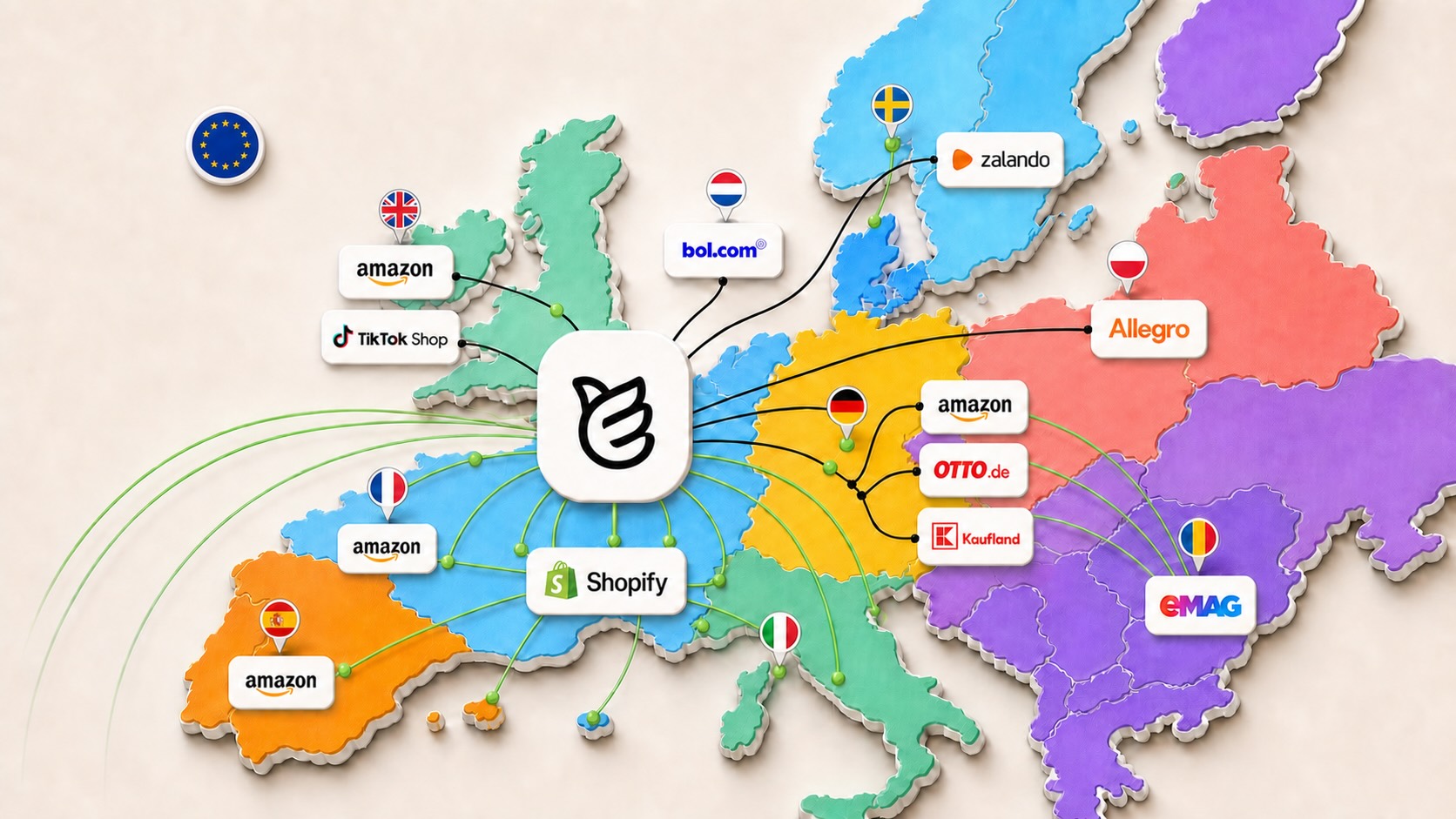
eBrands carries that role for the brands we operate. As Importer of Record in our registered markets, our entities are named on the declaration, our customs brokerage partners file against classifications we maintain per market, and the liability for getting it right sits with the party that also owns the process. Your products keep one owner, one brand, and one set of codes that stay current across every market you sell into. If your catalogue is heading into a new market and nobody can currently say who is accountable for its classification, that is the conversation worth having with our team before the first container ships.
Frequently asked questions
What is the difference between an HS code and an HTS code?
An HS code is the six-digit international classification used by over 200 countries. An HTS code is the ten-digit US extension of it, and the number US Customs assesses duty against. The first six digits of your HTS code are your HS code.
Can I just use the HS code my supplier provides?
Use it as a starting point, not as an answer. Suppliers classify for export from their own country and are not liable for your import declaration. The importer of record carries responsibility for the code, so it needs to be verified against the destination country's schedule.
How many digits does an HS code have?
Six internationally. Countries extend it for their own tariffs: eight digits in the EU's Combined Nomenclature, ten for EU TARIC imports, and ten for US HTS and Schedule B.
How do I know my classification is correct?
Work through the General Rules of Interpretation with the heading text and the section and chapter notes, and document the reasoning. For borderline products, request a binding ruling from CBP in the US or Binding Tariff Information in the EU, both free and valid for years.
When do HS codes change next?
HS 2028 enters into force on 1 January 2028, with 299 sets of amendments and correlation tables already published. National schedules such as the EU Combined Nomenclature and the US HTS also update annually, so an annual review is sensible regardless of the WCO cycle.

“ We are dedicated to assisting you; please contact us for any information or inquiries you may have. ”








.jpg)










.jpeg)