What Is De Minimis? The End of Duty-Free Parcels in the US and EU
For two decades, a quiet rule made direct-to-consumer cross-border ecommerce work. If a parcel was small enough in value, it crossed the border without duty and with minimal paperwork. Entire business models were built on it, from Shein and Temu shipping individual orders out of China to European brands testing the US market from a warehouse in Rotterdam. That rule is now gone in both of the world's largest consumer markets, removed within eleven months of each other, and any margin model still assuming duty-free small parcels is quietly wrong.
The short answer: de minimis is the value threshold below which imported goods enter a country free of customs duty. The US suspended its $800 threshold in 2025, and the EU replaced its €150 duty relief with a flat €3 charge on 1 July 2026.
Key takeaways
- De minimis governs customs duty, not VAT. EU VAT has been due on every import since 2021 regardless of value.
- The US suspended duty-free treatment for China and Hong Kong on 2 May 2025 and for all other countries on 29 August 2025, then made the suspension indefinite in June 2026.
- The EU's €3 charge applies per item category within a parcel, identified by HS code, so mixed baskets cost more than single-product orders.
- The €3 rate is temporary, expected to run until around 2028, after which standard tariffs apply at normal rates.
- The UK is removing its £135 relief, and Mexico, Thailand, Turkey, and Vietnam have already ended theirs.
What is de minimis?
De minimis, from the Latin principle that the law does not concern itself with trifles, is the customs threshold below which imported goods are admitted without duty and with simplified clearance. The reasoning was administrative rather than generous: collecting a few euros of duty on a small parcel cost more in processing than it raised, so countries set a floor and waved everything under it through.
The arithmetic held while cross-border parcels were rare. It stopped holding when they were not. The European Commission reports that small parcel imports into the EU doubled annually from 2022, reaching 4.6 billion packages in 2024, with the large majority arriving from China. At that volume, the exemption stopped being an administrative convenience and became a structural competitive distortion: an EU manufacturer paid duty on its imported components while an offshore seller shipping the finished article direct to the same consumer paid none.
One clarification that saves a lot of confusion. De minimis is about duty. In the EU, the separate VAT exemption for parcels under €22 was abolished back in July 2021, which is when IOSS was introduced. So a European buyer's parcel has been carrying VAT for five years. What changed in 2026 is that it now carries duty as well.
What happened in the United States?
The US removed its $800 exemption in two waves. An executive order effective 2 May 2025 ended duty-free treatment for shipments from China and Hong Kong. A second order effective 29 August 2025 suspended it for every other country of origin. In June 2026, US Customs and Border Protection formalised the position: an interim final rule published in the Federal Register and effective 24 June 2026 imposes an indefinite suspension of the de minimis exemption for merchandise arriving through all modes other than the international postal network, meaning every entry of goods valued at $800 or less must now use formal or informal entry procedures.
The practical consequences for a seller shipping into the US are three. Every commercial shipment needs a correct tariff classification, because duty is now assessed on all of it. Entry paperwork applies to parcels that previously moved on a manifest, which adds brokerage cost per shipment. And the duty rate itself depends on the product's classification and country of origin, in a US tariff environment that has moved repeatedly since 2025, which is why brands shipping there should be checking rates against current schedules rather than a spreadsheet built last year. We covered the wider picture for European sellers in our guide to shipping to the US and the openings it created in the US trade shakeup.

What happened in the European Union?
On 1 July 2026, the EU abolished the €150 customs duty relief. In its place sits a temporary flat charge of €3 on qualifying low-value consignments sold in distance sales to EU consumers, expected to run until around 1 July 2028, when the EU's customs data hub takes over and standard tariff rates apply at full value.
Three details determine what this actually costs you, and they are where most coverage is imprecise:
The €3 is per item category, not per parcel. The charge attaches to each distinct tariff classification in the shipment. A parcel containing a t-shirt and a water bottle carries two charges, because they sit under different HS headings. Multi-item baskets, the thing every brand optimises its AOV to encourage, are now the expensive ones.
Intrinsic value excludes shipping and insurance. A €145 order with €12 delivery is still a low-value consignment for these purposes.
Every parcel needs its own item-level declaration. As Avalara notes, that applies whether or not you use IOSS, and non-IOSS B2C shipments must clear in the destination member state rather than clearing centrally and moving onward, which changes routing and transit times. Carriers have been publishing their own guidance on the operational side; UPS's overview is a reasonable reference point for how the flows are being handled.
Two further changes are worth tracking rather than assuming. An EU handling fee of roughly €2 per parcel has been under discussion and could arrive late in 2026, and new product identifier data requirements are expected from 1 November 2026. Neither is settled enough to build a price list around, but both point the same way.
Where does de minimis stand market by market?
What does it actually cost per parcel?
Take a European brand shipping a €45 two-item order from outside the EU to a customer in Germany, where the two items fall under different tariff headings.
Six euros on a €45 order is roughly 13 points of margin, before the handling fees and the brokerage cost of item-level declarations. On low-AOV catalogues the effect is worse, and for categories with meaningful duty rates the 2028 transition to standard tariffs will be worse again: textiles commonly carry rates around 12%, which on the same order would dwarf the interim €3 lines. Whatever your landed cost model said in 2024, it needs rebuilding.

What should brands do now?
Four moves, in order of how quickly they pay back.
Reclassify your catalogue properly. When duty attached to nothing under the threshold, a sloppy tariff code cost you little. Now the code determines the charge, the number of charges in a parcel, and your exposure when standard rates return. This is also the moment to make sure your commercial invoice data matches what is actually in the box.
Reprice honestly, and decide who pays. Either you absorb the duty, or the customer sees it. Letting a courier collect it at the door is the worst of the three options, because it converts a completed sale into a refused parcel and a support ticket. Shipping DDP puts the charge on you at import, which is cleaner for the customer but means someone still has to be the importer of record in the destination market.
Reconsider the shipping model itself. This is the structural response and it is why the reform matters strategically rather than just financially. Per-parcel cross-border shipping now attracts a per-parcel, per-tariff-line charge and an item-level declaration every time. Importing in bulk to an in-market warehouse turns that into a single customs event on a container, after which every order is a domestic delivery: no duty per parcel, no declaration per order, faster delivery, cheaper returns. The arithmetic that made direct shipping attractive was built on an exemption that no longer exists.
Sort out who carries the import. Bulk import requires an importer of record with establishment in the destination market, along with the VAT registrations and customs infrastructure behind it. That is a different question from which carrier you use, and it is the one that usually decides how fast a brand can actually make the switch.
The bigger picture
Two of the world's largest consumer markets removed duty-free small-parcel treatment inside a year, and several others followed. It is reasonable to read this as a permanent direction rather than a policy cycle: governments want visibility and revenue on parcel flows, domestic retailers want the competitive distortion closed, and both the US entry rules and the EU's 2028 data hub are being built to make full assessment routine rather than exceptional. The frictionless era of direct-to-consumer cross-border shipping is over, and the brands adjusting now are doing it while they still have pricing room, not after a quarter of eroded margin forces the issue.
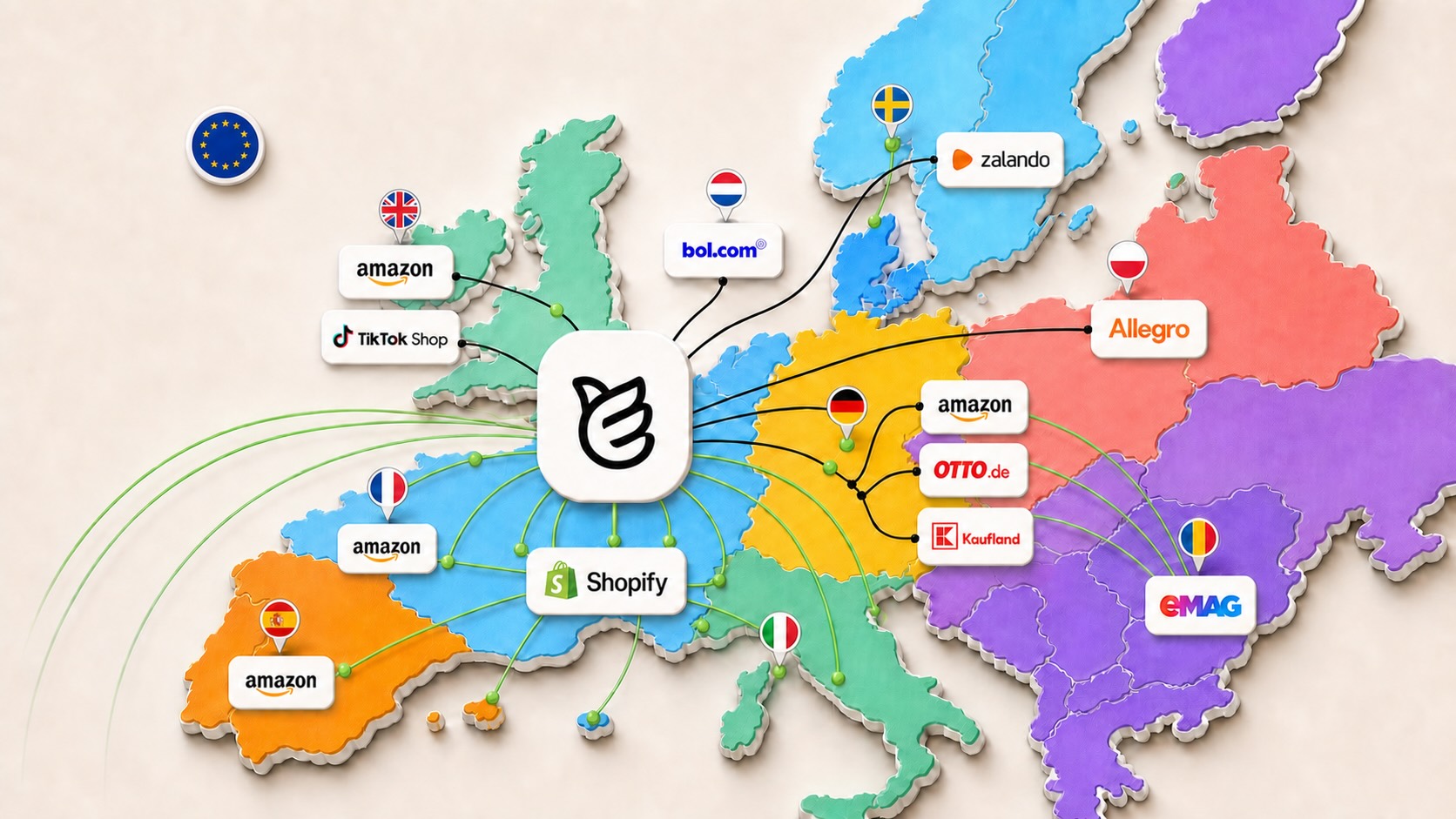
What replaces it is the model brands selling seriously in a market have always used: stock in the market, one import event, domestic fulfilment. eBrands runs that structure for the brands we operate. Our entities act as Importer of Record and Merchant of Record in each market, with the customs registrations, VAT setup, and in-market inventory already in place, while you keep ownership of the brand and the goods. With the rules moving again in 2028, our overview of what is changing in EU market entry covers where this is heading, and if your parcel economics stopped working in July, our team can model what the alternative looks like for your actual order profile.
Frequently asked questions
Is de minimis gone completely?
In the US and EU, effectively yes for duty purposes. The US suspension covers all countries of origin, and the EU replaced its €150 relief with a flat €3 charge on 1 July 2026. The UK is phasing its £135 relief out, and several other countries have already ended theirs.
Does the EU €3 charge apply per parcel or per item?
Per item category, identified by tariff classification. A parcel containing products from two different HS headings attracts two charges, which makes multi-item orders proportionally more expensive.
Does de minimis affect VAT?
No. De minimis governs customs duty. EU VAT has been due on all imports regardless of value since July 2021, which is when IOSS was introduced to collect it at checkout.
Is the €3 duty permanent?
No, it is an interim measure expected to run until around 2028. Once the EU's customs data hub is operational, standard tariff rates are set to apply to low-value consignments, which will cost more than €3 in most dutiable categories.
How can brands avoid per-parcel duty into the EU?
By importing in bulk to an EU warehouse and fulfilling domestically, so customs is cleared once on a consolidated shipment rather than on every order. That requires an importer of record established in the EU, along with the VAT and customs registrations that go with it.

“ We are dedicated to assisting you; please contact us for any information or inquiries you may have. ”








.jpg)









.jpeg)