What Is DDP Shipping? DDP vs DAP for Ecommerce Brands

Three letters on a shipping document decide whether your customer receives a parcel or a bill. Under DDP, everything is settled before the courier knocks. Under DAP, the same parcel arrives with duty and a handling fee owing, and a shopper who thought they had already paid gets asked for more money at their own front door. Roughly the same route, the same carrier, the same box. One line of difference in the terms, and two completely different customer experiences.
The short answer: DDP (Delivered Duty Paid) means the seller pays all import duties and taxes and handles customs clearance. DAP (Delivered at Place) means the seller delivers to the destination but the buyer clears customs and pays the duty.
Key takeaways
- DDP places maximum obligation on the seller; DAP transfers the import step to the buyer.
- The Incoterm decides who acts as importer of record, which is the legal consequence most sellers overlook.
- DDP is the ecommerce default because consumers will not accept surprise charges, and refused parcels cost more than the duty did.
- Choosing DDP does not create the ability to execute it. You need an importer of record established in the destination market.
- Since the EU removed its low-value duty exemption in July 2026, DAP parcels with no arranged importer are more likely to be rejected than simply billed.
What is DDP shipping?
DDP stands for Delivered Duty Paid, one of the eleven Incoterms 2020 rules published by the International Chamber of Commerce. Incoterms are the standard vocabulary of international trade: three-letter codes that allocate cost, risk, and responsibility between seller and buyer at each stage of a shipment, so both sides know exactly where one party's obligation ends and the other's begins.
DDP sits at one extreme of that range. The seller arranges and pays for transport, handles export clearance, handles import clearance in the destination country, pays all duties and import taxes, and carries the risk until the goods are placed at the buyer's disposal ready for unloading. It is the seller's maximum obligation under the Incoterms framework. For the buyer, the price quoted is the price paid, with nothing further owing at the border. Our glossary entry on DDP keeps the compact definition if that is all you need.
What is the difference between DDP and DAP?
DAP, Delivered at Place, covers the same journey right up to the destination. The seller arranges transport, bears the risk in transit, and delivers the goods to the named address ready for unloading. Then it stops. Import clearance, duty, and import VAT belong to the buyer.
One row in that table carries more weight than the rest. As the VAT specialists at SimplyVAT explain, for B2C ecommerce the Incoterm is effectively how you decide who the importer of record will be: ship DAP and the consignee, your customer, becomes the importer of record. That is a real legal role, and most consumers have no idea they have been handed it.

Why does DDP dominate ecommerce?
Consumers do not distinguish between your price and the courier's duty invoice. They remember one number, the one they agreed to at checkout, and anything beyond it registers as a bait and switch by your brand rather than as a customs process working correctly.
The economics reinforce the psychology. A DAP parcel that gets refused at the door does not simply lose the sale: you pay return freight, you may forfeit the outbound cost entirely, the item comes back for reprocessing, and the customer typically requests a refund and does not return. Compared with that, absorbing the duty at import is usually the cheaper of the two outcomes, and it is why landed cost belongs in your pricing model rather than in a footnote.
There is also a marketing claim hidden in the choice. Any storefront promising "no hidden fees" or "duties included" for international customers is describing DDP, whether or not the words appear anywhere in its logistics documentation. The promise is only as good as the arrangement behind it.
When is DAP the better choice?
DAP is not the wrong answer everywhere, and the case for it is stronger than most ecommerce advice admits.
In B2B trade, DAP often wins outright. A commercial buyer who imports regularly has a customs broker, a bond, and their own duty position. Under DAP, they see the exact duty calculation, choose their own broker, apply any preferential programme or exemption they qualify for, and claim drawback on re-exports. Under DDP, all of that visibility disappears into a single seller-set price.
DAP also protects the seller from duty volatility. As Suaid Global points out, tariff rates moved repeatedly through 2025 and 2026, and a DDP quote given in January can be wrong by March. Under DDP the seller absorbs that increase or reopens the price; under DAP the exposure sits with the party best placed to manage it. For high-value shipments from volatile origins, that argument carries real weight.
And in some destinations, non-resident importers face restrictive or bureaucratic rules that make seller-side clearance genuinely painful. Where a local buyer can clear goods easily and you cannot, DAP is the pragmatic choice.
The trap: DDP is a responsibility, not a capability
Here is where sellers get hurt, and it is not a subtle failure. Writing DDP on a commercial invoice commits you to clearing customs and paying duty in the destination country. It does not give you the ability to do either. As Carra Globe puts it, a smooth DDP delivery depends on having the capability behind the term, usually an importer of record. Without one, the shipment stalls at the border under a term that promised the opposite.
To act as importer in most markets you need establishment there, or an arrangement that substitutes for it, plus the registrations that go with it: a customs identity, VAT registration where import VAT is recoverable or payable, and in some markets a bond or guarantee. Two shortcuts fail predictably. Your freight forwarder will not act as your importer of record, because it means absorbing your duty and penalty exposure at logistics margins. And a customs broker files declarations on an importer's behalf rather than becoming one. Some carriers do bundle an importer arrangement into a DDP service, which works at parcel scale, but it is worth knowing whether that is what you have bought rather than assuming it.
This is why shipping DDP does not remove the need for an importer of record. It creates it, and points it at you. Whether that party has to be a local entity depends on the market, and it is the question to settle before quoting DDP, not after a container is held.

What changed in 2026?
The balance between the two terms shifted this year, particularly for anyone shipping into Europe. When the EU removed its €150 low-value duty exemption on 1 July 2026, every low-value parcel gained a duty charge and an item-level declaration requirement. Under the old regime, a DAP parcel below the threshold cleared without duty, so the choice of term was largely invisible to the customer. Now every parcel needs a designated party to handle duty and clearance, and a DAP parcel arriving without one is more likely to be rejected and returned than simply billed.
The US moved in the same direction earlier, suspending its $800 de minimis exemption across all origins in 2025 and making the suspension indefinite for non-postal modes in June 2026. Both markets now pull essentially every commercial parcel into a formal customs process, which means the Incoterm you ship under has consequences on every order rather than only on the large ones.
The practical read: DDP executed through a proper importer of record is becoming the safer default for cross-border consumer sellers, and DAP is increasingly a B2B term or a deliberate choice for buyers who can clear goods themselves. Your commercial invoice should state the term explicitly on every shipment, because a blank Incoterm field is how carriers end up guessing on your behalf.
How to choose, and what it takes to run DDP properly
Selling to consumers cross-border, ship DDP. The customer experience argument is decisive and the refused-parcel economics back it up. Selling B2B to buyers who import regularly, DAP is often better for both sides. Sending inventory to your own or a partner's warehouse abroad, you are the importer either way and the term is mostly a formality between you and your freight provider. Facing volatile duty rates on high-value goods, DAP moves that risk off your balance sheet, provided your buyer accepts it.
Running DDP well takes four things: an importer of record with standing in the destination market, accurate tariff classification so the duty you quote is the duty you owe, VAT registrations where import VAT arises, and a landed cost model that survives contact with the actual invoice. Brands often start by buying a carrier's DDP service, which works while volumes are small, then find the per-parcel economics deteriorating as they grow, especially now that duty attaches to low-value shipments.
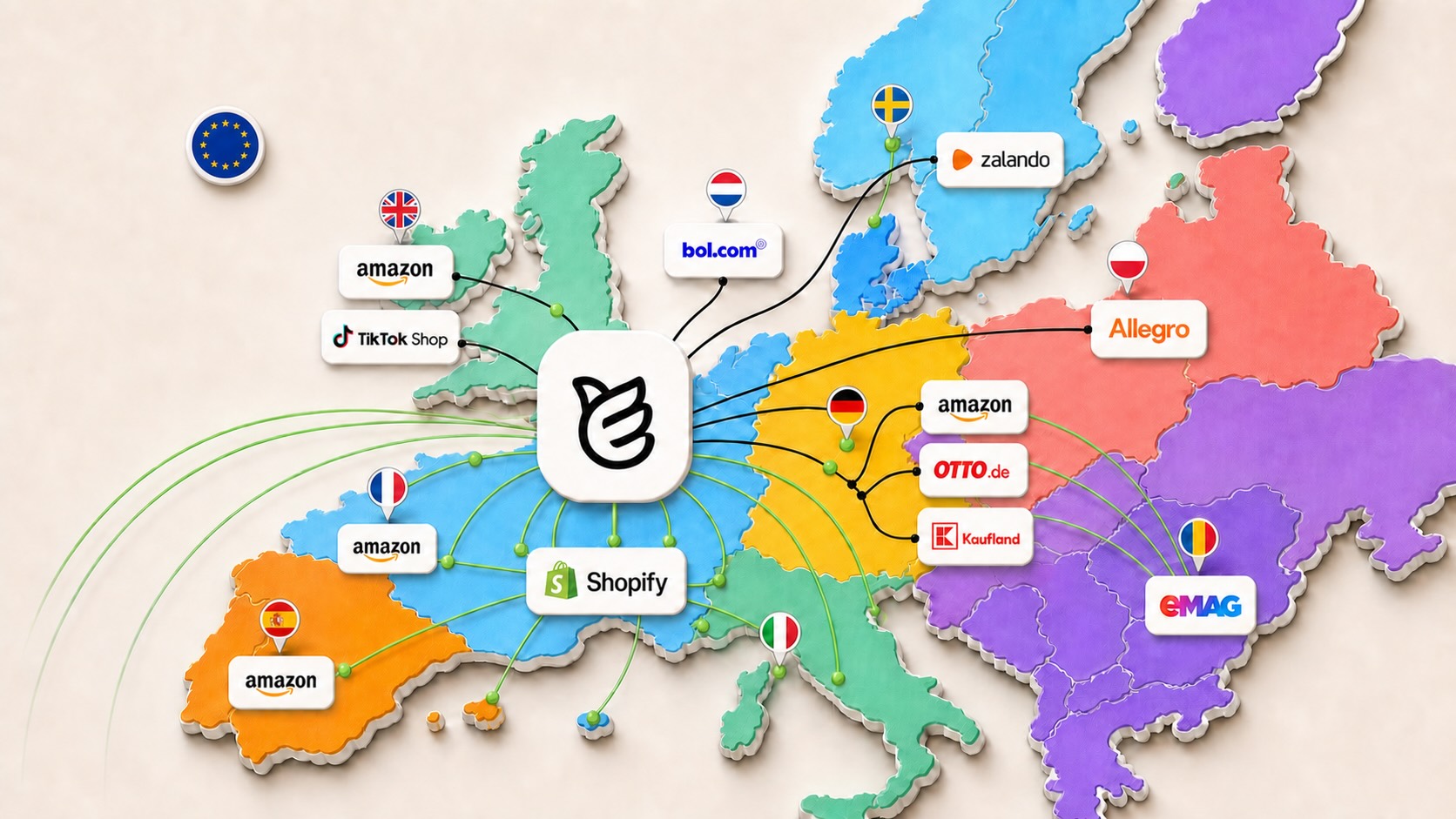
At that point the structural answer usually beats the per-parcel one: import in bulk to an in-market warehouse, clear customs once on a consolidated shipment, and fulfil domestically, where no Incoterm question arises on the final delivery at all. That requires exactly what DDP requires, an established importer, which is the role eBrands takes for the brands we operate. Our entities act as Importer of Record in each registered market, with the customs and VAT infrastructure already in place, while you keep ownership of the brand and the goods. If you are quoting DDP today without being certain who is actually carrying the import, that is worth a conversation with our team before it becomes a held shipment.
Frequently asked questions
What does DDP mean in shipping?
Delivered Duty Paid. The seller arranges transport, clears both export and import customs, and pays all duties and import taxes, delivering the goods to the buyer with nothing left to pay.
Who pays customs duty under DAP?
The buyer. Under DAP the seller delivers to the named destination, but import clearance, duty, and import VAT are the buyer's responsibility, which in consumer sales means the courier bills your customer.
Is DDP more expensive than DAP?
The total cost of moving the goods is similar; what differs is who pays and what is visible. DDP concentrates everything in the seller's price, which usually means a higher headline figure and a cleaner customer experience.
Do I need an importer of record to ship DDP?
Yes. DDP makes the seller responsible for import clearance, and someone with standing in the destination market has to carry that role, whether that is your own entity, a carrier's bundled arrangement, or a partner acting as importer of record.
Should ecommerce brands use DDP or DAP?
DDP for consumer sales, because shoppers reject surprise charges and refused parcels cost more than the duty. DAP is often better for B2B buyers who import regularly and want control of clearance and duty.

“ We are dedicated to assisting you; please contact us for any information or inquiries you may have. ”








.jpg)










.jpeg)