Amazon Vendor Central vs Seller Central: Which Model Wins in 2026?

For years, an invitation to Amazon Vendor Central was treated as a graduation. Amazon buys your stock wholesale, handles the retail side, and you ship pallets instead of parcels. In 2026 that logic has flipped. Amazon has been terminating vendor agreements in waves since late 2024, mostly for brands under $5 to 10 million in annual sales, and the latest round of notices carries an effective date of August 2, 2026. Thousands of brands are now being pushed into the exact decision this article covers, some by choice and some by a termination letter. Getting it right decides who controls your pricing, who owns your customer data, and whether your Amazon margin lands at 10% or 20%.
The short answer: Seller Central (3P) wins for most brands in 2026. It offers price control, better margins at typical volumes, and no risk of Amazon ending the relationship with a form letter. Vendor Central (1P) still makes sense for a narrow group: very large brands with wholesale-scale logistics, heavy or bulky products, and categories where Amazon's retail placement matters. Many established brands run both. Here is how to work out where you fall.
Key takeaways
- Vendor Central is invite-only wholesale: Amazon is your customer and sets the retail price. Seller Central is open to anyone: you sell to consumers and keep pricing control.
- Amazon has cut vendors below roughly $5–10M in annual sales since late 2024, with the newest terminations effective August 2, 2026.
- Third-party sellers moved 60% of Amazon's paid units in Q1 2026, and seller services brought Amazon $172.2 billion in 2025.
- A 1P-to-3P transition typically means a 15–25% revenue dip for 60 to 90 days while rankings rebuild, with margins flat or better from day one.
- The hybrid model, high-volume hero SKUs on 1P and everything else on 3P, remains the strongest setup for large brands that still hold a vendor account.
What is the difference between Vendor Central and Seller Central?
The difference comes down to who owns the inventory and the transaction. On Vendor Central, Amazon is your customer. It sends purchase orders, buys your products at a negotiated wholesale price, and retails them itself under "Ships from and sold by Amazon." On Seller Central, the shopper is your customer. You list, price, and sell directly, with Amazon taking a referral fee and, if you use FBA, a fulfillment fee per unit.
Everything else flows from that split:

Why is Amazon pushing brands from Vendor Central to Seller Central?
Follow the money. Amazon earned $172.2 billion from third-party seller services in 2025, up 11% year over year, and another $68.6 billion from advertising, most of it bought by those same sellers. On a 3P sale, Amazon collects referral fees, fulfillment fees, storage fees, and ad spend while carrying zero inventory risk. On a 1P sale, Amazon ties up capital in stock and hopes the retail math works. It is not hard to see which model a platform operator prefers.
The vendor purge is the visible edge of that shift. Since late 2024, Amazon has sent termination letters to vendors below roughly $5 to 10 million in annual sales, and the notices have kept coming in waves, the most recent with an August 2, 2026 effective date. Remaining vendors face tougher terms each annual negotiation: tighter chargeback enforcement, an expanded CRaP list ("Can't Realize a Profit," the internal flag for items Amazon loses money retailing), and mandatory ASN v2 labeling with automated compliance audits. The program is shrinking while its compliance burden grows. We covered the strategic background in our guide to the end of Amazon's vendor model, and a year on, every trend in that piece has accelerated.
[QUOTE PLACEHOLDER: add one or two first-hand sentences from an eBrands Amazon team member here, e.g. what you saw across partner accounts when the 2024–2026 termination waves hit and what separated smooth transitions from painful ones. A named internal quote makes this section impossible for competitors to copy.]
One nuance most coverage misses: the marketplace's share of units actually slipped recently. Marketplace Pulse reported that third-party sellers accounted for 60% of paid units in Q1 2026, down from 61% in Q4 2025 and the 62% all-time peak, the first back-to-back decline since Amazon began reporting the figure in 2004. Before anyone reads that as a 1P comeback, the driver was groceries: Amazon's perishables business grew 40x year over year, and milk and bananas are first-party by nature. For brands in normal categories, the direction of travel has not changed.
What does each model actually cost?
Vendor Central's costs hide in the contract. You sell at wholesale, then Amazon deducts co-op marketing allowances that have historically run 3 to 7% of invoice value, damage allowances, freight allowances, and chargebacks for any routing or labeling miss. Stack those deductions and many vendors discover their effective margin is thinner than the wholesale price suggested. You also fund any price war Amazon starts, because when Amazon discounts your product to match a competitor, the next PO negotiation claws that money back from you.
Seller Central's costs are more visible and more controllable. The referral fee averages around 15% depending on category (see Amazon's official fee schedule), FBA fulfillment runs a few dollars per standard unit and rose by an average of $0.08 per unit on January 15, 2026, and storage, inbound placement, and low-inventory surcharges apply depending on how you manage stock. Benchmarks across the seller base put the total Amazon take at 30 to 35% of revenue for a typical FBA seller, with net margins of 15 to 20% for well-run accounts. That is before advertising, which is its own discipline; our FAQ on marketplace advertising budgets covers sensible starting points.
The honest comparison: 1P trades margin for simplicity, 3P trades operational work for margin. A brand doing $3 million a year at a 14% net on Vendor Central will usually model out to a higher net on Seller Central, but only if it can run fulfillment, pricing, and ads competently or has a partner who does. Whether each SKU belongs in FBA or your own logistics is a case-by-case call; here is how we decide FBA versus FBM per SKU.
Which model gives you more control?
Control is the strongest argument for Seller Central, and it shows up in three places. Pricing: on 3P you set the price and can hold MAP; on 1P Amazon prices dynamically and will happily break your MAP policy to match an outside retailer, which then wrecks your pricing everywhere else you sell. Availability: on 1P Amazon decides what to order, and a CRaP-flagged product simply stops getting POs; on 3P you decide what stays in stock. Data: 3P brands see order-level sales, traffic, and conversion data plus Brand Analytics; 1P vendors see aggregated retail dashboards and never touch the customer.
Vendor Central concedes all of that in exchange for two real advantages. The "sold by Amazon" label still converts slightly better in some categories because shoppers trust it, and Amazon's retail team handles returns, customer service, and logistics at a scale most brands cannot match on their own. For a brand shipping heavy furniture or running a 5,000-SKU catalog, that operational relief has genuine value.

When does Vendor Central still win in 2026?
Despite the contraction, 1P is the better answer in a few situations. Brands doing well above $10 million a year on Amazon in categories Amazon cares about retailing, since the purge has targeted smaller vendors, not anchor brands. Products that are heavy, bulky, or low-priced, where FBA fees would eat the entire 3P margin advantage. Brands with wholesale DNA and no appetite to build ecommerce operations. And businesses that value predictable PO revenue over per-unit margin, at least while the POs keep coming.
Even then, running 1P alone is the risky version. The pattern among large brands in 2026 is hybrid: keep hero SKUs with strong PO velocity on Vendor Central, launch everything new on Seller Central, and hold a warmed-up 3P account as insurance. If Amazon halts POs, and it can do so without warning, your products stay in stock and your rankings survive. Nearly half of 1P vendors already route part of their catalog through 3P for exactly this reason. If you are weighing this from a live vendor account, our FAQ answers the direct question: is Vendor Central still worth it, or should you stick with Seller Central.
How do you transition from Vendor Central to Seller Central?
Whether you received a termination letter or are moving by choice, the sequence matters more than the speed:
- Open the Seller Central account before you need it. Registration, brand approval, and bank verification take days to weeks. Brands that wait for the termination deadline start with zero seller history at the worst possible moment.
- Enroll in Brand Registry. As a vendor, Amazon controlled your listings. As a seller, Brand Registry gives you back listing control, A+ content, and the tools to remove hijackers.
- Claim your existing ASINs, never relist from scratch. Your reviews, ranking history, and best-seller badges live on the ASIN. Take ownership of the current listings so nothing resets. That accumulated history is exactly what powered results like our Best Seller badge case study.
- Position FBA inventory before your last POs run dry. Time inbound shipments so 3P stock goes live as 1P availability winds down. A gap in availability costs rank that takes months to rebuild.
- Reset your pricing and margin model. Wholesale-minus-allowances becomes retail-minus-fees. Reprice deliberately rather than inheriting Amazon's last retail price.
- Rebuild advertising under your own account. Vendor campaigns do not carry over. Expect to re-earn placements for 60 to 90 days.
Plan for two to three months to reach full operating capacity, and budget for a temporary 15 to 25% revenue dip in the first 60 to 90 days while the buy box and organic rankings adjust. The consolation is real: profit per unit typically holds or improves immediately, because the 3P margin structure is better even at lower volume.
So which model wins in 2026?
Seller Central, for most brands, most of the time. The numbers behind Amazon's own behavior say the same thing: the company makes a quarter of its revenue from seller fees, keeps raising them, and keeps trimming the vendor program. Betting your Amazon business on a wholesale relationship Amazon is actively shrinking is a strategy with a countdown attached. 1P earns its place only at large scale, in logistics-heavy categories, or as half of a deliberate hybrid.
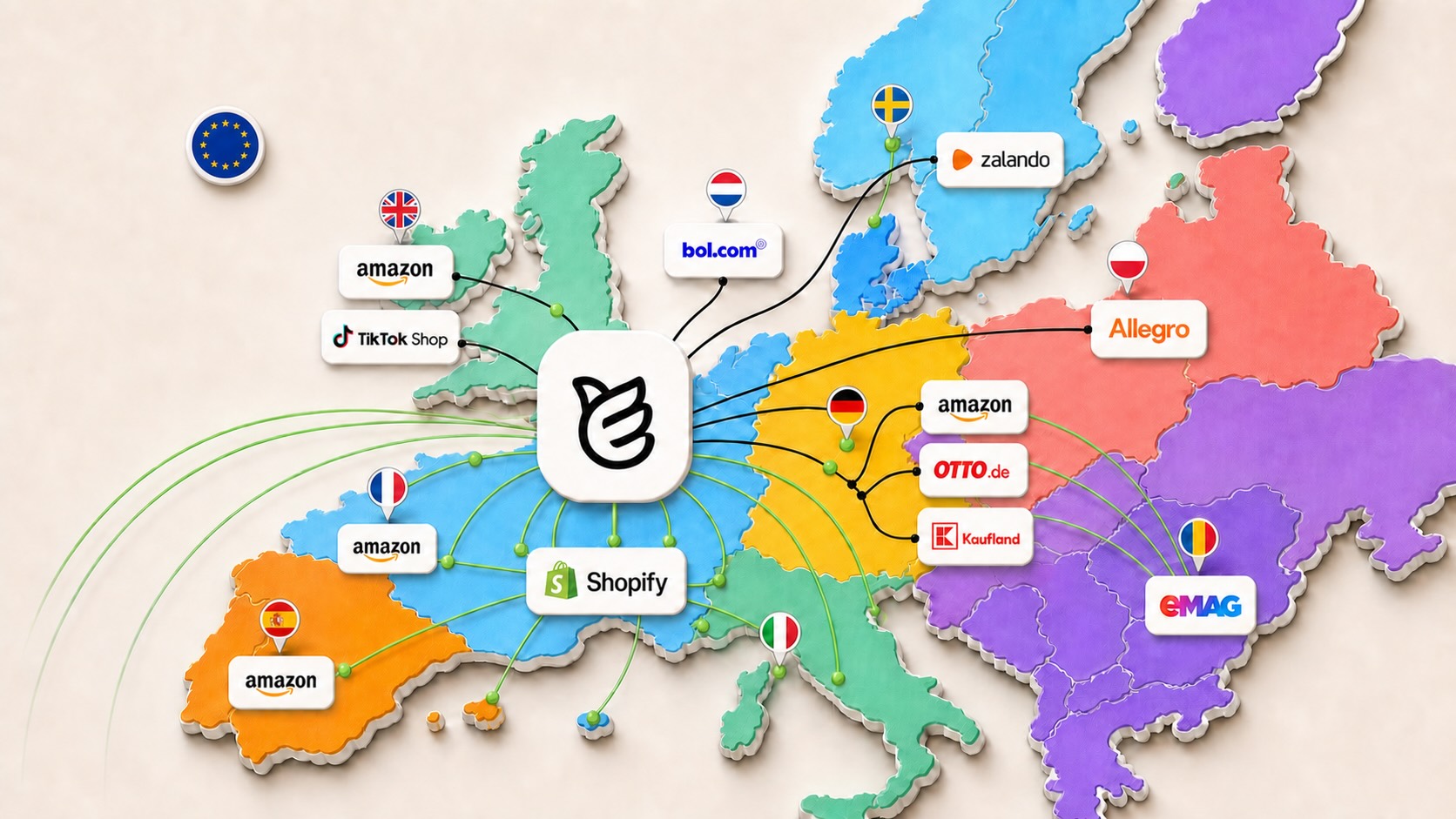
The harder truth is that "winning" on 3P is an operations game: fulfillment decisions, pricing discipline, advertising, and account health, multiplied across every marketplace you sell in. That is the part brands underestimate, and it is the part a partner can carry. eBrands runs Amazon as a managed channel across North America and Europe, from vendor-to-seller transitions to day-to-day growth, as the Merchant of Record in each market while you keep full ownership of your brand and inventory. If you are staring at a termination letter or just tired of watching allowances eat your wholesale margin, talk to our team about what the move would look like for your catalog, on Amazon and every channel beyond it.
Frequently asked questions
Can I use both Vendor Central and Seller Central at the same time?
Yes. Many large brands run a hybrid: high-volume SKUs on 1P for PO revenue, new and niche products on 3P for margin and control. It also works as insurance if Amazon stops ordering.
Why did Amazon terminate my Vendor Central account?
Since late 2024, Amazon has been cutting vendors below roughly $5–10 million in annual sales to concentrate its retail business on the largest brands. The letters cite "strategic realignment"; the practical meaning is that Amazon wants you selling 3P.
Will I lose my reviews if I move from 1P to 3P?
No. Reviews and sales history belong to the ASIN, not the account. Claim your existing listings through Brand Registry instead of creating new ones and everything carries over.
Is Vendor Central more profitable than Seller Central?
Rarely, at typical volumes. After co-op allowances, chargebacks, and freight deductions, most sub-$10M vendors net less on 1P than they would paying the ~15% referral fee and FBA costs on 3P. Very large or logistics-heavy brands can be the exception.
How long does a Vendor-to-Seller transition take?
Two to three months to full capacity. Expect a 15–25% revenue dip for the first 60 to 90 days while rankings and buy box share rebuild, with per-unit profit flat or better from the start.

“ We are dedicated to assisting you; please contact us for any information or inquiries you may have. ”








%2520-%2520Copy.jpeg)
_Nick_Fancher_Photos_ID6071.jpeg)
.jpeg)