How North American Brands Sell in Europe and the UK Without Distributors or Legal Entities
Europe and the UK are a consumer market of over 500 million people, and most North American brands still can't sell there properly. Not because demand is missing — the emails asking "when can I buy this here?" are already in the inbox — but because every obvious route in is bad. Set up a legal entity and wait a year. Hand the keys to a distributor and lose the brand. Ship cross-border from a US warehouse and watch carts get abandoned over duties and two-week delivery.
There is a fourth route. A commerce operator that acts as your merchant of record and importer of record in Europe and the UK gives you sales channels, VAT and compliance infrastructure, in-market fulfillment, and customer service in one partnership. You keep the brand, the IP, and the pricing. You can be selling in weeks instead of building for years. That's the model we run at eBrands, for our own brands and for North American partner brands.
The short version
- Cross-border shipping from North America rarely wins European customers. Converting at scale needs goods in market — which needs VAT registrations, an importer of record, and local compliance. Since Brexit, that means separate setups on both sides of the EU-UK customs border.
- Traditional distributors solve the logistics problem but take your brand, your customer data, and your pricing control with it.
- Building your own EU/UK infrastructure (entities, VAT registrations, warehousing, marketplace accounts, ERP) typically takes 12 to 24 months before the first proper sale.
- The partner model flips the sequence: sell first through infrastructure that already exists, learn what works, and decide on deeper investment from revenue data instead of projections.
- Commercially it runs on a commission of sales, with operational costs passed through transparently at cost. Costs you would carry anyway, without building the machine yourself.
What are the routes into the EU and UK market?
Why doesn't cross-border shipping win European customers?
Plenty of brands "test Europe" by switching on international shipping from their US store. The test almost always fails, and the brands conclude Europe doesn't work for them. What actually failed is the delivery model.
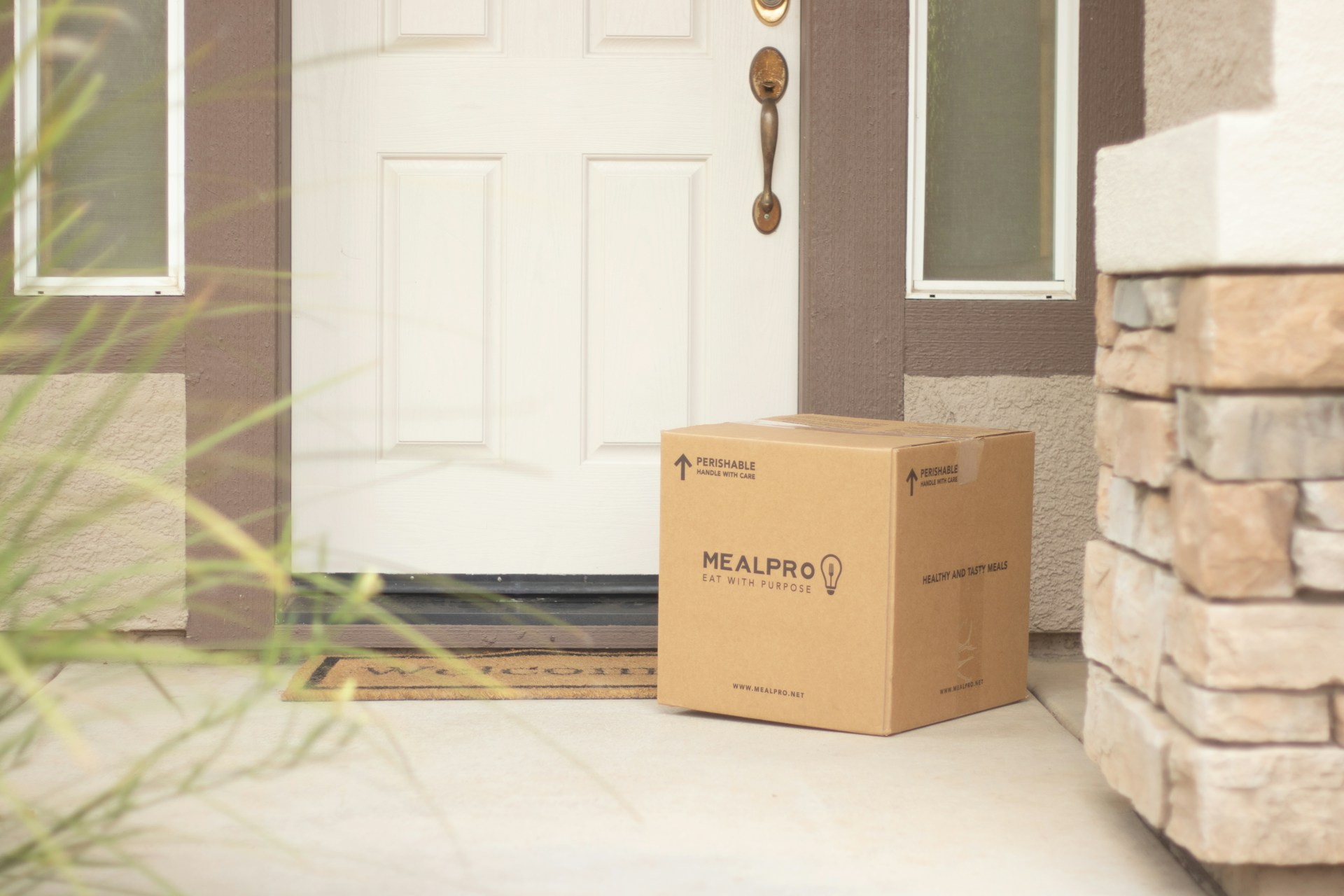
A European shopper who orders from a US site waits one to two weeks, often gets a customs invoice at the door for import VAT and duties they didn't expect, and has no realistic way to return the product. Local competitors deliver tomorrow, returns included. Add that many European shoppers pay with local methods rather than credit cards, and expect prices in euros or pounds with VAT included, and the picture is clear: hearts and minds in Europe are won with local delivery, local pricing, and local trust signals.
That means stock physically in the market. And the moment your goods are in an EU or UK warehouse, you need an importer of record, VAT registrations, EPR registrations, a responsible person for regulated categories, and compliant labeling. That wall is what stops most brands, and it has nothing to do with demand.
Brexit made the wall taller. The UK and the EU are now separate customs territories, so a warehouse in the Netherlands doesn't serve London much better than one in New Jersey does. Covering both markets properly means stock on both sides of the border, and ideally positioned close to your end customers rather than sitting in one EU location.
Every additional warehouse is its own setup: registrations, inventory commitment, minimum volumes. The economics only close with real volume behind them, which is exactly what a brand entering the market doesn't have yet. Shared infrastructure, where that volume already exists across many brands, is how the math works from day one.
Why do distributors keep letting brands down?
The distributor model is a hundred years old and its incentives haven't changed. A distributor buys your product and owns the relationship with the market. Your brand becomes a line in their catalog, prioritized when it's easy money and dropped when it isn't.
You don't see the sell-through data, you don't own the customer, you can't control how the product is presented or priced, and when the distributor loses interest your European presence disappears overnight. Many brands cycle through two or three distributors before concluding that nobody will build their brand in Europe for them.
That conclusion is right, and the answer isn't a better distributor. It's keeping brand ownership and management in your own hands while renting the operational backbone underneath. That backbone already exists: eBrands runs it today, across every major sales channel in Europe and the UK.
Sell in Europe and the UK without setting up a single entity
eBrands acts as your Merchant of Record — VAT, compliance, payments, and filings handled across every market, while you keep your brand, pricing, and customers.
See how the Merchant of Record model works →
What does the partner model actually include?
eBrands is that backbone: the infrastructure layer a brand plugs into instead of building its own. We own and operate our own consumer brands on exactly the same platform, which means every part of it is tested on our own money first. Many partner brands already run on it, and it ships millions of orders a year across Europe, the UK, and North America.
Plugging in gets you:
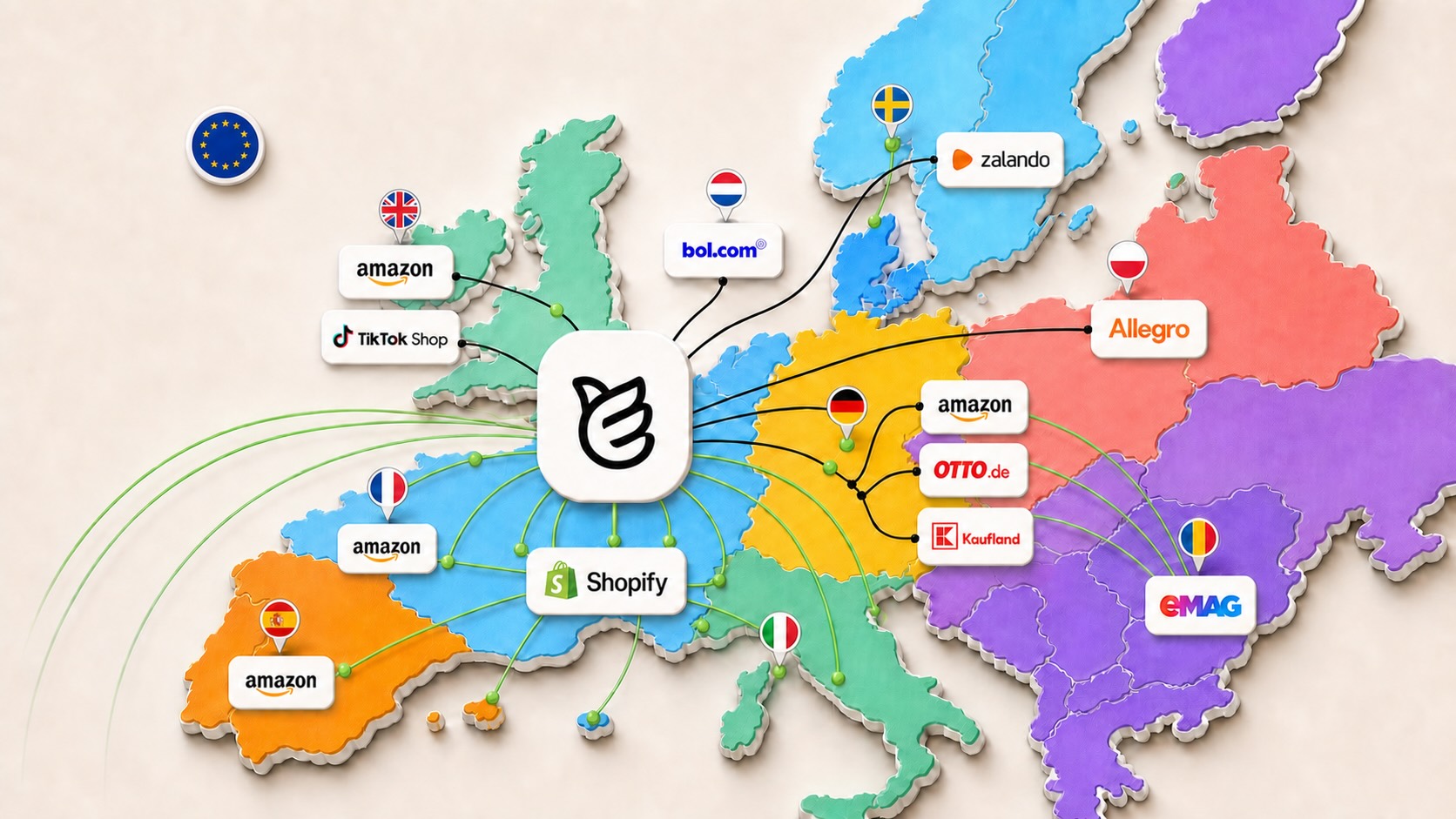
- Sales channels, live from day one. Amazon across European marketplaces, bol.com, other major European marketplaces, your own localized Shopify storefront, Shopify POS, and retail distribution. One inventory pool serving all of them.
- Compliance infrastructure for most consumer goods categories, including regulated ones like medical devices: CE, labeling, EPR, and responsible-person requirements handled inside the platform.
- Legal and financial infrastructure. eBrands acts as merchant of record and importer of record, with the ERP, VAT registrations, and filings that come with it. You don't set up an entity, you don't register for VAT in seven countries, you don't reconcile marketplace payouts across currencies.
- Logistics proven for multichannel. Warehousing on both sides of the EU-UK customs border, positioned close to end customers, with fast fulfillment for D2C, retail replenishment, and feeding marketplace fulfillment programs where those models perform better.
- Customer service in-market, in the tone your brand sets.
- Software that shows you everything. Apollo, our commerce platform, puts multichannel sales, costs, and profitability per channel and per market in one view, so you can manage Europe with the same visibility you have at home.
What does it cost, and what do you keep?
The commercial model is deliberately simple: a commission on sales, plus operational costs (fulfillment, advertising, marketplace fees) passed through transparently at cost, with no markup. Those are costs you would carry in any model. What you avoid is the fixed cost of building and staffing the infrastructure around them.
You keep brand ownership, IP, product decisions, and pricing strategy. You manage the brand; the partner runs the machine. Think of it as export as a service.
It's also a bridge, not a cage. Use the infrastructure to win customers and prove the market, and if your European volumes later justify building your own operation, you make that call on real revenue data instead of projections. The customers you won stay yours.
Who is this for?
The model fits US and Canadian consumer brands doing meaningful domestic revenue, seeing organic European demand, and unwilling to spend two years and mid-six figures finding out whether Europe works. It's built for brand owners who want to run their international expansion themselves rather than outsource it to a distributor's priorities, but who have no interest in operating warehouses and VAT filings.
If that sounds like your situation, use the form on this page. Tell us your category, your current channels, and the markets you want. We'll come back with a straight answer on what a realistic first year in Europe looks like, and whether the model fits you at all.

“ We are dedicated to assisting you; please contact us for any information or inquiries you may have. ”