Beyond Amazon in Europe: How to Sell on bol.com, Cdiscount, Kaufland, Allegro and Otto
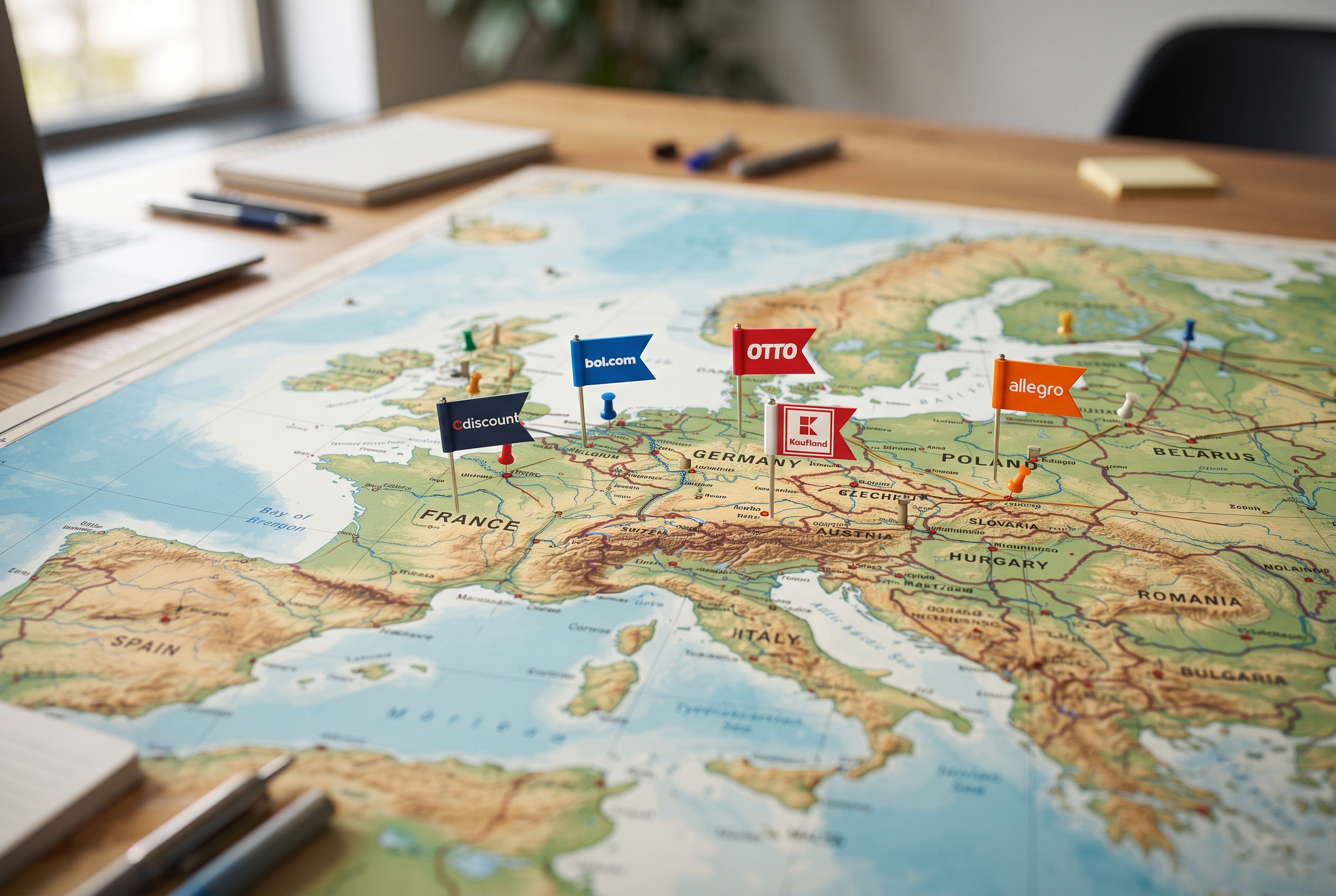
Europe is not one ecommerce market with one dominant platform. It is a collection of national markets, several of which have a local champion that outsells Amazon on its own ground. Allegro holds the larger share in Poland. bol.com is where Dutch and Belgian shoppers start. Cdiscount has a position in France that no non-French platform has replicated. For a brand treating Amazon as the whole of European retail, that is a lot of demand sitting outside the plan.
The short answer: bol.com covers the Netherlands and Belgium, Cdiscount covers France, Kaufland covers seven Central European countries, Allegro leads Poland and neighbouring markets, and Otto is Germany's second marketplace. Each needs its own integration, content and fulfilment setup.
Key takeaways
- Commission ranges sit broadly between 5% and 20% depending on marketplace and category, which is comparable to Amazon rather than dramatically cheaper.
- What differs is competition density, and on most of these platforms it is a fraction of Amazon's.
- Fee comparisons mislead unless you check what the percentage is charged on, since some include shipping and VAT.
- Local language content is a requirement rather than a nice-to-have on all five.
- The real cost of a new marketplace is operational, not the commission rate.
The five, and who they are for
bol.com serves the Netherlands and Belgium with a broad general catalogue and a reputation for reliable service that makes Dutch shoppers default to it. No monthly seller fee, commission varying widely by category from the low single digits in some electronics up to around 20% in jewellery and watches, plus a small fixed fee per item. Benelux is a wealthy, high-adoption market that brands routinely skip because it is small on a population map.
Cdiscount is France, operated by Octopia, and it is the hardest of the five on content. Everything runs in French, titles are tightly capped, and the catalogue model means several sellers contribute to shared product sheets rather than owning their own. French consumers use it heavily for electronics, home and larger goods.
Kaufland gives the widest geographic spread for a single setup, covering Germany, Austria, Czechia, Slovakia, Poland, Italy and France from one account. Commission typically runs around 7% to 16% by category with a monthly subscription of roughly €40 to €60. The detail that matters: on Kaufland the percentage is calculated on the gross price including shipping and VAT, which makes a headline rate look better than it behaves.
Allegro is the largest marketplace in Poland by a distance, with Czech, Slovak and Hungarian storefronts built out from it. Commission runs from very low single digits to around 17% depending on category, charged on the price including delivery, with optional subscriptions and its own fulfilment service. Poland is the one market on this list where Amazon is clearly the challenger rather than the incumbent.
Otto is Germany's second marketplace and the most selective of the five. It carries a monthly base fee near €100 and tiered category commissions that can reach into the twenties, and it curates which brands it admits. In return you reach a German audience that skews older, more affluent and considerably more brand-loyal than the Amazon average.
How the fees actually compare
Published comparisons disagree with each other, and the reason is worth understanding before you use any of them.
Average commissions across European marketplaces cluster in a fairly narrow band. Koongo's 2026 comparison puts Amazon near 15.5%, bol.com around 12%, Kaufland around 11%, Allegro around 14.5% and Zalando near 19%. Those are averages across categories, and your own category can sit far from the average in either direction.
The bigger issue is the basis. As Commercraft points out from official price lists, Kaufland charges on the gross price including shipping and VAT, Allegro charges on the price including delivery with the rate itself quoted net, and others charge on the product price alone. A 12% rate on a gross figure and a 14% rate on a net figure can leave you with the same money, so comparing headline percentages across platforms is close to meaningless without normalising them.
Fixed and subscription costs change the picture again for smaller sellers. bol.com has no monthly fee but a per-item fixed charge. Otto's base fee sits near €100 a month before a single sale. Kaufland's subscription is modest and covers all its markets at once, which is why per-platform breakdowns tend to favour it for multi-country reach.
The honest summary is that none of these platforms is dramatically cheaper than Amazon on fees. What they offer is a different competitive environment, and that is where the actual margin difference comes from.
Why the competition density matters more than the rate
On Amazon you compete with millions of sellers, many of them bidding on the same keywords and racing each other down on price. On most of these platforms you compete with a fraction of that.
Practically, that shows up in three places. Advertising costs less per click because fewer sellers are bidding. Organic positions are reachable without an advertising budget that dwarfs the margin. And price pressure is lower, so a product that cannot survive the Amazon race can be perfectly healthy on Allegro or Kaufland at a price the market accepts.
It also shows up in the kind of brand that wins. These marketplaces reward complete, well-localised listings and reliable fulfilment more than they reward aggressive bidding, which suits a brand with a good product and a modest budget considerably better than Amazon does.
What entry actually requires
This is where the commission conversation stops being the interesting one.
Local language content, properly done. Not machine translation. Dutch buyers on bol.com and French buyers on Cdiscount notice immediately, and on some platforms non-local content is simply rejected. Every marketplace also has its own field structure, character limits and attribute requirements, so localisation is a per-platform job rather than one translation reused five times. Our FAQ on optimising listings across marketplaces covers how much these differ.
A separate integration each. Different APIs, different data models, different quirks. Bol has no customer-messaging API, so service runs through the portal. Allegro uses a device-flow authorisation with rotating tokens. Cdiscount's shared catalogue model means your content merges with other contributors' rather than standing alone. None of this is difficult in isolation, and all of it is work.
Fulfilment that reaches the market at local speed. Shipping from one European warehouse to all five markets is possible and often slow enough to hurt conversion. Each platform has its own fulfilment programme or approved carrier expectations.
Tax and compliance per country. Holding stock in a country creates a VAT registration obligation there. Selling into it brings packaging EPR, product compliance and the rest of the European stack with it.
Customer service in the local language, inside each platform's response-time rules, with account health consequences for missing them.
How to choose the order
The mistake brands make is opening several at once and running all of them badly. Marketplaces reward consistency, and a half-maintained listing performs worse than no listing while still consuming attention.
A workable sequence starts with the market where you already have evidence of demand. Existing D2C orders from the Netherlands point at bol.com. Organic traffic from Poland points at Allegro. That is a better signal than market size.
Then weigh breadth against depth. Kaufland opens seven countries from one integration, which is efficient if your category travels well across Central Europe. Allegro opens one dominant market deeply, which is better if Poland alone justifies the work. Otto is worth the base fee when your brand positioning fits a curated German audience and not before.
Make the second channel pay for the third. The product data, localisation workflow, compliance registrations and fulfilment network you build for one marketplace carry over, so the cost curve falls as you add channels. That is the real argument for going beyond Amazon rather than deepening on it, and it is the same logic we set out in which marketplaces to prioritise when entering Europe.
And keep pricing coherent across all of them. Shoppers compare, marketplaces monitor, and a price that varies without reason undermines you on every channel at once, as does running multiple marketplaces without a single source of inventory truth.
The case for not doing this alone
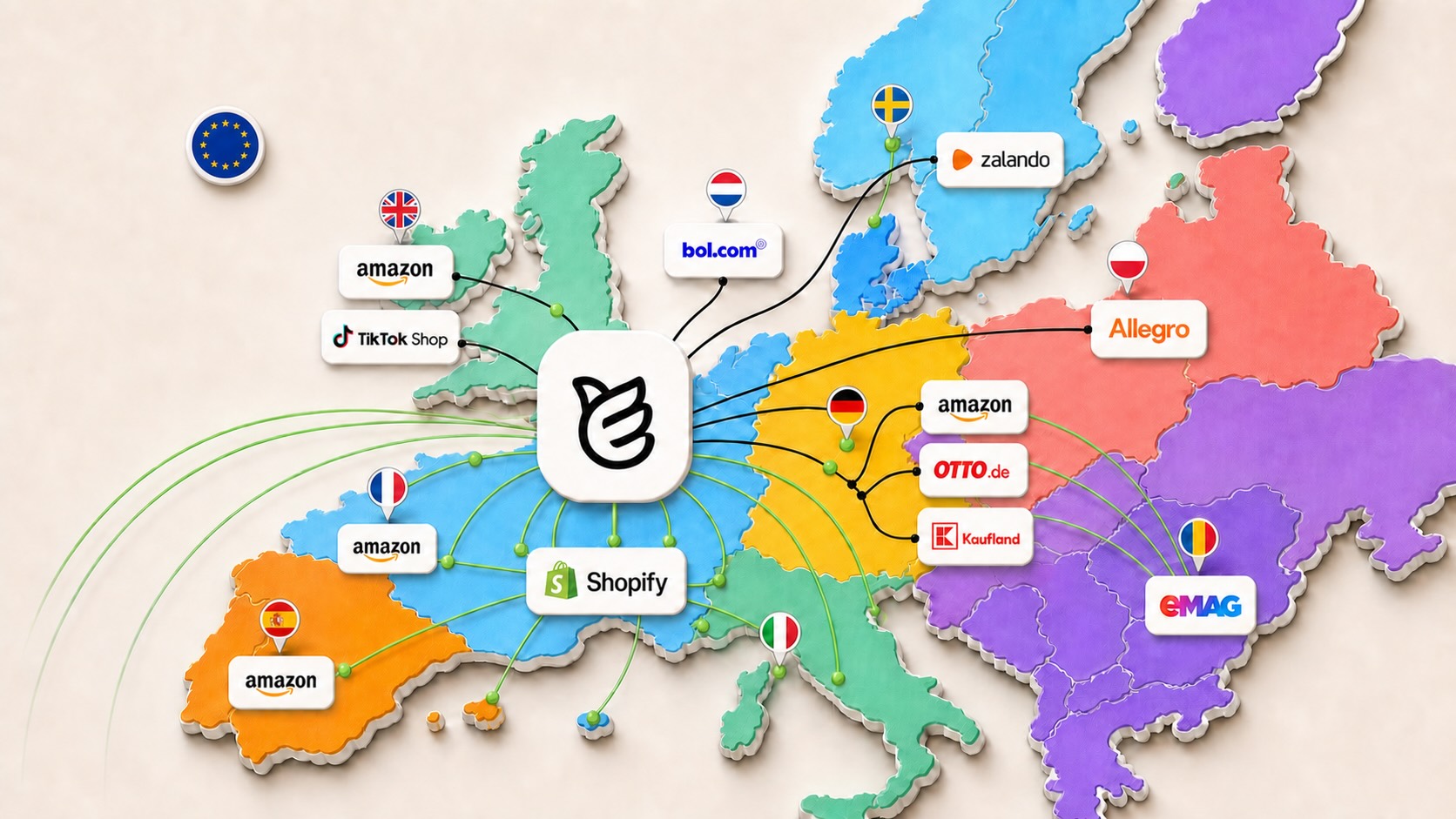
Five marketplaces means five integrations, five content sets, five sets of account health rules, VAT registrations wherever stock sits, EPR registrations per country, and a customer service operation covering Dutch, French, German, Polish and more. Any one of those is manageable. Together they are a function, not a project, and that is the point at which most brands stall.
eBrands runs these channels as managed operations. We hold the seller accounts, act as Merchant of Record and Importer of Record so the tax and compliance obligations sit with established European entities, produce the local-language content, and run listings, pricing, stock and customer service day to day across the marketplaces we operate. The brand, the pricing decisions and the inventory stay yours, and the second channel costs a fraction of the first because the infrastructure is already there.
If Europe beyond Amazon has been on your list and the operational weight is what has stopped you, that is the part we take on, and our team is happy to look at which of these five fit your products.
Frequently asked questions
Which European marketplace is the cheapest to sell on?
Commission ranges overlap heavily, so the answer depends on your category and price point rather than on the platform. Comparisons also mislead unless you check whether the percentage is charged on the net product price or the gross price including shipping and VAT.
Do I need a local company to sell on these marketplaces?
Generally no, but you do need VAT registration where you hold stock, compliance obligations handled by an established party, and in most cases local-language content and customer service. Many brands use a partner that already holds those registrations.
Which marketplace reaches the most countries from one setup?
Kaufland, which covers Germany, Austria, Czechia, Slovakia, Poland, Italy and France from a single account. Allegro covers Poland, Czechia, Slovakia and Hungary, with Poland by far the largest.
Is it worth selling on European marketplaces if I already sell on Amazon?
Usually, because these platforms hold leading positions in markets where Amazon does not, and competition per listing is far lower. The work you have already done on product data and compliance also transfers.
Can I use machine translation for listings?
Not advisably. Local shoppers notice, conversion suffers, and some platforms reject content that does not meet local language standards. Each marketplace also has its own field and character requirements, so localisation is per platform rather than one translation reused.

“ We are dedicated to assisting you; please contact us for any information or inquiries you may have. ”











%2520-%2520Copy.jpeg)
_Nick_Fancher_Photos_ID6071.jpeg)
.jpeg)