How Long Does Customs Clearance Take? Timelines for EU, UK and US Imports
Ask a freight forwarder how long clearance takes and you will get a shrug and a range. That is not evasion. Clearance has two completely different answers depending on which queue your shipment lands in: the routine one, where a compliant entry filed before arrival is released almost automatically, and the exception queue, where a documentation mismatch or an examination turns days into weeks. The gap between them is not luck. Almost everything that decides which queue you end up in happens before your goods reach the border.
The short answer: customs clearance takes a few hours to about three days for compliant shipments with complete, pre-filed paperwork. Express parcels often clear within hours, air freight in 24 to 72 hours, and ocean freight in one to five business days. Examinations add a week or more.
Key takeaways
- Compliant, pre-filed shipments clear in hours to three days. Everything longer is an exception, not the norm.
- Examinations are the biggest single delay: US exam rates run at a few percent of shipments, and affected shipments average about a week, with intensive container exams stretching to two or three weeks.
- Customs release is not the same as cargo release. Terminal and carrier releases are separate steps that people forget to budget for.
- Pre-arrival filing is the main lever you control, and both the EU and US now require security data before the goods move.
- Since de minimis ended in the US and EU, low-value parcels go through formal customs processes too, so parcel timelines have lengthened.
How long does customs clearance take by shipping mode?
Timelines are measured from arrival at the port of entry, assuming the entry was filed correctly and in advance.
United States: what the timeline looks like
US Customs and Border Protection processes entries through the ACE single-window system, and for routine low-risk shipments release is largely automated once the filing validates. Practical windows in 2026, as summarised in GoFreight's breakdown of the CBP process, run to 24 to 48 hours for typical commercial air cargo, under 12 hours for express, and one to five business days overall, with total arrival-to-delivery commonly landing at one to four business days.
Three US-specific mechanics shape that. Ocean shipments need an Importer Security Filing, the "10+2", lodged 24 hours before the container is loaded at origin, not before arrival, so a late ISF is a problem you created two weeks earlier. Duty must be paid before CBP releases cargo, and payment method matters: ACH settles same day while a cheque can add one to three days. And examination tiers vary enormously, from a quick document review to an intensive exam where a container is hauled to a customs exam station and unpacked box by box, which commonly runs 10 to 20 days and carries trucking, labour, and storage costs that can exceed $1,500.
The other change worth planning around: with the $800 de minimis exemption suspended, low-value parcels that once moved on a manifest now require formal or informal entry procedures. If your US parcel flow felt instant in 2024 and feels sluggish now, that is why, and our guide to the end of duty-free parcels covers the wider consequences.

United Kingdom: CDS routing decides your day
UK imports run through the Customs Declaration Service, which assigns each declaration a route as soon as it is validated. That routing, rather than the port, is what determines your timeline. An automatically cleared declaration is released almost immediately, often within seconds of acceptance. A documentary check means an officer reviews the paperwork, typically adding a few hours up to a day. A physical inspection puts the goods in a queue at the terminal, usually 24 to 72 hours depending on how busy that terminal is.
Because the split between those outcomes is driven by data quality and risk profile, the UK is where clean declarations pay off most visibly. Two operational notes for 2026: HMRC moved customs data reporting to the Trade Reporting and Extracting service during the year, replacing the older MSS and CDS report contracts, and anyone shipping between the UK and the EU is now dealing with security filings on both sides of the same movement.
European Union: ICS2 moved the work earlier
EU clearance itself is fast when the paperwork is right, with the same broad windows as the table above. What changed is how much has to happen before arrival. The Import Control System 2 requires advance cargo information for goods entering or transiting the EU, and as of 1 June 2026 every consignment entering EU territory by any mode needs a valid Entry Summary Declaration, filed either directly into ICS2 or through the transit system in opt-in countries.
Two details catch sellers out. Compliance is determined by the member state of first entry, not the final destination, so a parcel destined for Spain that arrives through Rotterdam follows the Dutch entry rules. And ICS2 wants meaningful data: at minimum a six-digit HS code, full shipper and consignee details, and the consignee's EORI number for imports. Vague goods descriptions, the classic "gift" or "samples", are exactly what the risk engine is built to flag. For road freight from the UK, carriers must file the Entry Summary Declaration at least an hour before arrival, and that requirement has been enforced strictly since January 2026.
Both of those data requirements point at homework you can do in advance: a correct classification, covered in our guide to HS codes and how to classify products, and a valid EORI number that actually reaches the declaration.
What actually causes customs delays?
Most delays trace to a small set of causes, and almost all of them are preventable.
That last row deserves emphasis because it is the only one with no natural end date. A shipment with a documentation error gets fixed and released. A shipment with nobody qualified to act as importer sits until someone is appointed, accruing storage the entire time. It is also the reason DDP shipments stall when the seller committed to clearing customs without having the capability to do it, and why the distinction between the importer of record and the customs broker matters operationally rather than just legally.

Customs released my goods. Why can't I collect them?
This one causes more confused phone calls than any other part of the process. Customs release is one of three separate releases. The terminal must issue its own release, which usually depends on port charges being settled, and the carrier must issue a freight release, which depends on the freight being paid and the bill of lading surrendered. Any of the three can be the one holding your container, and a "cleared" status in a customs system tells you nothing about the other two.
Storage is the reason to care. Free time at a terminal is short, demurrage and detention start quickly, and goods that sit long enough can be moved into a bonded warehouse where storage continues to accrue. When people describe a customs delay as expensive, the duty is rarely the expensive part.
How to make clearance predictable
Six habits separate importers who clear in a day from importers who clear eventually.
File before arrival rather than on the deadline, since pre-arrival entries are what make same-day release possible. Keep your commercial invoice, packing list, and declaration in exact agreement on value, quantity, and description, because mismatches are the most common trigger of a documentary check. Describe goods specifically: "cotton t-shirts, 200 units, 100% cotton knit" rather than "clothing". Classify correctly and keep the codes current, since the tariff code drives both duty and risk scoring. Have funds, guarantees, and any bond ready before arrival. And confirm who the importer of record is, with the registrations that role requires, before the goods ship.
That last point is where most brands actually lose time, and it is not a paperwork problem so much as a structural one. Establishing importer status in a new market takes weeks to months depending on the country, which is why we keep a straight answer on how long importer of record coverage takes to set up. Brands that discover the requirement when a container is already at sea are the ones who write articles like this one from the wrong side.
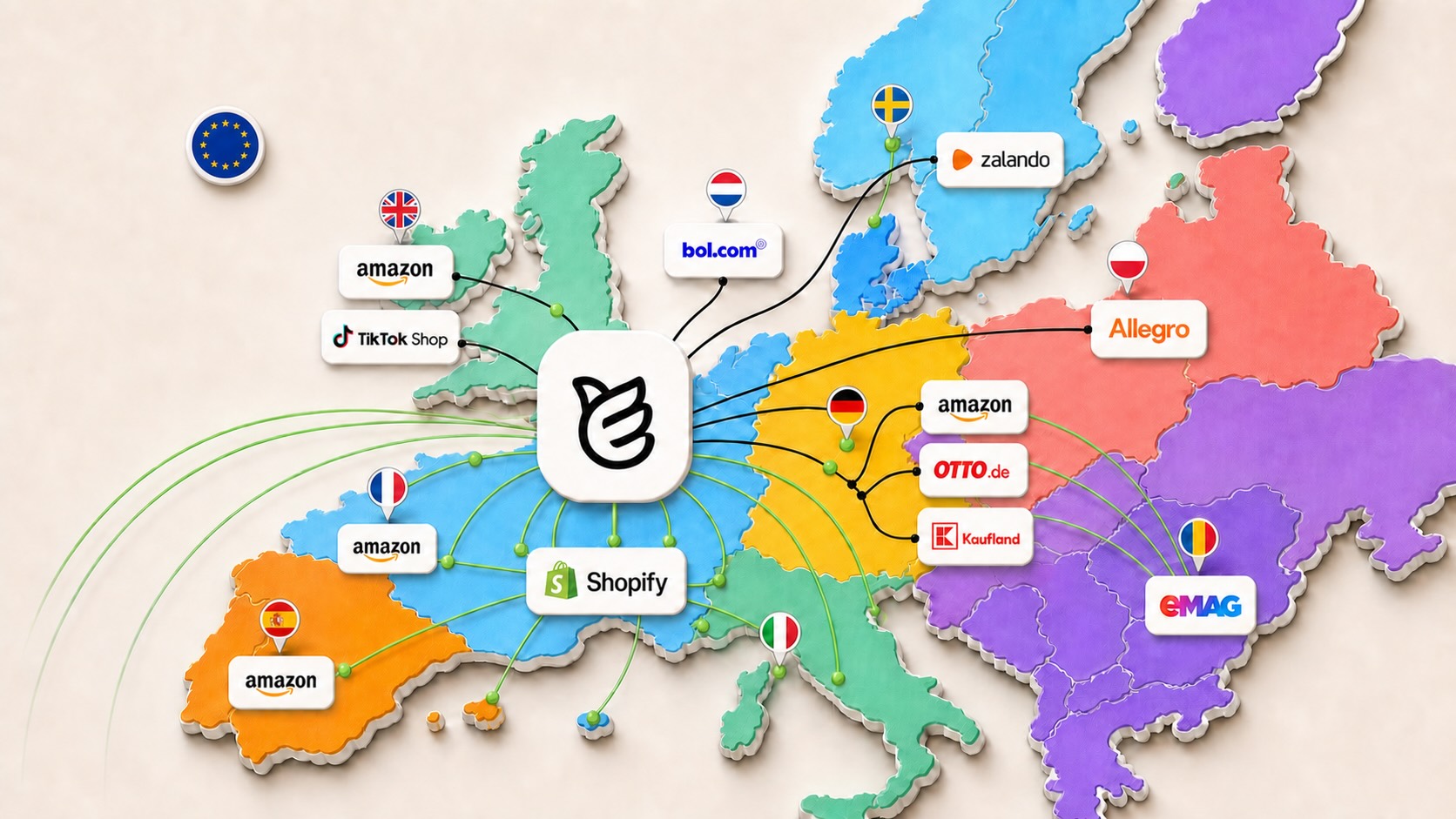
eBrands removes that step by holding the role already. Our entities act as Importer of Record in each registered market, with the customs identities, VAT registrations, and broker relationships in place, so shipments clear against an established profile rather than a first-time importer with no history. Goods you own move under our import infrastructure, and clearance becomes a routine step rather than a variable. If your inventory is heading into a new market and you are not certain who is importing it, that is the question worth resolving before the vessel leaves.
Frequently asked questions
How long does customs clearance usually take?
A few hours to three days for compliant shipments with pre-filed paperwork. Express parcels often clear in hours, air freight in 24 to 72 hours, and ocean freight in one to five business days. Examinations add days to weeks.
Why is my shipment stuck in customs?
Most commonly a document mismatch, an incorrect tariff classification, a missing security filing, unpaid duty, or selection for examination. Regulated goods needing secondary agency approval also wait longer. Your broker can usually identify the cause within a day.
Does clearance take longer for sea freight than air?
Yes, typically. Air shipments are often pre-cleared while inbound and release in 24 to 72 hours, while ocean freight generally takes one to five business days, with consolidated cargo slower than full containers.
Can I speed up customs clearance?
Not by paying a fee, but yes by preparation: file before arrival, keep documents consistent, classify accurately, describe goods specifically, settle duty with a same-day payment method, and have a properly registered importer of record in place.
Why can't I collect goods that customs has released?
Because customs release is only one of three. The terminal must issue its own release, usually after port charges are paid, and the carrier must issue a freight release. Until all three are done, the cargo cannot move.

“ We are dedicated to assisting you; please contact us for any information or inquiries you may have. ”

.jpg)







.jpg)










.jpeg)