What Is DAC7? EU Marketplace Reporting Rules for Sellers

Most sellers meet DAC7 the same way: an email from Amazon, Etsy, or bol.com asking for a tax identification number, a date of birth, or a business registration number, with a warning that payouts will be held if it is not provided. It looks like routine account admin. It is not. Behind that request sits an EU directive that turned every marketplace into a reporting arm of the tax authorities, and 2026 is the year the collected data started producing consequences: Germany's tax offices began sending mass letters to platform sellers, and HMRC's equivalent regime received reports covering close to £55 billion of online earnings. Understanding what is being reported about you, and making sure it matches what you file, is now part of running a marketplace business.
The short answer: DAC7 is an EU directive requiring digital platforms to collect seller data and report each seller's transactions and income to EU tax authorities annually, by 31 January for the previous calendar year.
Key takeaways
- DAC7 creates no new tax. It creates a transparency obligation that makes your existing tax position visible to authorities.
- The reporting duty sits with the platform, but the consequences reach the seller through mismatches with filed returns.
- You are excluded only if you stay under both limits on a platform: fewer than 30 sales and no more than €2,000 in the year. Cross either one and you are reportable.
- Thresholds are counted per platform, not across all your channels combined.
- A June 2026 Commission proposal would raise the goods threshold to €3,000 and scrap the 30-transaction test, but not before 2028 and only with unanimous Council agreement.
What is DAC7?
DAC7 is Council Directive (EU) 2021/514, the seventh amendment to the EU's Directive on Administrative Cooperation in taxation. It has applied since 1 January 2023, with the first reports filed in January 2024 covering 2023 activity, and it now runs as a fixed annual cycle. According to the European Commission, the obligation was placed on platform operators precisely because they are best positioned to collect and verify data on everyone selling through them.
The logic is straightforward. Millions of people and businesses earn income through platforms, tax authorities historically could not see that income, and cross-border sales made it worse. DAC7 closes the gap by making the platform report it. One member state receives the report, then automatically shares it with the tax authority of the seller's country of residence and any country where the seller has property income.
It covers four activities: sale of goods, rental of immovable property, personal services, and rental of transport. For a product brand, only the first matters, but the same directive is why freelancers and Airbnb hosts get similar requests.
Who does DAC7 apply to?
The reporting obligation applies to any digital platform that facilitates relevant activities for EU-resident sellers, whether or not the platform itself is in the EU. Non-EU platforms register in one member state and report through it, which is why US and Asian marketplaces send the same data requests as European ones.
For sellers, in scope means being EU-resident or renting out EU property. The exclusion for small goods sellers is narrow and often misread, because both conditions must hold at the same time:
The per-platform detail matters for anyone selling across multiple marketplaces. Each platform counts only its own transactions, so you can be excluded on a channel you barely use and fully reported on the one carrying your volume. Personal-service providers, incidentally, have no threshold at all: a single euro of income is reportable.

What data do marketplaces report about you?
Platforms collect and transmit roughly 22 data points per seller. For a business seller that means the legal name, the primary address, the tax identification number and the member state that issued it, the VAT number where one exists, the business registration number, and for individuals the date of birth. Alongside the identity data goes the money: total consideration paid or credited per quarter, the number of relevant activities, and any fees, commissions, or taxes the platform withheld, broken down by quarter and reported per financial account identifier.
Platforms must complete due diligence on this data by 31 December each year and file by 31 January, and they must verify what you give them rather than take it at face value. That verification duty is the reason for the account freezes and payout holds sellers experience: the platform cannot file an incomplete report without risking penalties that, in Ireland for instance, start at €19,045 with a further €2,535 per day of delay. When a marketplace threatens to suspend payouts over a missing tax ID, it is not being bureaucratic, it is protecting itself.
What happens with the data after it is reported?
It gets matched against what you declared. Tax authorities cross-reference reported platform income with VAT returns and income or corporation tax filings, and mismatches generate letters. This is no longer hypothetical: Germany's tax offices began a mass wave of DAC7-triggered letters to platform sellers in 2026, built on data from the January 2026 filing cycle, in a country that estimates over €300 million in annual tax losses from undeclared platform income. In the UK's parallel regime, a Freedom of Information response cited by AVASK shows HMRC received reports on 1.47 million sellers for 2024 and 3.99 million for 2025, a 272% jump in a single year covering close to £55 billion of earnings, with nudge letters already going out.
The exposure for sellers is worth stating precisely, because it is widely misunderstood. DAC7 itself carries no seller penalty; the penalties in the directive fall on platforms. What reaches you is the underlying tax: unpaid VAT, unpaid income or corporation tax, plus interest and penalties on those amounts. DAC7 does not create the liability, it removes your ability to have an undeclared one. For brands already registered and filing correctly across their markets, which is what marketplace tax compliance is supposed to deliver, the reports simply confirm the returns and nothing happens at all.
What is changing in 2028?
On 24 June 2026 the European Commission adopted a tax simplification package that recasts the entire administrative cooperation framework, consolidating DAC1 through DAC9 into one instrument. Four DAC7 changes sit inside it: the goods threshold rises from €2,000 to €3,000, the 30-transaction test disappears entirely so only the money test remains, small platform operators facilitating under €50,000 of relevant activity a year gain an exemption, and, notably for this audience, the text clarifies that intermediary and merchant-of-record structures can themselves qualify as platform operators. An EU-wide tax identification number verification tool is also proposed to reduce the data-matching errors that generate false-positive letters. The Commission estimates the package would lift reporting obligations from more than 10 million mostly private sellers, largely people clearing out secondhand goods.
One caveat carries the whole section: this is a proposal, not law, and tax measures need unanimity in the Council. The Irish presidency aims to conclude negotiations by the end of 2026, with implementation in 2027 and most changes applying from 1 January 2028. Until then, plan against €2,000 and 30 transactions, because those are the rules that will govern your next two reporting cycles regardless of how the negotiation goes.
.jpg)
Who gets reported when a partner sells on your behalf?
This is where DAC7 stops being a paperwork question and becomes a structural one. The report names the seller on the platform, so the answer depends on who legally holds that role. If you operate your own marketplace accounts, the reports name your entity, and every market where you trade expects your registrations to line up with them. If a partner operates the channels as seller of record, the platform's relationship, and its reporting, runs to that entity instead. The distinction between the two roles is subtle enough that we wrote a full comparison of merchant of record versus seller of record, and DAC7 is one of the clearest practical illustrations of why it matters.
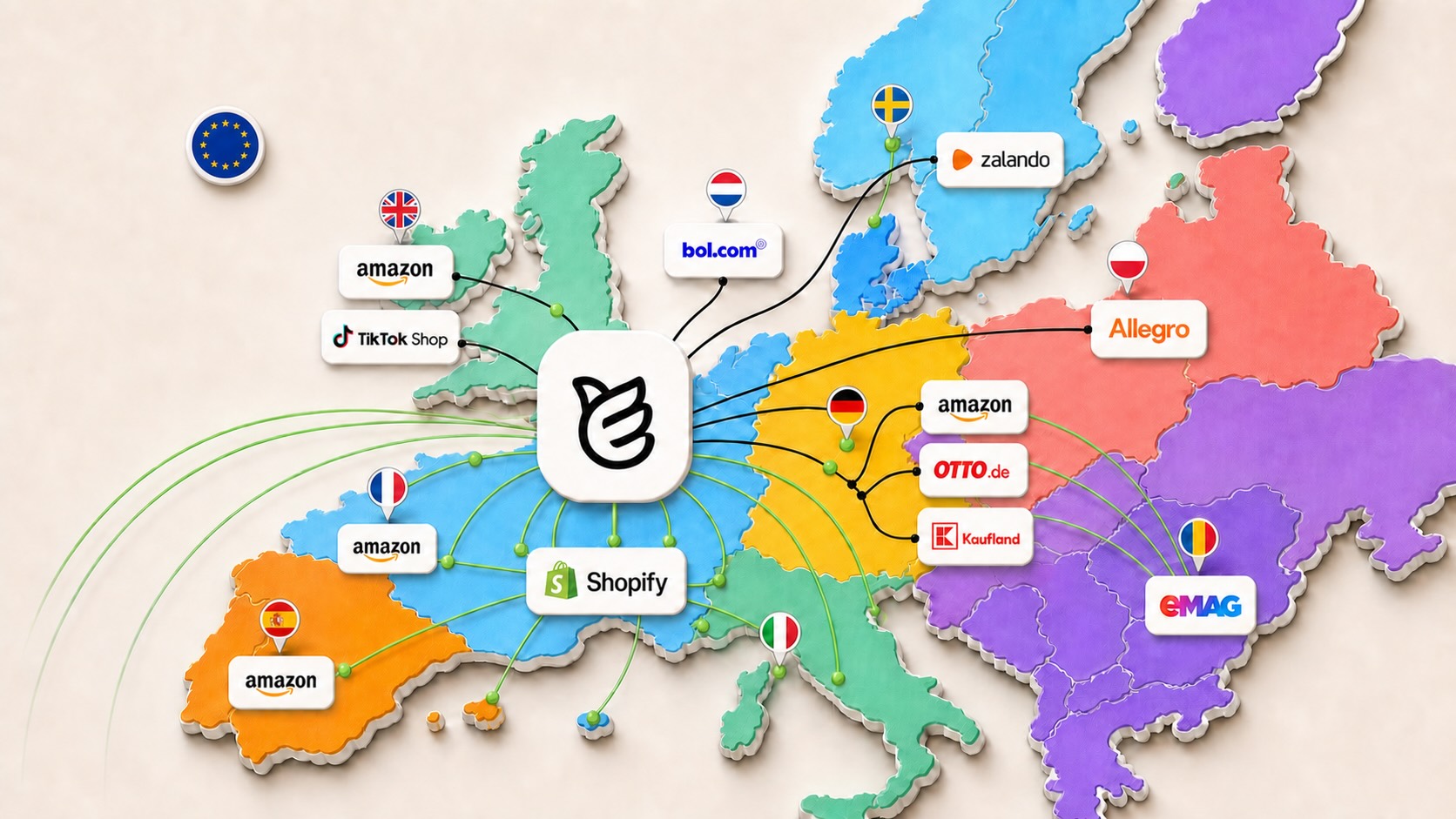
For a brand selling into several EU countries, the practical burden was never the directive itself. It is that DAC7 sits alongside VAT registrations, OSS and IOSS filings, EPR, and product compliance, each with its own deadlines and each visible to a different authority. eBrands takes that layer on: as Merchant of Record our entities are the registered seller in each market, and we handle VAT, EPR, and regulatory compliance as part of running your channels, so the reported data and the filed returns come from the same operation by design. If your international tax setup currently depends on several parties agreeing about who reported what, our team can show you what the cleaner version looks like.
Frequently asked questions
Does DAC7 create a new tax?
No. DAC7 is a reporting and transparency measure. It requires platforms to disclose seller income to tax authorities, which then compare it with what was declared. Any money owed comes from existing VAT and income tax rules.
What are the DAC7 thresholds?
A goods seller is excluded only when both conditions hold on that platform: fewer than 30 sales transactions and no more than €2,000 in total consideration during the calendar year. Crossing either makes the account reportable. Personal-service sellers have no threshold.
When do marketplaces file DAC7 reports?
Due diligence must be complete by 31 December, and reports are filed by 31 January for the previous calendar year, with Germany's national deadline falling on 2 February. Tax authorities then exchange the data between member states.
Does DAC7 apply to non-EU platforms and sellers?
It applies to any platform facilitating relevant activities for EU-resident sellers, wherever the platform is based; non-EU platforms register in one member state to report. Sellers are in scope when EU-resident or renting out EU property.
What should I do if I receive a DAC7 data request from a marketplace?
Provide the requested details promptly and make sure they match your official registrations exactly, since platforms must verify the data and will hold payouts on incomplete accounts. Then check that your declared income and VAT filings reconcile with what the platform will report.

“ We are dedicated to assisting you; please contact us for any information or inquiries you may have. ”

.jpg)