Amazon Brand Store: How to Build One That Earns Its Traffic

Most Brand Stores are built once, published, and then visited mainly by the brand's own team. The build gets a designer and a deadline, the launch gets a Slack message, and nobody looks at the analytics again until someone asks whether it was worth doing. The honest answer in that scenario is usually no, and not because the Store was badly made. A Brand Store is a destination, and a destination with no route to it is a brochure.
The short answer: an Amazon Brand Store is a multi-page branded space on Amazon, free to build with Brand Registry, where you control the layout rather than competing on a shared product page. It pays back when advertising and external traffic are pointed at it deliberately.
Key takeaways
- Build at least three sub-pages before publishing, because that is the structural requirement for Store Spotlight.
- Amazon's own guidance is to refresh the Store at least once per quarter.
- Section-level insights launched on 10 January 2026, showing engagement per content block by traffic source.
- Organise pages around how customers shop rather than around your catalogue structure.
- A Store with no traffic strategy is the most common reason the asset underperforms.
What the Store is actually for
On a product detail page you are one offer inside Amazon's template, with competitor ads running alongside your own listing. The Brand Store is the one place on Amazon where the whole page is yours, with no competing products on it.
That makes it useful for three jobs that a detail page does badly. Showing range, so a shopper who arrived for one product discovers the other eleven. Explaining the brand, for categories where who made it affects whether someone buys. And giving your advertising somewhere better to land than a single listing, which is where most of the measurable value comes from.
It needs Brand Registry, like the rest of Amazon's brand tooling, and it costs nothing to build using Amazon's self-service Store builder.
Structure: build for how people shop
The most common structural mistake is organising the Store the way the catalogue is organised internally. Shoppers do not think in product lines, they think in problems, occasions and use cases.
A skincare brand gets more from pages built around dry skin, anti-ageing and sensitive skin than from pages called Serums, Creams and Cleansers. A sports brand gets more from beginner, intermediate and competition than from a list of categories. The test is whether a page title matches something a shopper would say out loud.
Three structural rules are worth following.
Build at least three sub-pages before you publish. This is not an aesthetic preference. As Canopy Management notes, three sub-pages with at least one product each is the structural requirement for Store Spotlight, the Sponsored Brands format that surfaces up to three of your Store pages directly in search results. Publishing with a single page forfeits an ad format you would otherwise qualify for.
Lead with best sellers. The homepage should show what already converts, not a brand film. A shopper arriving from a search ad is mid-purchase, not mid-discovery.
Keep navigation shallow. Every extra click loses people, and dead pages that nobody reaches are worse than no page, because they dilute the navigation for everyone else.
Reading Store Insights properly
Store Insights is free, sits in the Store builder and the advertising console, and most sellers never open it. It reports visitors, page views, sales, units, conversion rate and traffic source, per page.
Amazon sharpened this considerably on 10 January 2026 with section-level insights, currently in beta, which show engagement metrics for each section of a Store by traffic source. That moves the analysis from which page works to which block within a page works, which is the difference between knowing something is wrong and knowing what to change.
The diagnostic that matters most is the two-by-two. A page with traffic and weak conversion has a merchandising or layout problem, so fix the page. A page with good conversion and no traffic has a navigation or promotion problem, so send people to it. A page with neither should probably be deleted. That framing, set out by Amazon Growth Lab, turns a dashboard into a decision.
On benchmarks, agency-published figures commonly put a healthy Store conversion rate around 10% to 15%, with above 15% considered strong. Treat those as directional rather than official, since Amazon does not publish a target, and your own trend over time is a better guide than someone else's average.

Where the traffic comes from
This is the part that decides whether the Store was worth building, and it is the part most brands skip.
Sponsored Brands. The main paid route, and the reason to have more than one page. Campaigns can send shoppers to a specific Store page rather than to a product listing, which lets you match the landing page to the search intent. Gating that spend against your margin is the same discipline as any other placement, covered in our guide to setting ACoS and TACoS targets.
The byline link. Every product detail page carries a link to your Store under the brand name. It is free, it is already working, and it means your Store homepage should be built for someone who just looked at one of your products.
External traffic. Social, email, creators and your own site can all point at Store pages, and Amazon Attribution closes the loop by showing which off-Amazon source actually produced sales. For brands running influencer activity, this is the difference between a campaign you can evaluate and one you cannot.
Point campaigns at specific pages rather than the homepage. A shopper searching for a use case should land on the page about that use case, which is the same logic that governs landing pages anywhere else.
Keeping it alive
Amazon's published guidance is to update the Store at least once per quarter so shoppers see something fresh. That is a low bar and most brands miss it.
A workable rhythm: refresh featured products and seasonal content quarterly, check Store Insights monthly, and rebuild any page showing traffic without conversion. New product launches and promotions should appear in the Store at the same time they appear elsewhere rather than weeks later.
The reason to bother is not only shopper-facing. A Store that is maintained reflects a brand that is active, and the same content work feeds the rest of your Amazon presence. Your Store, A+ Content and listing imagery should read as one system rather than three projects, and that consistency is also what Amazon's AI shopping assistant reads when deciding what your brand is and who it suits, as we covered in our piece on how Amazon's AI ranks products.
Common mistakes
Treating it as a brand site. Shoppers on Amazon are closer to purchase than visitors to your own site. Lead with products and reasons to buy, not with a manifesto.
Too many pages. Six well-used pages beat fifteen where nine get no visits. Prune rather than accumulate.
Desktop-first design. Most Amazon traffic is mobile, and a layout that balances nicely on a wide screen frequently becomes a scroll of stacked blocks on a phone. Check every page on a phone before publishing.
No traffic plan. The biggest one. A Store with no advertising and no external promotion gets the byline link and nothing else, which is a fraction of what the asset can do.
Publishing once. A Store last updated eighteen months ago, still featuring a discontinued product, is doing active harm to the impression it was built to create.
Where the Store fits in the wider channel
The Brand Store sits alongside listings, advertising, reviews and listing optimisation rather than above them. It raises the value of traffic you already have and gives paid campaigns a better destination, which is why it works best in combination rather than in isolation, and it is part of the combination behind our Best Seller badge case study.
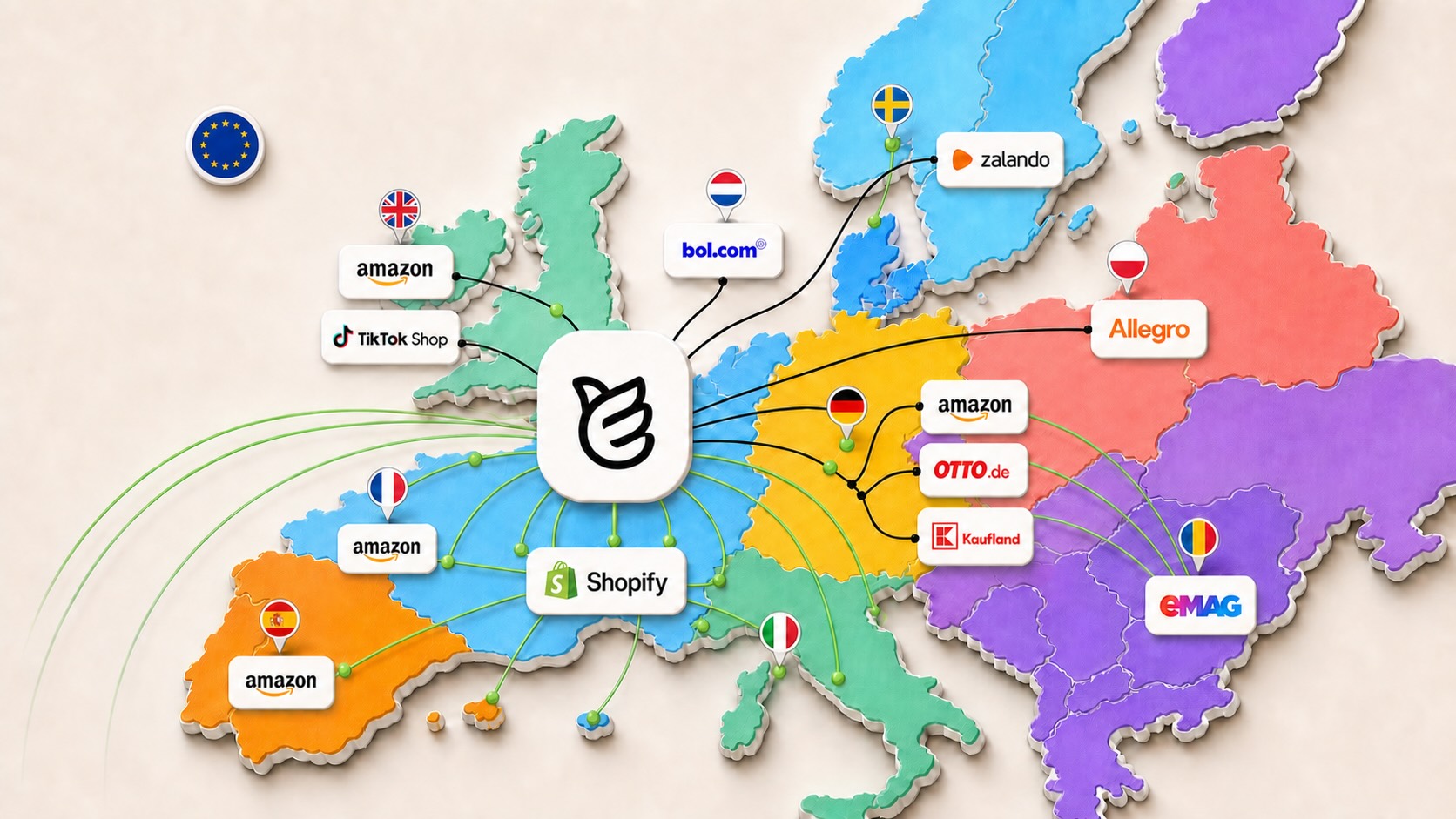
For brands selling across several marketplaces there is an additional consideration, which is that a Store built for one market has to be rebuilt per marketplace, with its own language, its own featured products and its own seasonal calendar. That is the same multiplication problem that applies to A+ content, and it is the reason Store maintenance quietly becomes a programme rather than a project once you sell in more than two countries.
eBrands runs Amazon as a managed channel across Europe and North America, with Store, listings, content and advertising maintained together and performance read in one place through Apollo Intelligence. The brand and the inventory stay yours. If you have a Brand Store that nobody has opened the insights on this year, that is a short diagnostic and usually a quick improvement, and our team is happy to look at it.
Frequently asked questions
What is an Amazon Brand Store?
A free multi-page branded space on Amazon, available to brand-registered sellers, where you control the layout and no competitor products appear. It works as a destination for advertising and external traffic as well as a catalogue.
How many pages should a Brand Store have?
At least three sub-pages, which is the structural requirement for Store Spotlight in Sponsored Brands. Beyond that, build pages you can actually drive traffic to rather than adding pages for completeness.
How do I measure Brand Store performance?
Store Insights reports visitors, views, sales and conversion by page and traffic source, with section-level engagement metrics added in January 2026. Amazon Attribution tracks off-Amazon sources that send traffic to your Store.
What is a good Brand Store conversion rate?
Agency benchmarks commonly cite around 10% to 15%, with above 15% considered strong. Amazon publishes no official target, so treat these as directional and track your own trend.
How often should I update my Brand Store?
Amazon's guidance is at least once per quarter. A practical rhythm is quarterly content refreshes with monthly checks of Store Insights to catch pages with traffic but weak conversion.

“ We are dedicated to assisting you; please contact us for any information or inquiries you may have. ”