What Is Duty Drawback? How to Recover Tariffs You Have Already Paid

Most importers treat duty as a sunk cost. Money leaves the account at the border and that is the end of it. In the United States it often is not, because a federal programme called duty drawback returns most of what you paid once the goods leave the country again, reaching five years into the past. This is a US customs mechanism, administered by Customs and Border Protection, so it matters to any brand importing into the US and shipping some of that stock onward, whether or not the company itself is American. In a year when tariff rates have climbed hard enough to reshape landed cost models, the amount of recoverable duty sitting unclaimed in company records has grown with them.
The short answer: duty drawback is a refund of up to 99% of the duties, taxes and fees paid on imported goods when those goods, or qualifying substitutes, are later exported or destroyed. Claims can reach back five years from the date of import.
Key takeaways
- The refund is capped at 99%, with 1% retained as an administrative fee.
- Merchandise processing and harbor maintenance fees are recoverable alongside the duty.
- Claims reach back five years from import, so entries expire month by month.
- Section 301 duties are recoverable; treatment of other programmes varies and has changed during 2026.
- Deferral through bonded warehousing or a foreign trade zone solves a different problem, which is cash flow rather than recovery.
How drawback works
Drawback sits in US law at 19 U.S.C. 1313 and is administered by Customs and Border Protection, with claims filed electronically through the Automated Commercial Environment under the modernised rules introduced by the Trade Facilitation and Trade Enforcement Act.
The logic is that duty exists to protect a domestic market. If goods pass through the United States and leave again, the protective purpose was never served, so the duty comes back. What makes it unusually generous in practice is substitution: you do not always need to export the exact units you imported. A substituted article classified under the same eight-digit tariff heading can qualify, which is why correct HS classification matters here as much as it does at import.
Three claim types cover most situations. Manufacturing drawback applies when imported inputs go into something that is then exported, which is the largest category by value. Unused merchandise drawback applies when goods are exported in essentially the condition they arrived in, which is the one that matters most to consumer brands moving stock between markets. Rejected merchandise drawback covers goods that did not conform to specification or were shipped without consent, and are returned or destroyed.
As the specialists at Alliance Drawback Services describe it, the refund covers duties, taxes and fees including MPF and HMF, with the statutory 99% ceiling, and the five-year reach means duty paid in earlier years is often still claimable today.
Which tariffs are recoverable in 2026
This is where the answer stopped being simple, because eligibility now depends on which programme the duty was charged under rather than on the goods themselves.
Section 301 duties are recoverable, and CBP has stated this position in writing. That matters more in 2026 than it used to, because Section 301 is no longer only the China technology-transfer lists. It now also covers the forced-labour duties that took effect in July 2026 across a large group of economies including the EU, and the Brazil action from the same month. A claimant recovers 99% of the additional duty on top of the ordinary duty when the merchandise or a substituted article of the same eight-digit heading is exported within five years.
Section 232 is more complicated and has been moving. These duties originally barred drawback outright, and proclamations during 2026 opened narrow manufacturing-drawback paths for certain product groups while leaving others closed. Treatment genuinely differs from one proclamation to the next, so this is a question to put to a drawback specialist rather than to a general rule.
Antidumping and countervailing duties are not recoverable through drawback.
And duties charged under the IEEPA-era actions sit outside drawback entirely. Those are handled through a separate CBP refund channel rather than a drawback claim, which is an important practical distinction: filing the wrong instrument wastes time on money that is recoverable through the right one. Ginger Control maintains a programme-by-programme matrix that is worth checking against your own entries.
Does this apply to a consumer brand, or only to manufacturers?
Most published material on drawback is written for manufacturers, which leaves consumer brands assuming it is not for them. Several common situations qualify.
Stock imported into the US and later shipped onward to Canada, Mexico or another market is an export, and unused merchandise drawback is the relevant path. Brands running US fulfilment for North America generally do this routinely without realising there is duty attached to it.
Goods returned to an overseas supplier because they did not conform to specification fall under rejected merchandise drawback. So, in defined circumstances, does merchandise destroyed under CBP supervision, which is relevant to brands writing off unsellable stock rather than discounting it.
The exception worth knowing is that exports to USMCA countries carry restrictions that can reduce the recovery compared with exports elsewhere, so the Canada and Mexico case needs checking rather than assuming a full 99%.
The practical test is simple. If goods you imported later left the United States, within the last five years, there is probably a claim. Whether it is worth filing depends on the duty value, and at current rates the threshold is met far more often than it was three years ago.

What filing actually involves
Drawback is a records exercise rather than a legal one, and that is where it succeeds or fails.
You need import entry records showing what was brought in and what was paid, export evidence showing the same or substituted goods leaving, and a traceable link between the two. For manufacturing claims you also need a bill of materials demonstrating how imported inputs became the exported product. Records must be retained for three years after the claim is liquidated, and CBP audits drawback claims, so the documentation has to survive scrutiny rather than merely exist.
Most claimants use a specialist broker rather than filing directly, because the filing is technical and the economics usually work: specialists commonly charge a share of what they recover, so an unsuccessful claim costs little. A customs broker filing drawback is doing a different job from one clearing your imports, and not every brokerage offers it.
One deadline to respect. The five-year window runs from the date of import, so eligible entries expire continuously. A brand that starts looking at this in October has a different claimable total than it had in June, and the oldest and often largest entries are the first to drop out.
Deferral: paying later instead of reclaiming
Drawback returns money you have already paid. Two other mechanisms stop you paying it so early in the first place, and they suit different problems.
A customs bonded warehouse lets you store imported goods without paying duty until they are withdrawn for domestic consumption. Goods exported straight from the bonded warehouse never attract the duty at all, which removes the need to claim it back. The trade-off is storage cost and the administrative obligations that come with operating under bond.
A foreign trade zone works on a similar principle with a wider scope, allowing manufacturing and processing inside the zone, and giving flexibility on whether duty is assessed on the imported components or the finished article. FTZs suit higher volumes and longer-term operations, and the setup effort reflects that.
Choosing between the three is mostly a question of what your goods do after import. Goods that will certainly be re-exported favour bonded storage or an FTZ. Goods that might be sold domestically or might be exported favour paying duty and claiming drawback later, since you keep the flexibility. Goods already imported and exported over the past five years are a drawback question regardless, because the decision was made for you.
Where this fits a brand's wider import setup
Drawback belongs to the same body of work as classification and valuation, and it rewards the same discipline. A brand that classifies accurately, keeps clean entry records and knows where its inventory physically goes can run drawback as a routine recovery. A brand that cannot reconcile its import entries against its export shipments usually cannot claim, not because it is ineligible but because it cannot prove it.
That is also why the duty line in your margin model deserves attention from both directions. The landed cost calculation tells you what a product costs to bring in. Drawback tells you how much of that comes back when it leaves again, and a brand running meaningful re-export volume is overstating its landed cost if it never counts the recovery. With duty now applying to effectively every commercial shipment after the end of duty-free parcels, that gap has widened.
Responsibility sits where it always does. The importer of record owns the entries, the classification and the records that any claim rests on, which is the distinction we set out between the importer of record and the customs broker. If someone else holds that role for your goods, the drawback conversation involves them.
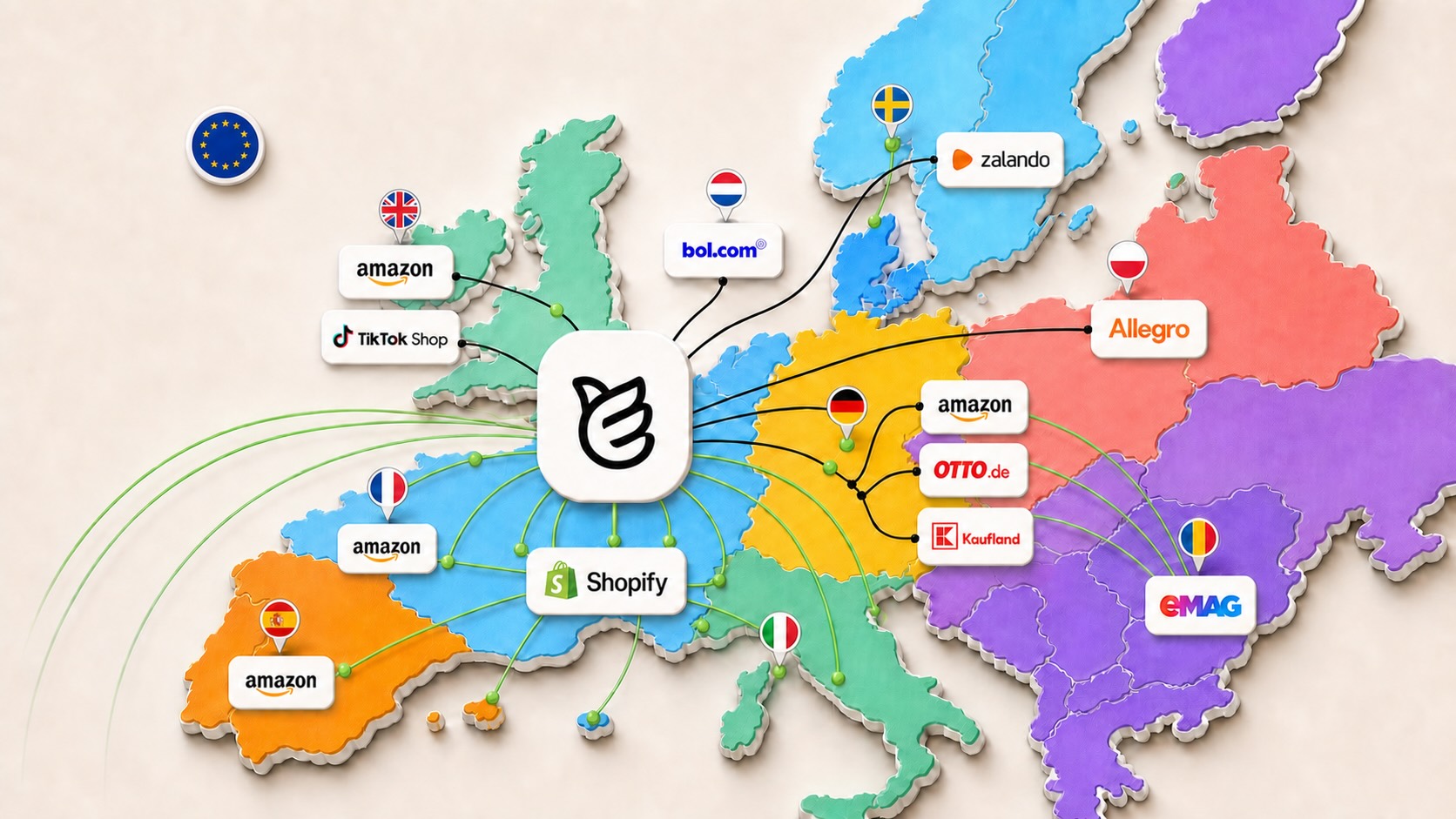
eBrands acts as Importer of Record in our registered markets, with classification maintained per market and entry records kept in one place rather than scattered across freight providers. That is the foundation any recovery claim needs, and it is the same foundation that keeps landed cost accurate in the first place. If your products enter the US and some of them leave again, our guide to shipping to the US covers the wider picture, and our team is happy to look at whether a recovery is worth pursuing.
This article is general information rather than customs or legal advice. Drawback eligibility depends on your specific entries and tariff programmes, so confirm your position with a licensed customs broker or drawback specialist before filing.
Frequently asked questions
How much can duty drawback refund?
Up to 99% of the duties, taxes and fees paid at import, including merchandise processing and harbor maintenance fees. The remaining 1% is retained by the government as an administrative charge.
How far back can I claim duty drawback?
Claims reach five years from the date of import, so entries become ineligible on a rolling basis. Older entries expire continuously, which is why delaying a review has a direct cost.
Are Section 301 tariffs eligible for drawback?
Yes. CBP has confirmed in writing that Section 301 duties are recoverable, which now extends to the 2026 forced-labour duties and the Brazil action as well as the original China lists.
Do I have to export the exact goods I imported?
Not necessarily. Substitution rules allow a qualifying article classified under the same eight-digit tariff heading to support a claim, which is what makes drawback workable for businesses with mixed inventory.
What is the difference between drawback and a bonded warehouse?
Drawback refunds duty you have already paid once goods leave the country. A bonded warehouse defers the duty until goods are withdrawn for domestic sale, so goods exported directly from bond never attract it.

“ We are dedicated to assisting you; please contact us for any information or inquiries you may have. ”






.jpg)









.jpeg)