EU Deforestation Regulation (EUDR): What Consumer Brands Need to Know

The EU Deforestation Regulation has been delayed twice, which taught a lot of businesses to treat it as something that would keep moving. That assumption expired in May 2026, when the Commission confirmed the 30 December 2026 application date and said it would not reopen the core text. The deadline is now roughly three months away, the scope was redrawn in July, and a fair number of consumer brands still believe this is a timber and commodities problem rather than something that touches a wooden toy, a rubber-soled shoe or a cosmetic containing palm derivatives.
The short answer: EUDR bans placing seven commodities and their derived products on the EU market unless they are deforestation-free, legally produced and covered by a due diligence statement. It applies from 30 December 2026 for large and medium operators, and 30 June 2027 for micro and small ones.
Key takeaways
- The date is fixed. The Commission has ruled out a third delay.
- Only the operator who first places goods on the EU market files the due diligence statement.
- Scope changed in July 2026, with six product categories out and three in, so check your own codes.
- Due diligence requires geolocation to plot level, which most suppliers cannot currently provide.
- Downstream operators still have obligations, including registration and verifying that upstream diligence happened.
What EUDR actually requires
Regulation (EU) 2023/1115 covers seven commodities: cattle, cocoa, coffee, oil palm, rubber, soy and wood, plus the products derived from them listed in Annex I.
For each in-scope product, three conditions must hold. The product must be deforestation-free, meaning not linked to land deforested after 31 December 2020, with wood also required to be free of forest degradation. It must be produced in accordance with the laws of the country of production. And it must be covered by a due diligence statement submitted through the EU Information System.
The cut-off date is worth noting, because it means this is not a forward-looking commitment. It is a question about land use that already happened, which is why the evidence has to come from the supply chain rather than from a policy document.
The timeline, and why it stopped moving
The original date was 30 December 2024. A first delay moved it to December 2025. In December 2025 the Council formally adopted a targeted revision postponing application for all operators to 30 December 2026, with an extra six months for micro and small operators, alongside streamlined due diligence and the removal of printed products such as books and newspapers from scope.
On 4 May 2026 the Commission published its simplification package and confirmed the December 2026 date with no further delay, stating it would not reopen the core text. Compliance costs are expected to fall by around 75% against the original framework while the core obligations stay intact.
One transition detail matters for anyone in wood. Products that fall under the old EU Timber Regulation, produced before 29 June 2023 and placed on the market before 30 December 2026, remain subject to EUTR rather than EUDR until the end of 2029. That is a genuine easement for existing stock and a trap for anyone who assumes all wood products switch over on the same day.
Which consumer products are actually caught
This is where brands misjudge their exposure, because the commodity list sounds agricultural and the derived products are not.
Wood pulls in furniture, wooden toys and games, boards and panels, and paper-based items. Rubber reaches footwear soles, grips, seals and various sporting goods. Oil palm derivatives appear across cosmetics and personal care, often under ingredient names that do not contain the word palm. Cocoa covers chocolate and derived products including some cosmetic butters. Soy, coffee and cattle products follow the same pattern of appearing inside things rather than as things.
The scope is also moving, which is the part to handle carefully. A Delegated Act on 13 July 2026 removed six product categories and added three, and cattle leather plus some rubber products left scope in September 2026. Products newly added to Annex I apply from 30 December 2027 rather than 2026.
Because of that, the useful action is not to read a list in an article. It is to take your own tariff classifications and check them against the current Annex I, which is one more reason to have accurate HS codes for your catalogue. A brand that cannot produce its codes cannot answer the scope question at all.
Who has to do what
The 2025 revision changed this significantly, and it is the single most useful simplification for brands.
Previously every actor in the chain could end up performing separate due diligence. Now only the operator who first places an in-scope product on the EU market submits the due diligence statement. The first downstream operator collects and keeps the reference number rather than repeating the exercise.
Downstream operators and traders that are not SMEs still carry real obligations. As Coolset summarises the amended position, they must register in the Information System and satisfy themselves that due diligence was exercised upstream with no more than negligible risk found, before making products available. Where a substantiated concern arises, verification obligations bite.
For a non-EU brand the practical reading is straightforward. If your goods are first placed on the EU market by an importer, that importer is the operator filing the statement, and it will need supply chain evidence from you to do it. If you place goods on the market through your own EU entity, the obligation is yours directly.
That is the same structural question running through GPSR, EPR, PPWR and the Digital Product Passport: which established European party answers for the product, and what it needs from you to do so. We set out how those roles differ in our guide to the EU authorised representative and responsible person.

What due diligence requires
Three steps, and the first is the hard one.
Information collection. Product description, quantity, country of production, supplier details, and geolocation coordinates of the plots of land where the commodity was produced. Plot level, not region level, with harvest dates.
Risk assessment. Evaluating the likelihood of non-compliance using the country benchmarking system, supply chain complexity, and the reliability of the information gathered.
Risk mitigation. Where risk is more than negligible, taking steps to address it, which can mean additional documentation, independent audits or changing supplier.
Operators sourcing exclusively from countries classified as low risk benefit from simplified due diligence and are not required to run a full risk assessment or mitigation, unless they become aware of information indicating non-compliance.
The geolocation requirement is where most programmes stall. It is not a question your supplier's sales contact can answer from the office. It requires their supplier, and sometimes their supplier's supplier, to produce coordinates for specific plots. Starting that conversation in November for a December deadline is starting late, and the conversations themselves take longer than the paperwork that follows.
What happens if you are not ready
In-scope products cannot lawfully be placed on the EU market without a due diligence statement, so the first consequence is commercial rather than financial. Goods cannot be sold, and customs and market surveillance authorities can hold shipments.
Penalties are set nationally and include fines proportionate to environmental damage and the value of the goods, confiscation, and exclusion from public procurement. For a consumer brand the realistic risk is simpler: an importer or marketplace partner declining to handle your product because they cannot file a statement for it. The commercial gate arrives before the enforcement one.
What to do in the next three months
Check scope first, by mapping your tariff codes against the current Annex I, since that answers whether this is your problem at all and the answer changed twice this year.
Then find out who the operator is for your goods, which is a question about your import arrangement rather than your org chart, and settle it before December rather than discovering it at a border.
Start the supplier conversations now, specifically about geolocation data. That is the long pole, and it does not respond to deadline pressure because the information sits several steps upstream.
Register in the EU Information System if you are an operator or a non-SME downstream operator, and test a submission before the deadline. The system reopened in mid-2026 with simplified declarations for smaller primary operators and updated interfaces, and testing in advance is cheaper than discovering a data problem on 30 December.
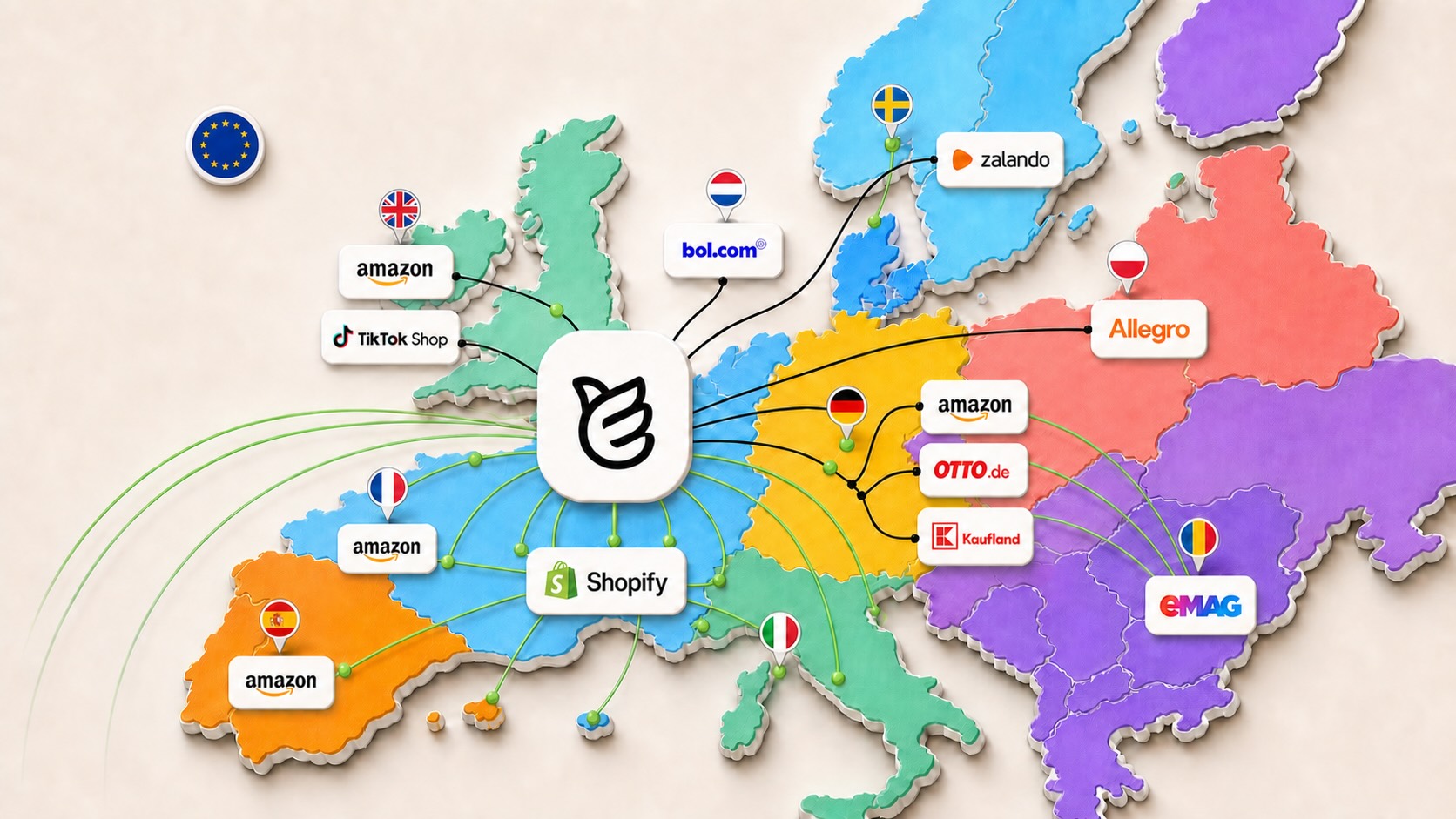
eBrands carries the operator role for the brands we work with. Our European entities act as Importer of Record, and we handle VAT, EPR and regulatory compliance as part of running the channels, which means the party filing the statement is the same party importing and selling the goods and already holds most of the product data needed to do it. If you are not sure whether your range is in scope, that check takes an afternoon with your tariff codes, and our team can do it with you.
This article is general information rather than legal advice. Scope and obligations depend on your specific products and supply chain, so confirm your position with a qualified adviser.
Frequently asked questions
When does EUDR apply?
From 30 December 2026 for large and medium operators, and 30 June 2027 for micro and small operators. The Commission confirmed in May 2026 that there will be no further delay.
Which products are covered by EUDR?
Cattle, cocoa, coffee, oil palm, rubber, soy and wood, plus derived products listed in Annex I. The Annex changed in July 2026, with six categories removed and three added, so check your own tariff codes against the current version.
Who has to submit the due diligence statement?
Only the operator who first places the product on the EU market. The first downstream operator keeps the reference number instead of repeating the diligence, though non-SME downstream operators must still register and verify that diligence took place.
What information does EUDR due diligence need?
Product and supplier details, country of production, and geolocation coordinates of the plots where the commodity was produced, with harvest dates, plus a risk assessment and mitigation where risk is more than negligible.
Does EUDR apply to non-EU companies?
It applies to goods placed on the EU market regardless of where the seller is based. A non-EU brand is affected through whoever imports its goods, since that operator needs supply chain evidence from the brand to file the statement.

“ We are dedicated to assisting you; please contact us for any information or inquiries you may have. ”