How Does TikTok Shop Work? A Brand's Guide to the Mechanics, Fees and Getting Paid

TikTok Shop works by collapsing the gap between seeing a product and buying it. A creator demonstrates something in a video, a cart icon appears on that video, and the purchase completes inside the app. The customer never visits your website, never opens a new tab, and in many cases has never heard of your brand until that moment.
For a brand, that mechanic changes what the channel demands. A marketplace rewards good listings and competitive pricing. TikTok Shop rewards a steady supply of content people actually want to watch — plus the operational ability to ship whatever that content sells, into whichever European market the order lands.
Here is how the channel works underneath: what TikTok charges, who fulfils the order, when the money reaches you, and what you need in place before any of it starts.
Key takeaways
- Standard UK commission is 9%, with an effective 5% for specified Electronics and Beauty & Personal Care categories. Only one reduction applies per product.
- Payouts run on settlement tiers, not a flat delay: 31 days for new sellers, 8 standard, 3 accelerated, 1 express — counted from delivery.
- A £0.50 VAT-inclusive fee per delivered order applies to Shipped by Seller only. FBT and Shipped via Platform are exempt.
- TikTok Shop has 10 European markets with local seller registration, and reaches 13 as destinations through Sell Across EU.
- A UK entity and UK warehouse are generally enough to reach the EU — but FBT is not supported on UK-to-Europe shipments.
- EU returns cannot be sent back to a UK warehouse.
How does TikTok Shop actually work?
Four surfaces sell your product, and they behave differently.
In-feed video. A product tag sits on a short video in the main feed. This is the discovery engine, and it depends almost entirely on whether the video is good enough that the algorithm keeps showing it.
LIVE shopping. A real-time broadcast with products pinned, where a host demonstrates and answers questions as people watch. It suits products that need explaining rather than just showing.
The Shop tab. A browsable storefront with product search, categories and your product pages. TikTok describes this as a source of high-intent shopping traffic, and it is where returning customers go. It is the closest thing to a conventional marketplace experience on the platform.
Affiliate creators. You set a commission rate, creators apply or are invited, and approved creators make their own videos tagging your product. You pay only when they sell. This is the part most brands underuse, and the only one that scales content without you producing it.
The commercial consequence is that your catalogue is not the whole asset. Your content pipeline is a large part of it. A brand with twelve excellent SKUs and no video capacity will usually be outsold by a brand with three ordinary ones and forty creators posting weekly.
Where can you sell on TikTok Shop?
Two different questions hide inside this one, and conflating them causes real planning mistakes. Where you can register as a seller is a shorter list than where your products can reach customers.
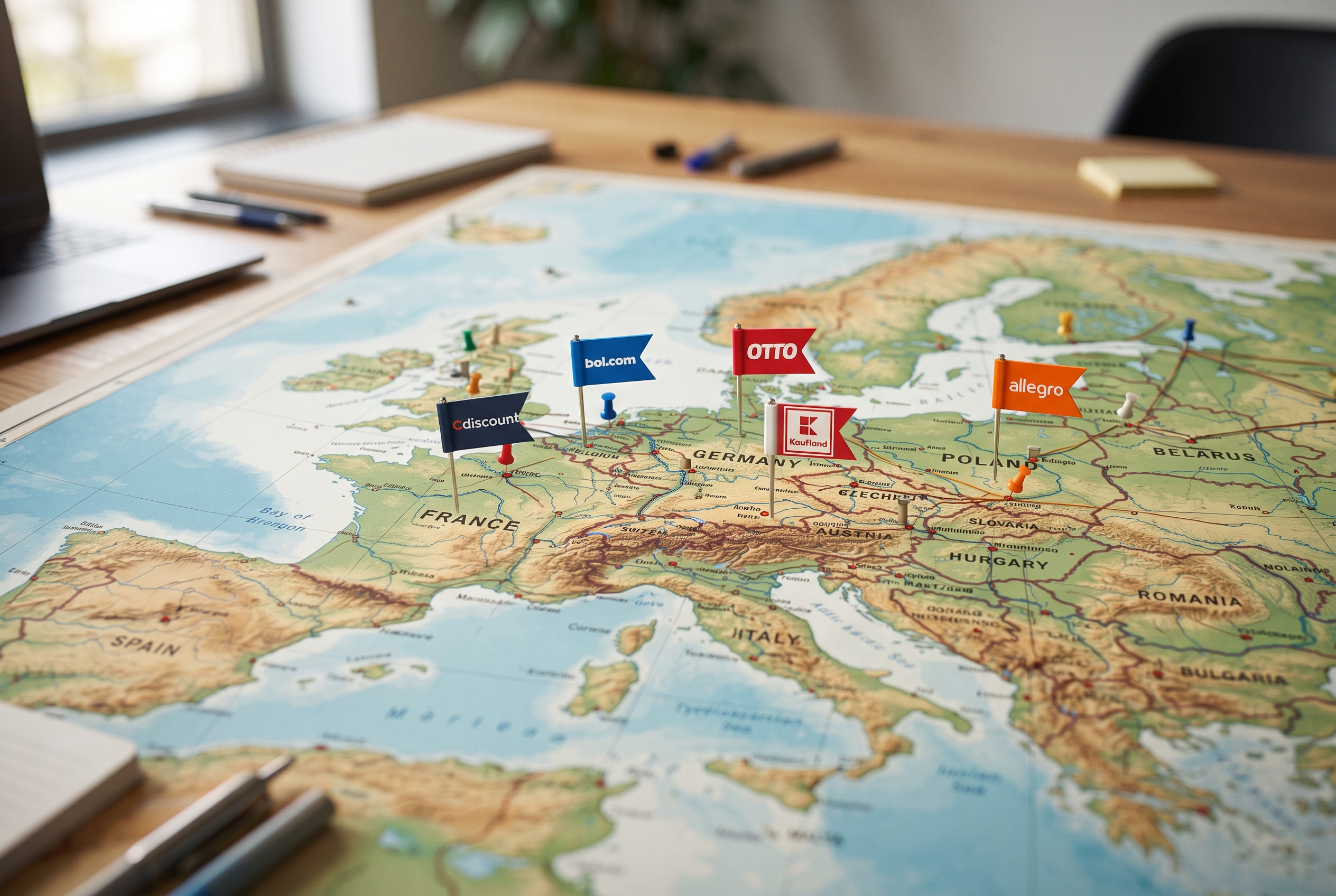
TikTok Shop has local seller registration in ten European markets. On 15 June 2026 it opened four of them — Austria, Belgium, the Netherlands and Poland — bringing the European total to ten.
Sell Across EU is what bridges the gap. You register one home shop and TikTok creates destination shops in up to 13 European markets from the same Seller Center account. For an EU-registered seller, eligible home-shop countries are Germany, France, Italy, Spain, Ireland, Poland, Belgium and the Netherlands. For UK sellers, the programme opened on 19.10.2026 and reaches 12 EU destinations — Ireland is not in the initial launch.
The headline benefit is real: TikTok states you do not generally need a local business entity in each European market to start. What does not disappear is tax. VAT registration may still be required depending on where your business is established, where you hold stock, and what taxable sales you make — and any EU VAT registration must be in the same legal company name as your existing shop.

What does TikTok Shop cost?
Check what your commission is calculated on, because the documentation is not consistent. TikTok's older UK commission policy describes a base that includes VAT, buyer-paid shipping and platform-funded discounts. Its newer finance guidance excludes platform-funded discounts from net sales and sets out a different formula. Third-party fee guides split roughly down the middle on whether VAT sits inside or outside the base.
That difference is not academic. On a £30 VAT-inclusive order, 9% of the gross is £2.70 and 9% of the £25 ex-VAT figure is £2.25 — a 20% swing in what the channel costs you, on exactly the same sale. The only reliable answer is your own order-level breakdown in Seller Center. Pull one real settlement record before you price anything.
One further wrinkle for UK-established sellers: TikTok treats its platform commission rate as VAT-inclusive, and the VAT element is generally reclaimable through your VAT return. So the cash deducted and the net cost of the fee are not the same number. Whether a stacked fee load of commission plus creator commission comes to roughly 20% or closer to 26% of your net revenue depends on both that recovery and the commission base above. Model it with your own figures rather than a rule of thumb.
Refunds reverse the platform commission proportionally — full commission on a full refund, pro rata on a partial one. Creator commission behaves differently: once it has settled to the creator, it is generally not recoverable, so a return that lands after settlement costs you the affiliate payout as well as the sale.
Who actually ships the order?
Three models, and for cross-border European orders the choice is more constrained than brands expect.
Shipped via Platform. TikTok collects labelled parcels from your warehouse and handles the onward leg. This is TikTok's recommended default for cross-border European orders. For UK-to-EU shipments it requires a UK EORI and UK VAT details, and it does not support items over €150 excluding VAT.
Shipped by Seller. You handle packing, shipping, customs and delivery with approved carriers. This is where the £0.50 per delivered order applies. On EU cross-border routes it is restricted and may require an allowlist through your account manager.
Fulfilled by TikTok (FBT). TikTok stores, picks, packs, ships and handles returns. Within the EU it operates from Spain, Germany, Italy and France warehouses, and a seller outside Germany can ship from the German FBT warehouse provided they hold a German shop and German VAT registration.
The constraint that catches UK brands: FBT is not currently supported for UK-to-Europe shipments. If your European strategy is "put stock in a TikTok warehouse and let them handle it", that route is closed from the UK today. Shipped via Platform is the default instead.
On warehousing, TikTok is more permissive than most guidance suggests. A UK seller can keep using UK warehouses for European orders — they sync automatically, and a local EU warehouse is optional rather than required. Adding an EU warehouse in the same country as a shop's region does require a local VAT number. Holding stock closer to the customer is a delivery-speed and cost decision, not a condition of entry.
Whichever model you choose, the demand pattern is the hard part. TikTok Shop sales are spiky in a way marketplace sales are not. One video outperforming can produce a week of volume in an afternoon, and going out of stock at exactly the moment the algorithm decided to help you is a common and expensive failure.
How and when do you get paid?
There is no single payout delay. TikTok runs settlement tiers, assessed monthly, counted from the delivery date.
Add roughly three business days of bank processing after the settlement period ends before the money is actually in your account. A separate reserve can also apply: a third-party payment provider may withhold funds for 30 calendar days after delivery for sellers who miss the Seller-Fault Cancellation Rate criteria.
The working-capital implication is the thing to plan around, and it is sharpest at exactly the wrong moment. A brand launching on TikTok Shop starts on the 31-day introductory tier, which means paying for stock, shipping and creator commission for a month before the first money arrives. In a fast-growing launch that gap widens rather than closing. Earning your way down to the 8-day standard tier changes the cash profile of the channel completely, which makes performance score and cancellation rate a finance concern rather than just an operations one.
Withdrawals also need bank details matching your business registration exactly. A mismatch there is a more common cause of a stuck payout than anything to do with the money itself.
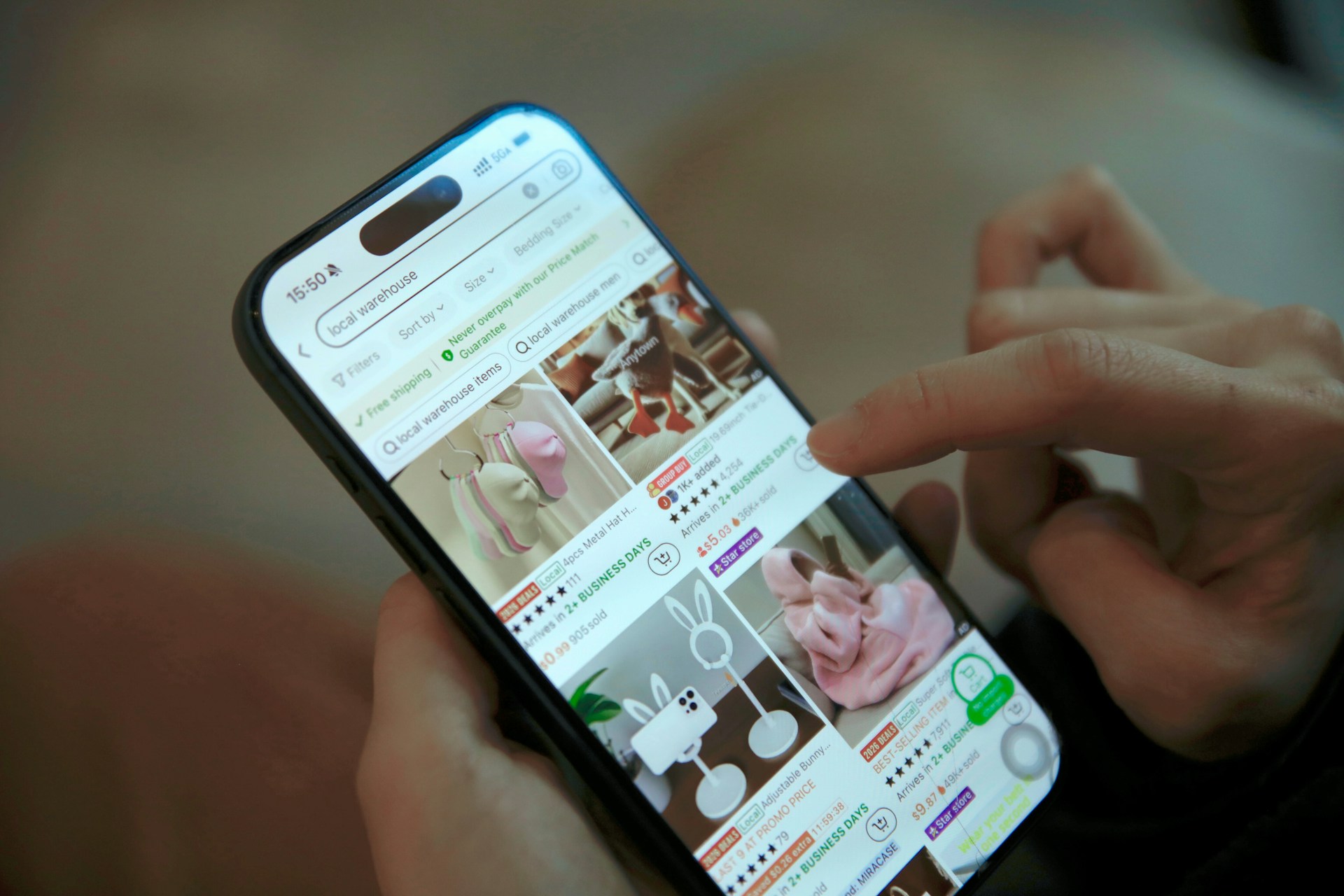
Why TikTok Shop is not a marketplace
On Amazon or bol.com, demand mostly already exists. Someone searches for what you sell and your job is to be the best answer — good listing, right price, available stock. Discovery is largely a search problem.
TikTok Shop has search too, in the Shop tab, and TikTok describes it as high-intent traffic. But the bulk of discovery happens the other way round: a video surfaces a product to someone who was not looking for it. That shifts where your effort goes. Your job becomes producing or sourcing enough good video that the algorithm keeps finding new buyers, rather than optimising a listing and waiting.
Three practical consequences follow. Creative made for other platforms tends to travel badly, because feed-native content outperforms content that looks like an advert — plan for making content for TikTok rather than repurposing it. Categories with a visible demonstration, such as beauty, skincare, supplements and gadgets with an obvious before-and-after, are widely reported to do better than ones needing a spec sheet. And the affiliate programme is the main lever that scales content without scaling your own production, which makes creator recruitment an ongoing operational function rather than a campaign.
Sales do not stop dead the moment you stop posting — Shop tab search, recommendations and existing creator videos keep working. But the channel rewards consistent content supply in a way a marketplace listing does not, and a brand treating TikTok Shop as another catalogue integration will usually conclude it does not work.
What do you need before you start?
An eligible registered business. You need a business registered in an eligible home-shop country, not a company in every market you sell to. A UK seller can reach EU destinations through Sell Across EU on a UK entity and a UK bank account.
The right VAT position, which is narrower than "register everywhere". You may need an EU VAT registration if your business is established in the EU, if you hold stock there, or if your sales otherwise create a local obligation. Where you qualify, the One-Stop Shop lets you report eligible cross-border B2C sales through a single Member State of identification rather than registering in each country. IOSS is narrower still: it covers imported distance sales in consignments valued at €150 or less, and non-EU sellers generally need an intermediary to use it.
Product compliance. GPSR requires a responsible person in the EU and specific information on the listing. EPR registration applies per country for packaging and several product categories, and marketplaces check it.
A returns answer for Europe, before your first EU order. This is the detail most brands miss: EU customer returns cannot be shipped back to a UK warehouse. TikTok gives three options — run your own EU return warehouse, use TikTok's platform return warehouse where returned items are disposed of at your cost, or go refund-only, where the customer keeps the item and you absorb it entirely. Each has a very different margin consequence, and the choice is yours to make deliberately rather than discover. We cover the wider economics in cross-border returns.
If you are at the setup stage, our guide to TikTok Shop seller requirements and setup walks through the account itself, and the zero-friction guide to TikTok Shop expansion covers moving between the UK, EU and US.
Frequently asked questions
How much does TikTok Shop take per sale?
9% standard commission in the UK, with an effective 5% for specified Electronics and Beauty & Personal Care categories, and a promotional rate reported at 1.8% for roughly the first 90 days. Add creator commission where the sale came through an affiliate, and £0.50 including VAT per delivered order if you ship it yourself. Confirm what the commission is calculated on in your own Seller Center breakdown, because TikTok's documentation is not consistent on whether VAT and buyer-paid shipping sit inside the base.
Do you need followers to open a TikTok Shop?
No. Seller accounts are not gated on follower count — that requirement applies to creators joining the affiliate programme, not to brands selling. What you need is an eligible registered business, bank details matching it, and product compliance for your market.
How long does TikTok Shop take to pay out?
It depends on your settlement tier: 31 days from delivery as a new seller, 8 days as standard, 3 days accelerated and 1 day express, with a deferred 31-day tier during security checks. Add about three business days of bank processing on top. Tiers are reassessed monthly based on performance score and GMV.
Can you sell on TikTok Shop without a company in that country?
Generally yes, within Europe. TikTok states you do not normally need a local business entity in each market — a business registered in an eligible home-shop country can reach the other European destinations through Sell Across EU. VAT is the separate question, and depends on where you are established, where stock sits and what sales you make. Outside that programme, or for markets it does not cover, many international brands enter through a partner acting as the legal seller — we explain that model in our guide to merchant of record for physical goods.
Can I use Fulfilled by TikTok for European orders from the UK?
Not currently. FBT is not supported for UK-to-Europe shipments. Shipped via Platform is the default for those orders, with Shipped by Seller available subject to route restrictions. Within the EU, FBT operates from Spanish, German, Italian and French warehouses.
What happens to commission when a customer returns something?
TikTok refunds platform commission on the refunded items, proportionally for a partial refund. Creator commission is treated differently and is generally not recoverable once it has settled to the creator. Your outbound shipping, return handling and, in Europe, any disposal or refund-only cost are not recovered either — which is why a high-return category needs a return allowance built into the price.
Where this fits
TikTok Shop rewards brands that can do two things at once: keep good content flowing, and ship reliably into European markets that each carry their own VAT, compliance and returns rules. Most brands are set up for one or the other.
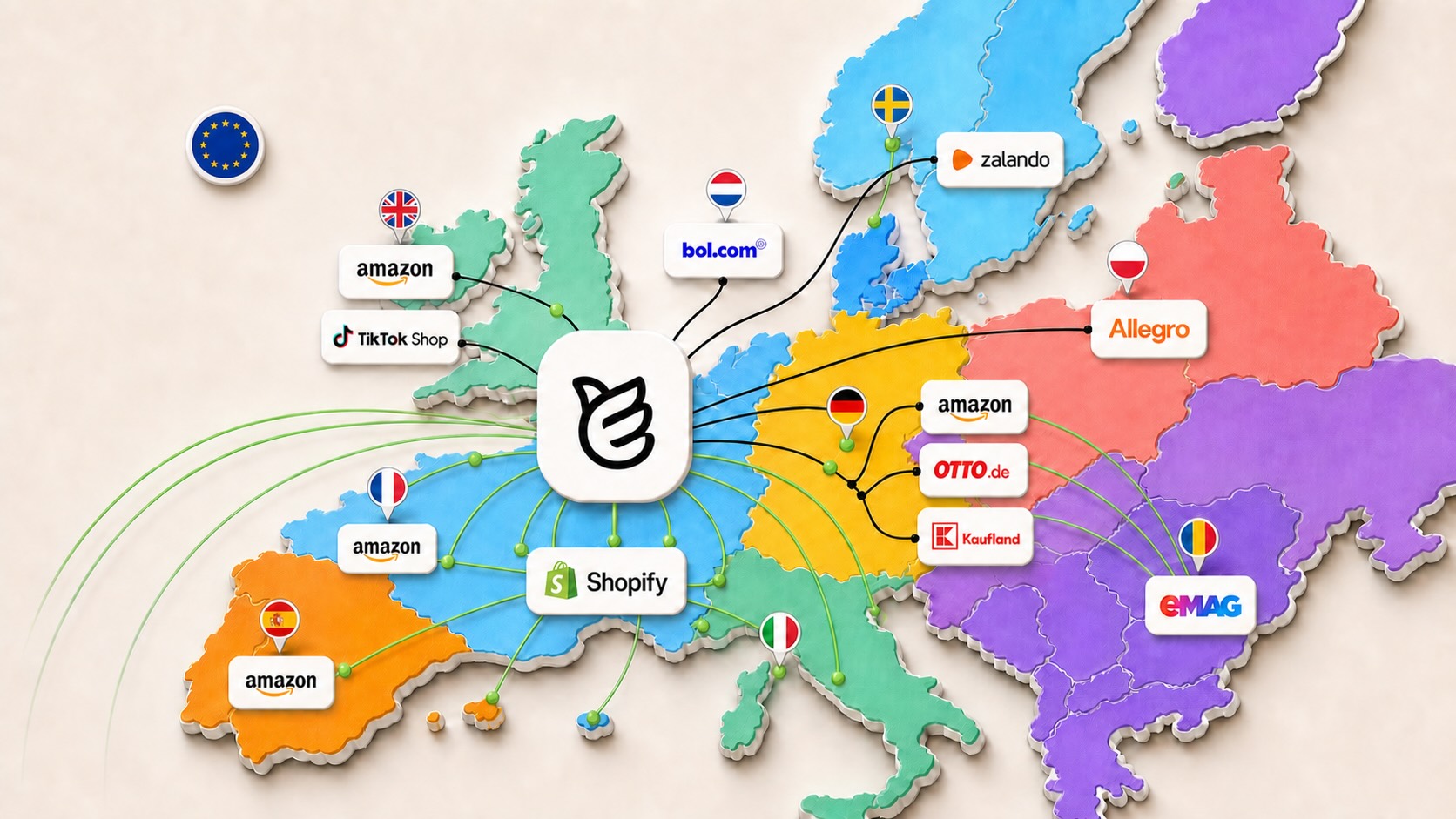
eBrands runs TikTok Shop as the seller and importer of record across the UK and EU, alongside Amazon, twenty other marketplaces, D2C and retail — so the entity, VAT position, EU returns capability and stock placement are already in place, and the creative side can be run by us or by your own agency. If you want to see what that looks like for your brand, start here.
Rates, market availability and programme terms change frequently. Figures here are drawn from TikTok's own seller documentation and policy pages current in November 2026; the UK commission policy referenced is dated 18.09.2025. Confirm in Seller Center before making pricing or fulfilment decisions. This article is general information, not tax or legal advice.
Sources: TikTok Shop UK payment settlement period · TikTok Shop UK settlement · TikTok Shop Sell Across EU · TikTok newsroom on the European expansion · UK commission rates · Shipped by Seller fee

“ We are dedicated to assisting you; please contact us for any information or inquiries you may have. ”