Reverse Logistics for Cross-Border Brands: What Returns Really Cost and How to Handle Them

A return on a $40 domestic order costs somewhere around $5 to $8 to process. The same return on a cross-border order can run $25 to $40 once international return shipping, customs clearance in reverse, re-inspection and repackaging are counted. Most brands model returns as a single percentage applied across the business, which works until a meaningful share of orders starts crossing borders, at which point the model quietly stops describing reality.
The short answer: reverse logistics is everything that happens after a customer decides to send something back. For cross-border brands it typically costs three to five times what a domestic return costs, and a portion of it is recoverable if anyone bothers to claim it.
Key takeaways
- Ecommerce return rates run around 20% overall, with apparel between 20% and 40%.
- Processing a return commonly costs 20% to 30% of the item's value, before the refund itself.
- EU law sets a 14-day withdrawal right, so a baseline return volume is structural rather than optional.
- Duty and import VAT on genuine returns are often recoverable, and most brands never claim them.
- Consolidating returns, rather than shipping each one back individually, is the largest single cost lever.
What the numbers actually look like
Return data is messier than it is usually presented. No EU statistics agency publishes an official series, so every figure in circulation is an industry estimate, and the ranges are wide enough that quoting a single number is misleading.
What the sources broadly agree on: overall ecommerce return rates sit near 20% of online orders, well above physical retail. Apparel runs far higher, commonly 20% to 40%, with footwear similar, while beauty sits in the single digits to low teens. Germany is consistently the highest-returning major European market, with all-category rates reported around 30% and fashion-heavy figures higher still. Fit and sizing drives roughly half of apparel returns, which is why that category behaves so differently from the rest.
One finding worth noting because it runs against intuition: cross-border orders are returned less often than domestic ones, by a reported 30% to 50%, largely because customers anticipate the hassle and cost. Lower frequency, much higher cost per event. That combination is exactly the shape that makes a blended average useless for planning.
On cost, published estimates put reverse logistics at 20% to 30% of the original product value, with European processing costs broken down as roughly €5 to €15 for the return shipment, €8 to €15 in processing labour and €2 to €10 in restocking. For higher-value categories like electronics and furniture, Richpanel's benchmark analysis notes that reverse logistics alone can exceed the product's margin entirely.
Where the cost actually sits
The refund is the visible part and rarely the expensive part. Five other costs stack behind it.
Return shipping comes first, and it is higher per parcel than outbound because return volumes are unpredictable and consolidation is harder. Then processing labour, which is receiving, inspecting, grading and deciding what happens to the unit, and which is the line most brands underestimate because it is paid in hours rather than invoices. Restocking or disposition follows: repackaging a sellable item, refurbishing a marginal one, or writing off something that cannot be resold.
Then two costs that rarely appear in a returns model at all. Payment processing fees are frequently not refunded to you when you refund the customer, so every return carries a small permanent cost. And support labour: when a return starts as an email handled manually, a 20% return rate consumes a meaningful share of a support team's week before anyone touches a parcel.
Which argues for measuring cost-per-return rather than return rate. Return rate tells you how often it happens. Cost-per-return tells you what it does to the business, and those two numbers can move in opposite directions.
Why cross-border returns are a different problem
Three things change once a border is involved.
The return shipment is an import into whichever country it arrives in, so it needs a customs declaration, correct classification and a party responsible for the entry. A parcel sent back without the right paperwork can be held, charged duty a second time, or refused.
Transit is slower and less reliable in reverse than outbound, which matters because EU law requires the refund within 14 days of certain triggers. A brand waiting for goods to arrive before refunding can find the legal clock running faster than the parcel.
And the economics invert. A €15 item returned from another country can cost more to retrieve than it is worth, which is why some brands refund without requesting the return at all for low-value goods. That is a legitimate commercial decision once you have the numbers, and guesswork otherwise.
Worth separating intra-EU from cross-border into the EU. Returns moving between EU member states stay inside the customs union, so they travel without customs friction even though carrier surcharges still apply. A return from an EU consumer to a warehouse outside the EU is a full import and export event, and that is where the cost multiplies.

What EU law requires
This is the part that makes returns structural rather than discretionary in Europe.
EU consumer law gives shoppers at least 14 days from receipt to withdraw from an online purchase without giving a reason, and a further period to send the goods back. Refunds are due within 14 days of the relevant trigger. Many retailers extend the window to 30 days or more in competitive categories, so operations should be built for the longer window rather than the statutory floor.
Two details catch sellers out. If you fail to inform buyers about return costs before purchase, the withdrawal window can extend dramatically, by up to a year in some circumstances. And sources tracking the 2026 updates report a new requirement for a digital withdrawal mechanism on the storefront, which is worth confirming against the current directive text for your markets before you build to it.
The practical consequence, as Landmark Global puts it, is that return volume in Europe is a structural feature of trading there rather than a service choice. You cannot policy your way out of it, so the lever is cost per event rather than frequency.
The duty and VAT nobody reclaims
Here is the recoverable money, and it is routinely left on the table.
When goods are genuinely returned, standard-rate duty and import VAT paid at the original import are often recoverable. In the EU, returned goods relief covers goods coming back within a defined period in unaltered condition. In the US, rejected merchandise drawback covers goods returned because they did not conform, and unused merchandise drawback covers stock that leaves the country again, as we set out in our guide to duty drawback.
Two caveats keep this honest. Claims need the original import entry and the return movement linked by records, which is precisely the documentation most brands cannot produce. And the EU's flat per-item charge on low-value consignments, introduced when the €150 duty exemption was removed, is not recoverable in the same way, a point covered in our piece on the end of duty-free parcels.
For a brand returning meaningful volume, this changes the landed cost picture in both directions. If your landed cost model counts duty on everything imported and never counts the recovery on what comes back, it is overstating cost on the way in and understating it on the way out.
The levers that work
Consolidate rather than shipping singles. Collecting returns at a local hub and moving them back in batches is consistently described as the largest single cost lever in cross-border reverse logistics. One consolidated shipment clears customs once.
Hold returns locally where you can. If stock is already in the market, a return goes to a local warehouse, gets inspected and goes back on the shelf, with no customs event at all. This is the strongest argument for in-market inventory beyond delivery speed, and it is why returns cost so much less for brands holding European stock than for brands shipping every order from outside.
Steer toward pickup points. Research cited by Zineps found per-return costs falling 15% to 25% when returns were routed to drop-off points instead of home collection, with no change to the return rate.
Grade on arrival and act fast. A sellable item sitting in a returns queue is lost margin, since the longer it waits the more likely it is to be marked down. Speed of disposition matters as much as cost of processing.
Attack the causes in the highest categories. Fit and sizing drives roughly half of apparel returns, so sizing guidance, consistent measurements and better imagery reduce volume at source in a way no logistics optimisation can.
Decide your low-value threshold deliberately. Below some item value, refunding without retrieval is cheaper than the return. Work out that number rather than applying one policy to a whole catalogue.
Who actually handles this
Returns sit awkwardly across functions, which is part of why they stay expensive. The customer-facing side belongs to service, the physical side to logistics, the refund to finance, and the customs side to whoever handles imports. A brand selling into Europe from outside it often finds no single party owns the whole flow.
That ownership question is also a legal one. Whoever is merchant of record for the sale carries the consumer law obligations on withdrawal and refund timing, and whoever is importer of record holds the entries that any duty recovery depends on. If those are different parties and neither holds the returns process, the recoverable money generally stays unrecovered.
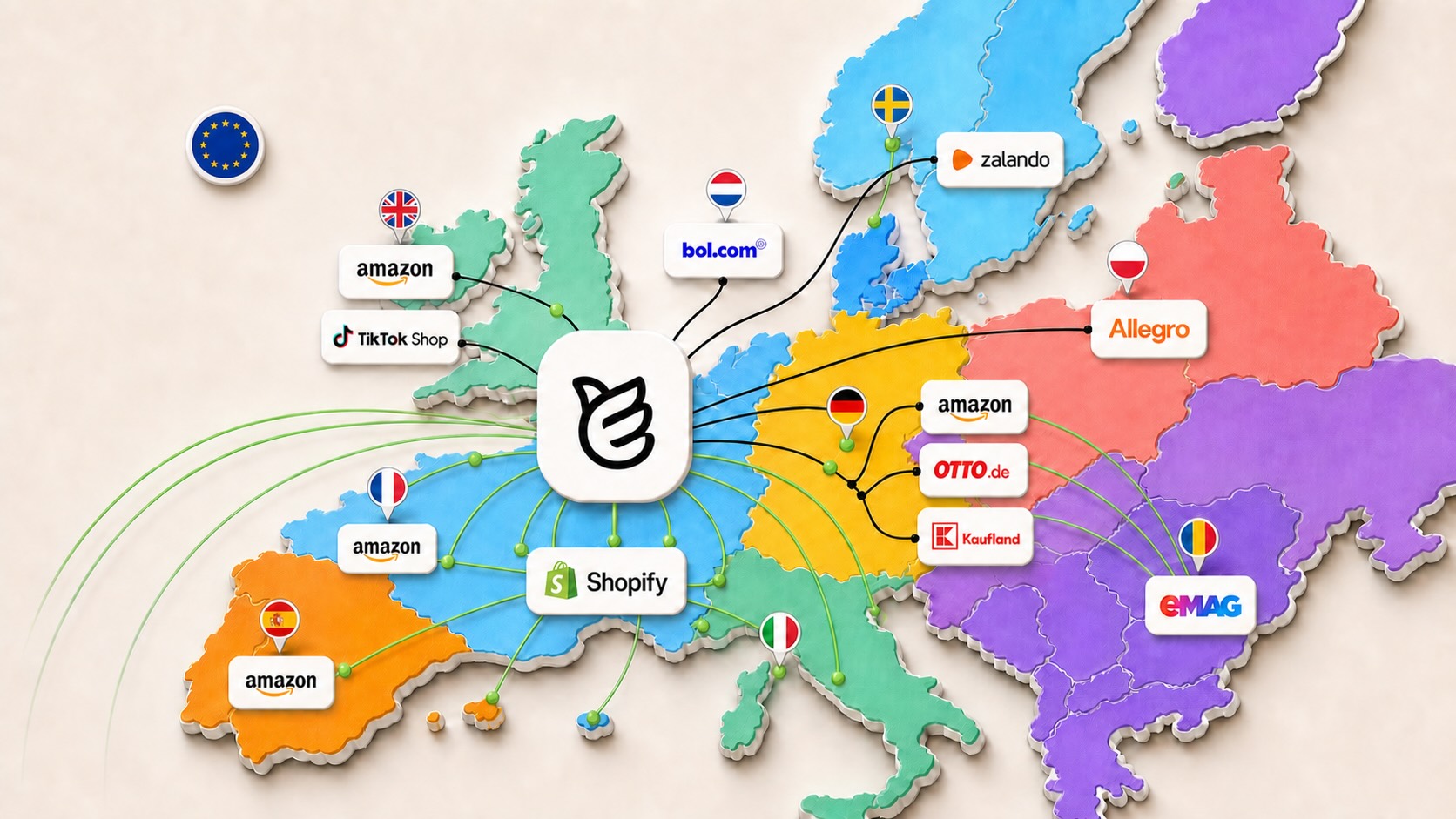
eBrands runs returns as part of operating the channel. Our European and US entities act as merchant of record and importer of record, inventory sits in-market so most returns never cross a border at all, and the same operation handles the customer, the parcel, the refund and the customs records behind both. The brand and the inventory stay yours. If returns are currently a number you see monthly without being able to explain, that is usually a measurement problem before it is a logistics one, and our team can help you break it down.
Frequently asked questions
What is reverse logistics?
Everything that happens to a product after a customer decides to send it back: return shipping, receiving, inspection, grading, restocking, refurbishment or disposal, and the refund and records that go with it.
How much does an ecommerce return cost?
Commonly 20% to 30% of the item's value. In Europe that breaks down roughly into €5 to €15 return shipping, €8 to €15 processing labour and €2 to €10 restocking. Cross-border returns can run three to five times the domestic cost.
What is the EU return rate for ecommerce?
No official series exists, but industry estimates put it around 18% to 22% overall, with apparel commonly 20% to 40% and Germany the highest-returning major market. Treat any single figure as an estimate rather than a statistic.
Can I reclaim duty on returned goods?
Often yes. Returned goods relief in the EU and drawback mechanisms in the US can recover duty and import VAT on genuine returns, provided you can link the original import entry to the return movement in your records.
How do I reduce cross-border return costs?
Consolidate returns rather than shipping singles, hold stock in-market so returns stay domestic, route customers to pickup points rather than home collection, and set a value threshold below which refunding without retrieval is cheaper.

“ We are dedicated to assisting you; please contact us for any information or inquiries you may have. ”