What Is a Bonded Warehouse? Duty Deferral for Brands Importing into the US and EU
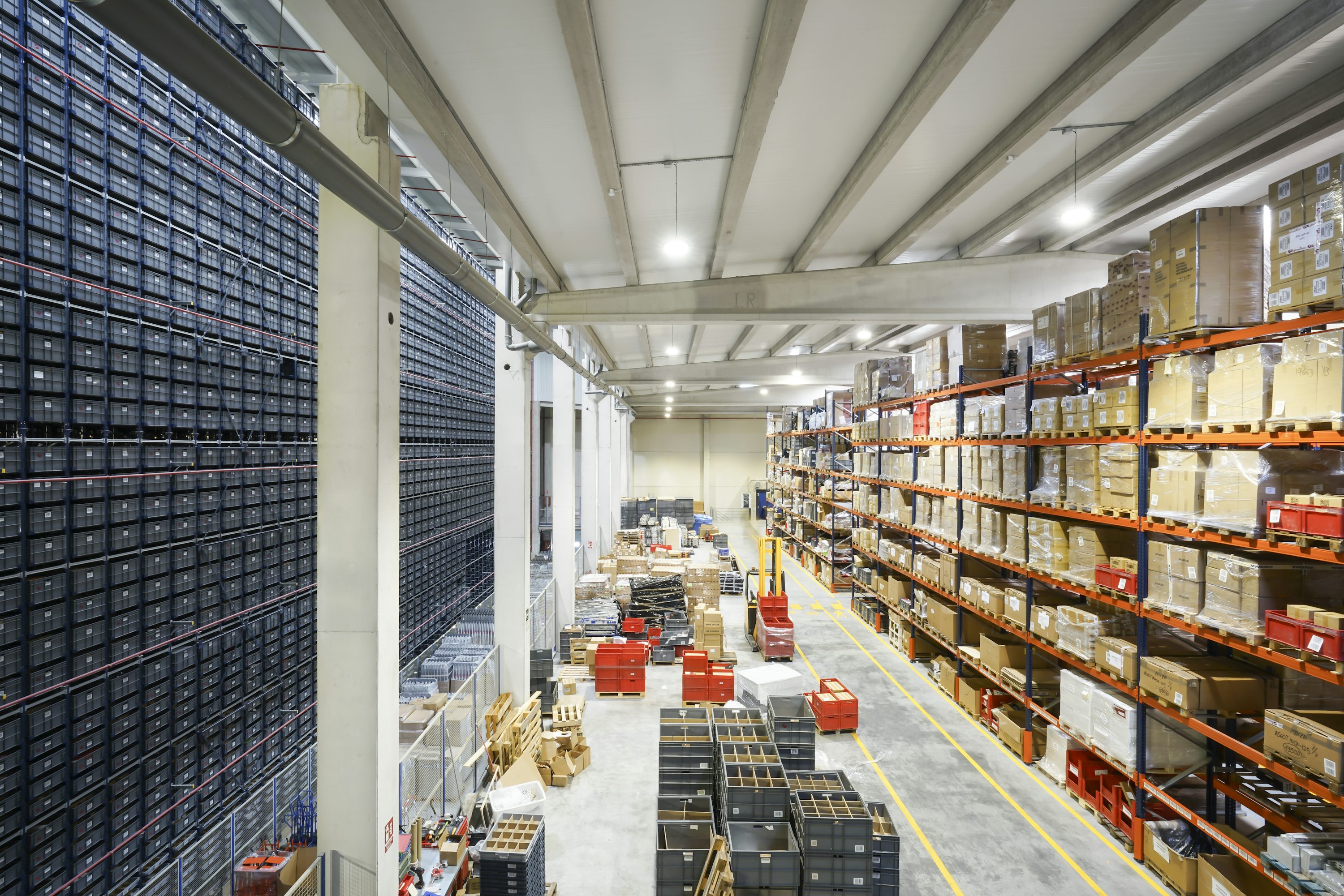
A bonded warehouse is a storage facility where imported goods sit under customs control with the duty unpaid. The goods are physically in the country; as far as customs is concerned they have not been imported yet. You pay when they leave — and if they leave by being re-exported, in most cases you do not pay at all.
For most of the last decade this was a niche instrument. Tariff rates were low enough that deferring duty on a container of consumer goods saved less than the storage cost. That changed when tariffs rose, and bonded storage went from a logistics footnote to something finance teams ask about by name.
Here is how it works on both sides of the Atlantic, where the US and EU versions differ in ways that matter, and the arithmetic that decides whether it is worth doing.
Key takeaways
- Duty is deferred until goods are withdrawn, and avoided entirely on goods re-exported from the warehouse.
- The US caps storage at five years — counted from the date of importation, not from arrival at the warehouse.
- The EU sets no equivalent time limit, and suspends import VAT as well as duty. For a European brand that is the larger cash effect.
- US duty is charged at the rate in force on the withdrawal date, not the import date — a bet that cuts both ways.
- A bonded warehouse is for storage. Assembly, manufacturing and most processing need a foreign trade zone or a specific warehouse class.
- It rarely pays on fast-moving stock or low duty amounts; the saving is financing, not a discount.
What is a bonded warehouse?
Three things are true of goods in bonded storage, and together they explain the whole instrument.
The duty is owed but not yet payable. Customs has an interest in the goods, secured by a bond the warehouse operator posts, typically covering a percentage of declared value. Nothing is forgiven; the clock is simply paused.
You can withdraw in parts. Duty falls due only on what actually leaves. A container imported in January and sold down over eight months generates eight smaller duty payments rather than one large one at the border.
Re-export generally escapes duty altogether. If the goods leave the country without ever entering free circulation, the duty that was deferred is never triggered. For a brand using one market as a distribution hub for several, this is the part that matters most.
What you cannot usually do is work on the goods. Bonded storage is storage. Repacking, sorting and light manipulation are permitted in specific circumstances; manufacturing and assembly generally are not, and need a different structure.
How it works in the United States
US bonded warehouses are governed by 19 CFR 19.1, which defines eleven classes. Most brands only ever deal with two or three of them.
Two rules decide most of the economics.
Five years, from importation. Goods may remain for up to five years — and the clock starts on the date of importation, not the date they arrive at the warehouse. That distinction catches people out when goods are transferred between facilities. Before the five years expire, each unit must be withdrawn for consumption, withdrawn for export, or destroyed under customs supervision. Anything still sitting there afterwards is treated as abandoned.
The duty rate is set on the day you withdraw. Not the day you imported. In a stable tariff environment this is a footnote. In a volatile one it is a position: if rates on your category fall while your goods sit, you pay the lower rate; if they rise, you pay the higher one. Brands using bonded storage specifically to wait out a tariff change should be clear that they are taking a view on policy, not hedging against it.
For the mechanics of what you will owe when the goods do come out, our guide to calculating import duty and landed cost covers the calculation, and HS codes explained covers the classification that drives the rate.

How the EU version differs
The EU equivalent is called customs warehousing, and it runs under the Union Customs Code. The principle is the same — non-Union goods held under customs control with charges suspended — but two differences are large enough to change the decision.
There is no five-year clock. EU customs warehousing carries no equivalent storage time limit. Goods can remain under the procedure indefinitely, subject to the authorisation holding and the stock records being right. For slow-moving or seasonal inventory, that removes the deadline that makes the US version awkward.
Import VAT is suspended as well as duty. This is the one most brands underestimate. In the US you are deferring a duty rate that might be a few percent. In the EU you are deferring duty plus VAT at the local rate — 19% in Germany, 21% in the Netherlands and Spain, 25.5% in Finland. On a container of consumer goods, the suspended VAT is usually several times the suspended duty, and the cash-flow effect follows accordingly.
Where goods are released for free circulation, duty and VAT fall due then. Where they are re-exported, neither does. Some member states also allow goods to move on under VAT exemption to the destination member state, which interacts with how you are registered — the schemes are covered in OSS, IOSS and postponed VAT accounting.
The access cost is authorisation. The warehouse operator needs prior approval from the national customs authority, which examines premises, security arrangements, financial solvency and record-keeping, and audits against them afterwards. In practice a brand does not seek this itself — it uses a provider that already holds it, in the same way it uses a 3PL. Rules differ by member state, so confirm locally rather than assuming EU-wide uniformity.
Bonded warehouse or foreign trade zone?
In the US these two get discussed interchangeably and should not be.
The short rule: bonded storage suits a defined hold on finished goods, particularly where some of it will be re-exported. A trade zone suits indefinite holds, high entry volume, or any operation where something is done to the goods before they are sold. Large importers sometimes run both.
Does it actually pay?
The saving is financing, not a discount. You are keeping cash that would otherwise have gone to customs, and the value is what that cash is worth to you for the months it stays.
A worked example circulating in the trade press puts it plainly: $20 million of average inventory at a 12% blended duty rate creates a $2.4 million deferred duty float, which at a 9% cost of capital is worth around $216,000 a year before any re-export or fee effects.
Scale that to a consumer brand and the picture gets honest quickly. On $500,000 of inventory at a 10% duty rate, you are deferring $50,000. Held six months at a 9% cost of capital, that is worth about $2,250 — before bonded storage rates, which run above standard warehousing, and bonding fees, which published figures put somewhere in the range of 0.5% to 1.5% of goods value depending on the source.
So the test is not "would deferral be nice". It is whether three things are true at once: a duty rate high enough to make the deferred amount meaningful, a holding period long enough for the money to be worth something, and a cost of capital high enough that cash has real value to you. Miss any one and the storage premium eats the benefit.
The exception is re-export. If a material share of a shipment will leave the country again, the saving stops being financing and becomes an actual avoided cost — and the arithmetic changes completely. A brand using the US as a hub for Canada and Latin America, or the Netherlands as a hub for the EU, is the clearest case for bonded storage there is. Where goods have already been imported and duty paid, duty drawback can recover some of it after the fact, but avoiding the charge up front is cleaner.
When it does not pay
Fast-moving inventory. If stock turns in six weeks, there is nothing to defer. The administrative overhead costs more than the float is worth.
Low duty rates. At 2–3%, the deferred amount on a normal consignment will not cover the storage premium.
Uncertain plans. Bonded storage rewards knowing what will happen to the goods. If you do not know whether they will be sold domestically or re-exported, the flexibility is real but you are paying for optionality you may not use.
Restricted categories. Some perishables, hazardous goods and regulated categories face limits on bonded storage. Check before planning around it.
And one that is easy to miss: bonded storage does not pause your other obligations. Product compliance, labelling and GPSR requirements apply when goods enter the market, and goods sitting in a bonded facility still have to be sellable when they come out.
Frequently asked questions
What is the difference between a bonded warehouse and a normal warehouse?
Goods in a normal warehouse have cleared customs and the duty is paid. Goods in a bonded warehouse are under customs control with duty suspended, secured by a bond, and subject to record-keeping and inspection requirements that ordinary storage does not carry.
How long can goods stay in a bonded warehouse?
In the US, up to five years from the date of importation, after which unwithdrawn goods are treated as abandoned. In the EU, customs warehousing carries no equivalent time limit. That difference alone decides the structure for slow-moving stock.
Do you pay VAT on goods in a bonded warehouse?
Not while they remain under the procedure in the EU — import VAT is suspended alongside duty and becomes payable on release for free circulation. For European brands this is usually the larger of the two deferred amounts.
Can you sell goods while they are in bonded storage?
You can sell them, but the buyer takes delivery only once they are withdrawn and the duty is paid, or once they are exported. Title can change while the goods remain under customs control; the customs position follows the goods, not the ownership.
Is a bonded warehouse the same as a free trade zone?
No. A bonded warehouse is for storage with limited manipulation and has a storage time limit in the US. A trade zone allows manufacturing and assembly, has no equivalent limit, and can offer tariff benefits a bonded warehouse cannot — at the cost of more complexity.
Who posts the bond?
The warehouse operator, not usually the brand. That is why most companies access bonded storage through a provider that already holds the authorisation and the bond rather than establishing their own facility.
Where this fits
Bonded warehousing is one answer to a question brands only start asking once tariffs are high enough to notice: how much cash is tied up in goods that have not sold yet, and when exactly does it have to leave the business? The answer depends on duty rate, holding period and whether anything will be re-exported — and on which side of the Atlantic the stock is sitting.
eBrands acts as importer and seller of record across Europe and North America, which means the entity, the customs position and the stock placement sit with us rather than being a project the brand has to build. If you want to see what your inventory is actually costing to hold, market by market, Apollo Intelligence is where that view lives.
Customs rules, duty rates and authorisation requirements change and differ by country; US warehouse classes are summarised from 19 CFR 19.1 and EU customs warehousing from general guidance rather than national rules. Several widely cited guides on this topic are published by companies that operate bonded facilities, and cost figures vary between them. Confirm your position with a licensed customs broker or your national customs authority. This article is general information, not legal or tax advice.
Sources: 19 CFR 19.1, classes of customs warehouses · FreightFigures on US duty deferral · Bonded warehousing vs FTZs · Dutifi on EU customs warehousing · Air Cargo Week on bonded warehousing as treasury strategy

“ We are dedicated to assisting you; please contact us for any information or inquiries you may have. ”