Local Payment Methods in Europe: Why Cards-Only Checkouts Lose Sales

A brand launching in the Netherlands with a card-only checkout is asking roughly seven in ten Dutch shoppers to pay in a way they do not normally use. Research cited by the Dutch payments industry puts the share of consumers who abandon a cart when iDEAL is missing at 48%. That is not a conversion optimisation problem to revisit next quarter. It is half the market deciding not to buy at the last step, and the brand usually reads it as weak demand rather than a checkout fault.
The short answer: Europe does not have one dominant payment method. Each market has its own, and in several countries the local method handles more volume than cards do.
Key takeaways
- iDEAL handles roughly 70% of Dutch online payments, and Bancontact reaches a comparable share of Belgian shoppers.
- BLIK processed 2.9 billion transactions in Poland in 2025 and now outpaces cards there.
- Germany runs on invoice and buy now pay later rather than cards, at around a quarter to a third of transactions.
- A missing preferred method accounts for a meaningful share of all cart abandonment, with published estimates around 13%.
- Adding methods adds settlement, refund and chargeback handling in each one, which is where the work actually sits.
What people actually pay with
The pattern that matters is that preference is national rather than continental, and it is often generational habit rather than price or convenience.
Netherlands. iDEAL, a bank-transfer rail, dominates at around 70% of online payments. Nothing else comes close, and the method is transitioning to the Wero brand from 2026, which is worth tracking if you are integrating now.
Belgium. Bancontact, which sits on effectively every Belgian bank card and is reported as used by around three quarters of online shoppers.
Poland. BLIK, a bank-app payment method, recorded 2.9 billion transactions in 2025 and holds a majority share of online payment volume. Polish shoppers trust their banking apps more than third-party wallets, which is why wallet-first strategies underperform there.
Germany. The outlier among large markets. Purchase on account, meaning pay after delivery, plus PayPal and buy now pay later together account for a large share of transactions, commonly reported between a quarter and a third. German consumers are notably reluctant to pay before receiving goods, which makes Klarna and similar options close to table stakes rather than an upsell.
France. Cards still lead, through Carte Bancaire rather than international schemes alone.
Nordics. Wallets and buy now pay later, with Sweden carrying the highest BNPL penetration in Europe. Klarna originated in that market for a reason.
Spain and Portugal. Bizum in Spain, Multibanco in Portugal, both well established locally and largely invisible to anyone planning from outside.
A useful planning rule from Scandiweb's 2026 country data: for each market where you exceed roughly 5% of revenue, add that market's dominant local rail. Below that threshold the integration work rarely pays back.
What the method is worth
The numbers published on this vary widely, and it is worth understanding why before relying on any of them.
Baseline cart abandonment in Europe sits around 70%, with roughly 13% of that traced to a missing preferred payment method. Several sources report conversion improvements from adding local methods in the range of 11 percentage points to 27%, and individual market cases higher still. The spread is large because the uplift depends almost entirely on whether the missing method was the dominant one in that country. Adding Bizum in the Netherlands does nothing. Adding iDEAL does a great deal.
The most credible framing comes from a pan-European deployment described by one payments provider: a marketplace running cards and PayPal only, with mobile traffic at 78% and checkout conversion at 58%, added twelve local methods and three BNPL providers, and conversion rose to 71.4%, with local methods contributing around 11 percentage points of that. Poland, where BLIK was the gap, gained the most.
So the honest version is that this is not a uniform few-percent lift. It is a large lift in markets where you are missing the default method and close to nothing where you are not, which is also why it should be prioritised country by country rather than rolled out everywhere at once.
One mechanism worth knowing, since it explains part of the effect. European card payments carry a strong customer authentication step, which adds friction and failure points. Methods like iDEAL and BLIK run through the customer's own bank app, so verification happens in an environment the shopper already trusts and uses daily. The local method is often not just preferred, it is a shorter path.

Who actually takes the payment
Here is the part that turns a checkout question into a structural one, and it is where most articles on this topic stop.
Each payment method you add is a commercial and operational relationship, not a toggle. It brings its own settlement timing, its own fee structure, its own refund mechanics and its own dispute process. Buy now pay later providers underwrite the consumer and take a different cut from card acquirers. Bank-transfer rails like iDEAL and BLIK generally have lower fees than cards but settle differently. Managing eight methods across six countries is a finance workload before it is a technical one.
Two further layers sit behind that. Settlement currency, because a brand collecting in euros, zloty and krona is managing foreign exchange whether or not it has decided to. And the legal position: whoever is merchant of record for the sale is the party in the payment relationship, the party that owes the refund within the statutory window, and the party answering a chargeback. Payment method coverage and merchant of record are the same question viewed from two ends.
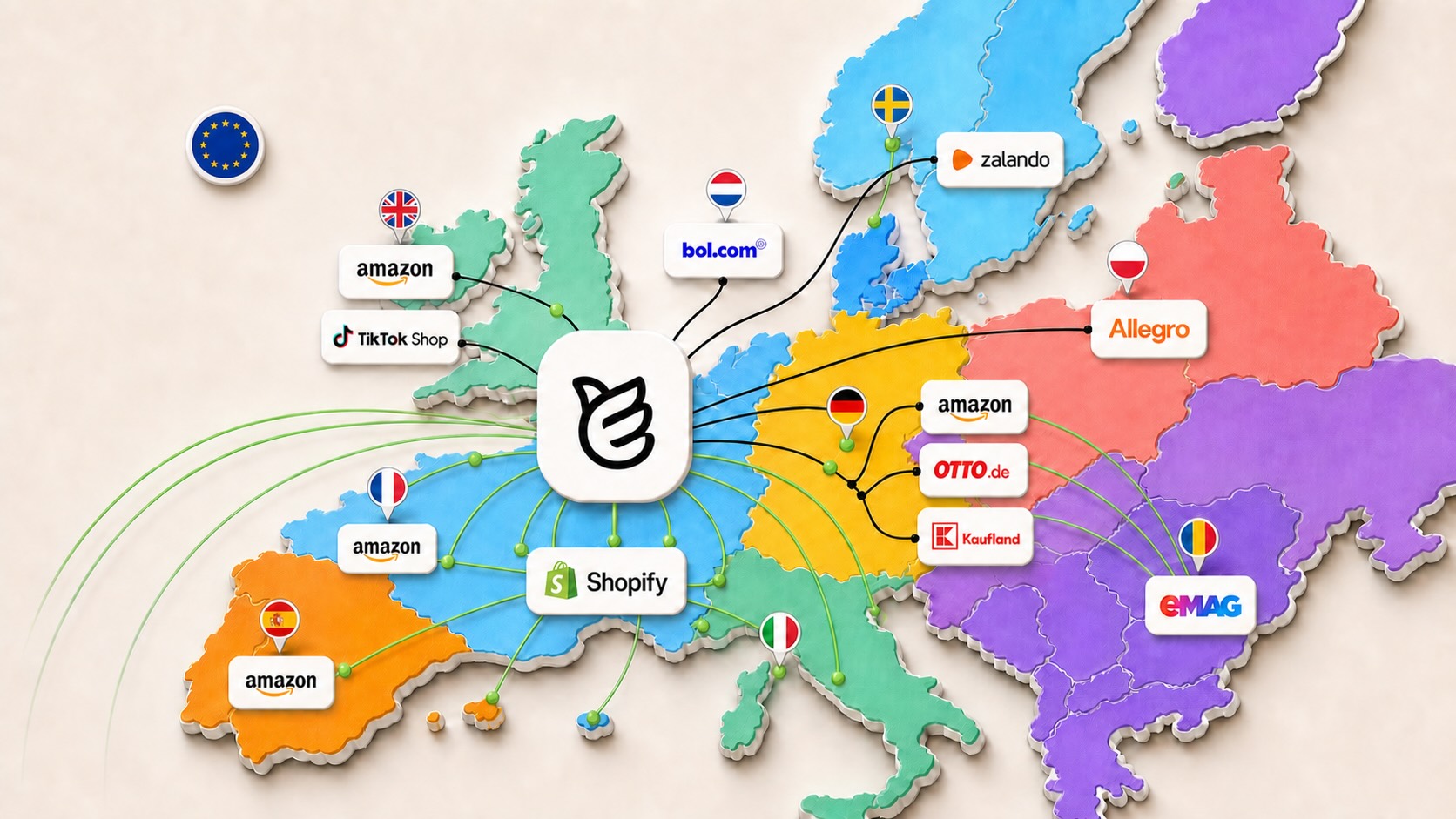
That also explains a pattern worth naming. Brands selling through marketplaces inherit the local payment methods automatically, because the marketplace is the merchant and has already built them. Brands selling direct have to build that coverage themselves, which is one of the quieter reasons a D2C launch in a new European market underperforms the same brand's marketplace listings there.
Getting it right without building a payments team
Four practical rules.
Prioritise by revenue share, not by method count. Offering fifteen methods badly is worse than offering four well. Work out which markets carry real revenue, add the dominant rail in each, and ignore the rest until they matter.
Display by geography. Show iDEAL first to Dutch visitors, Bancontact to Belgian ones. A single standardised checkout listing every method in the same order buries the relevant one for everybody, which is a common way to add methods and see no improvement.
Treat Germany as its own project. Pay-after-delivery changes your cash flow, your fraud exposure and your returns handling, not just your checkout. It is the market where payment method choice most affects the operation behind it.
Measure per country. Blended checkout conversion hides exactly the problem this article describes. A brand at 2.1% overall might be at 3.5% in France and 0.9% in the Netherlands, and only the per-market view tells you that, which is the kind of split Apollo Intelligence exists to surface for the brands we operate.
Where this fits the rest of European entry
Payment coverage belongs to the same group of obligations as everything else that makes European selling heavier than it looks. Collecting in a market means VAT registration and the right scheme. Selling to consumers means the withdrawal and refund rules that govern returns. Placing products on the market means an established European party accountable for them. Each one individually is manageable. Together they are the reason brands reach Europe through marketplaces first and find direct selling harder than expected.
eBrands covers that layer for the brands we operate. Our European entities act as Merchant of Record and Importer of Record, which means the payment relationships, the local methods, the settlement, refunds and the tax position sit with an operator already running them across the channels and markets we cover. The brand, the pricing and the inventory stay yours. If your European conversion looks weak in one country and fine in another, the checkout is worth checking before the marketing budget is, and our team can help you look at it per market.
Frequently asked questions
What are local payment methods?
Payment options specific to a country or region rather than international card schemes, usually bank transfers, bank-app payments or local card networks. Examples include iDEAL in the Netherlands, Bancontact in Belgium, BLIK in Poland and Bizum in Spain.
Which payment methods do I need to sell in Europe?
It depends on the market. A practical rule is to add the dominant local rail in any country where you exceed around 5% of revenue: iDEAL for the Netherlands, Bancontact for Belgium, BLIK for Poland, invoice and buy now pay later for Germany.
How much does a missing payment method cost?
Published estimates attribute around 13% of cart abandonment to a missing preferred method, and research on the Dutch market puts abandonment at 48% when iDEAL is absent. The impact is concentrated in markets where you are missing the default rather than spread evenly.
Do I need local payment methods on marketplaces?
Usually not, because the marketplace is the merchant of record and provides them. The gap appears in direct-to-consumer selling, where you own the checkout and therefore the method coverage.
Why is Germany different?
German consumers show a strong preference for paying after delivery, through invoice and buy now pay later, rather than paying up front by card. That affects cash flow, fraud exposure and returns handling, so it is an operational decision as much as a checkout one.

“ We are dedicated to assisting you; please contact us for any information or inquiries you may have. ”