Mobile POS: What Brands Actually Need for Pop-Ups, Markets and Events in Europe
A mobile POS is a till that fits in a pocket — a card reader paired to a phone, or increasingly just the phone, accepting contactless payments with no hardware at all. For a brand doing a pop-up in Amsterdam, a trade fair in Düsseldorf or a weekend market in Helsinki, it is the entire retail stack for three days.
Choosing one looks trivial. Two readers cost €29, both charge 1.75%, and the comparison appears to end there. It does not, and the differences that matter only show up when you are standing in a hall with no signal, a queue, and a fiscal receipt obligation you did not know existed.
Here is what actually separates them, which markets let you skip the reader entirely, and the European rule that catches brands out.
Key takeaways
- Hardware is cheap and nearly identical: readers at €29–39, transaction fees clustering at 1.69–1.75%.
- Offline mode is the real differentiator. Most readers have none; a dead connection means no sales.
- Tap to Pay on iPhone now covers 29 European countries — but availability from your acquirer is a separate question from Apple's.
- Most tap-on-phone providers are single-market. Only a few work across Europe, which matters for a touring brand.
- A phone-based till is still a till: fiscalisation rules in Germany, Spain, Italy, Austria and elsewhere apply to a three-day pop-up exactly as to a shop.
- Non-domestic card surcharges can nearly double your rate — Square charges 1.75% on UK cards and 3.25% on non-UK ones.
What is a mobile POS?
Three things get called mobile POS, and they are not equivalent.
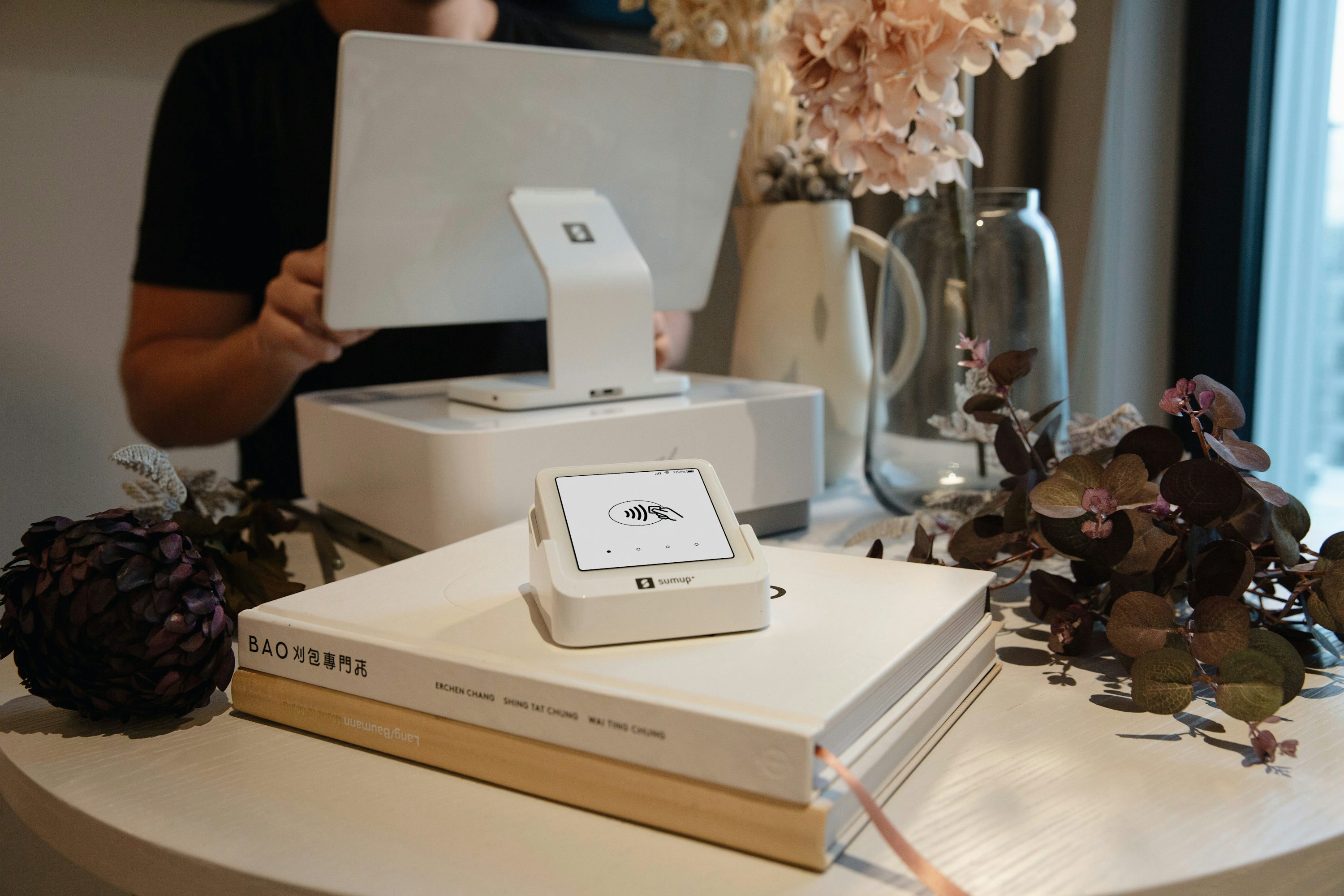
A paired card reader. A small Bluetooth device that connects to your phone or tablet, which runs the till app. The reader handles the card; the phone handles the sale. This is the familiar SumUp or Zettle setup.
A standalone terminal. A self-contained device with its own screen, SIM and often a printer. No phone needed. More expensive, more robust, and the only category that reliably works when your phone does not.
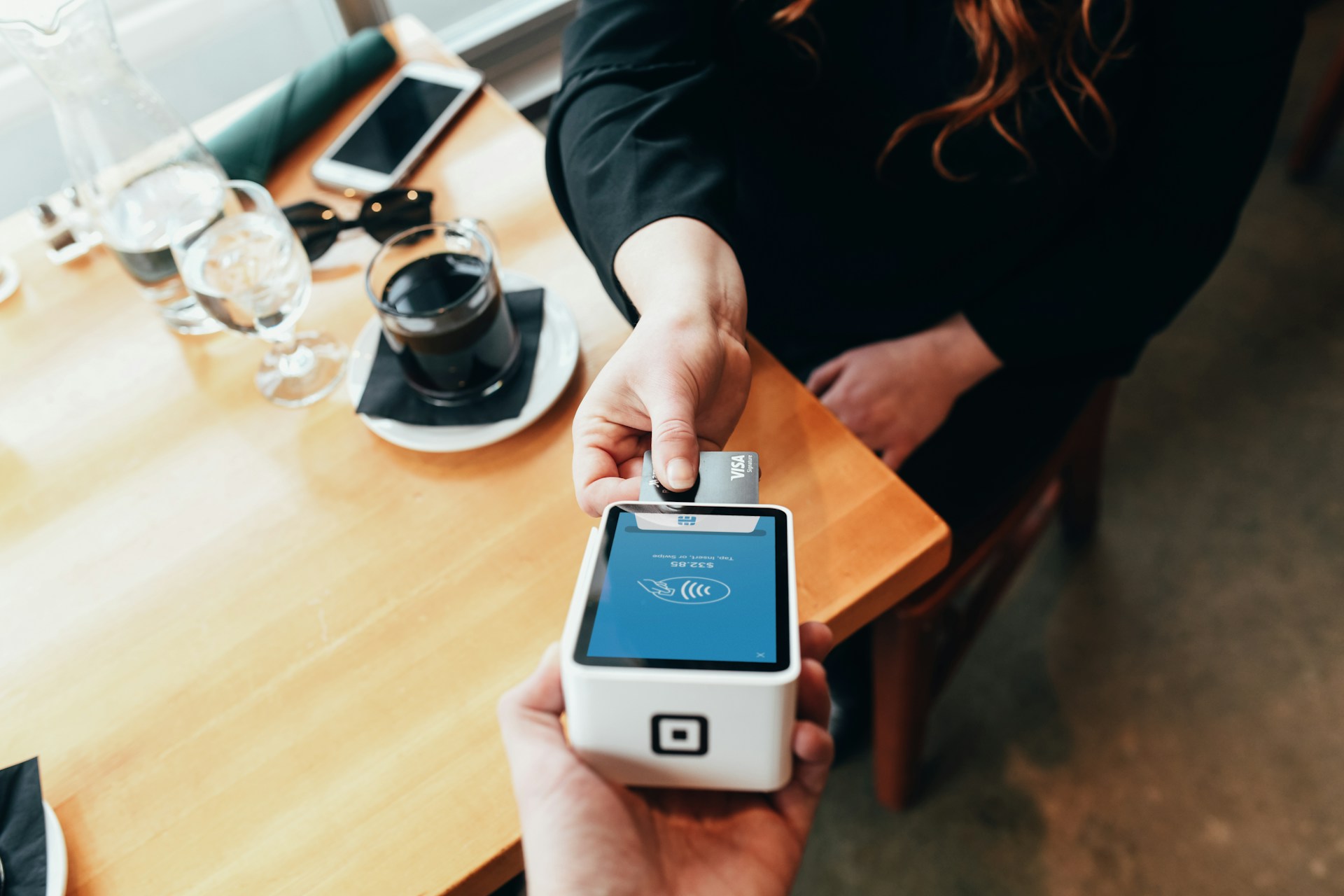
Tap to Pay, or SoftPOS. No hardware at all. The customer taps their card or phone directly against your phone's NFC antenna. Nothing to carry, nothing to charge, nothing to lose.
For a brand doing occasional retail, the choice between them is less about features than about failure modes — which is a different question from the one most comparison tables answer.
Reader or phone?
Tap to Pay has gone from novelty to default faster than most brands realise. As of May 2026, Tap to Pay on iPhone is available in 29 European countries, including every market a European brand is likely to tour: the UK, Ireland, Germany, Austria, France, Italy, Spain, Portugal, the Netherlands, Belgium, Luxembourg, Denmark, Sweden, Norway, Finland, Poland, Czechia, Slovakia, Hungary, Romania, Bulgaria, Croatia, Slovenia, Estonia, Latvia, Lithuania, Greece, Cyprus and Malta.
One distinction worth holding onto, because it causes real confusion: Apple enabling the feature in a country and your payment provider supporting it there are two different things. The country list above comes from one acquirer's own documentation. Another provider may cover eight of those markets, not 29. Check with the provider, not with Apple.
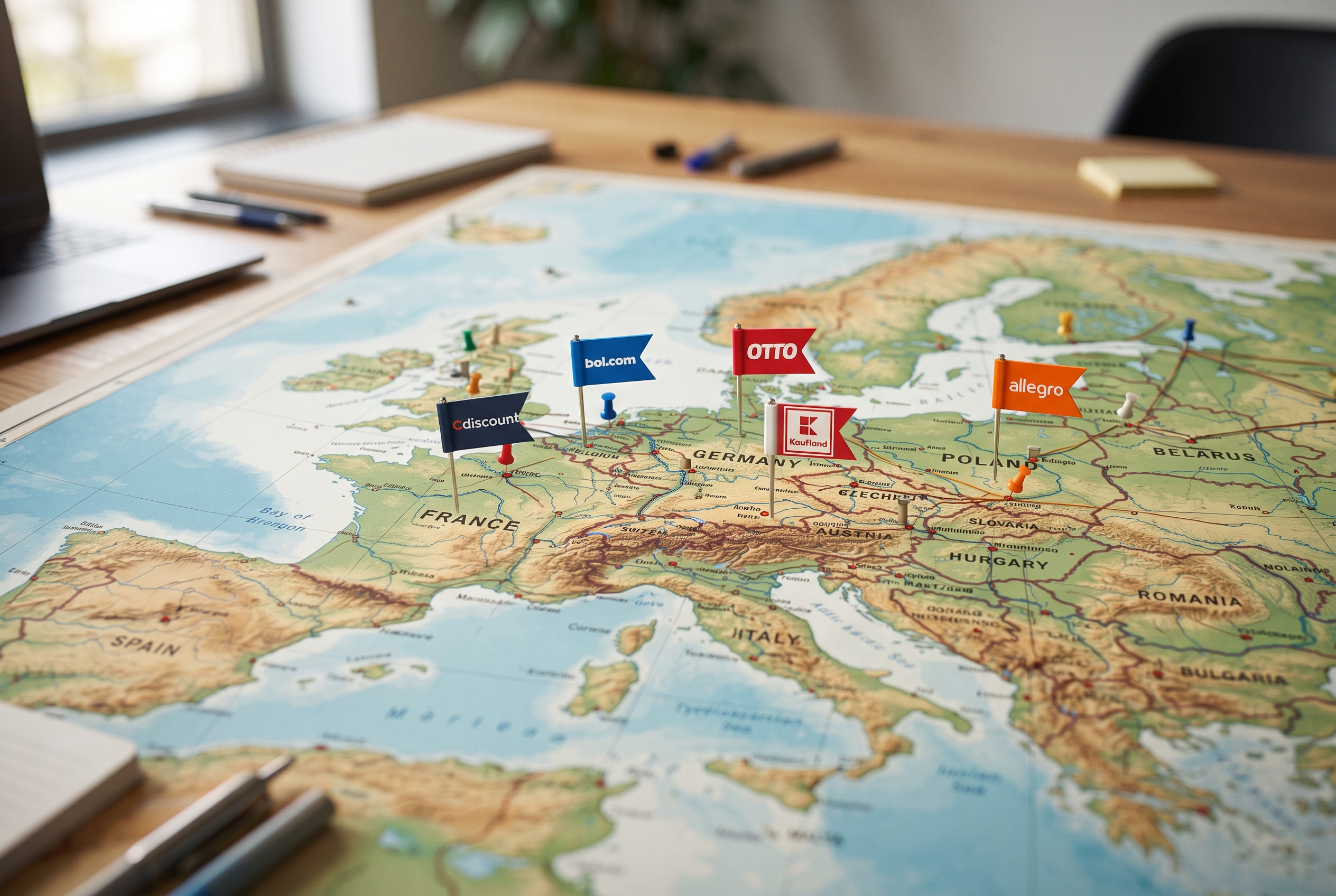
That is the deciding factor for a touring brand. Most tap-on-phone providers are effectively single-market — in the UK that means Square, SumUp, Revolut, Tide, Starling, Monzo, Tyl and Dojo. Only a handful operate across Europe on one account, with myPOS Glass and Viva.com the ones most often cited for genuinely pan-European coverage. If your roadshow crosses four borders, a single-market provider means four accounts, four reconciliations and four sets of payout timings.
Where a reader still wins: contactless transaction limits. Tapping a card is capped — £100 in the UK, similar ceilings across the EU — and above that the customer needs to enter a PIN. Some phone-only setups handle PIN on screen and some do not. If your average order value is €150, verify this before you rely on it, because discovering it at the till costs you the sale.
The readers compared
Prices and fees are as published in 2026 and mix EUR hardware pricing with provider rates that vary by market; this comparison draws on a guide published by a company that sells a competing reader, so verify against each provider's own pricing page.
Read that table from the bottom rather than the top. The device price difference is €10, which is nothing. The fee difference between 1.75% and 2.75% is a full percentage point, which is €1,000 on €100,000 of sales. And the offline row is the one that decides whether you take money at all on a bad day.

The three things that break at events
Connectivity. Trade halls, basements, festival fields and busy markets all do the same thing to mobile data: several thousand phones compete for one cell, and yours loses. A reader with no offline mode simply stops. This is the single most common cause of lost pop-up revenue, and it is entirely predictable — which is why a device with its own SIM and an offline buffer earns its higher fee on exactly the days that matter. If you run a no-offline reader, bring a second provider as backup rather than hoping.
Battery. A paired setup drains two devices, and the phone is doing the till, the photos, the maps and the messaging. A standalone terminal has one battery doing one job. Over a ten-hour market day that difference is not marginal.
Card mix. At any event with international footfall — a trade fair especially — a meaningful share of cards will be foreign. Some providers charge sharply more for those: Square's published UK rates are 1.75% domestic against 3.25% on non-UK cards. If you are a Finnish brand at a German fair taking Dutch, Polish and British cards, the blended rate you actually pay may bear little resemblance to the headline.
A phone is still a till
This is the part that is genuinely specific to Europe and almost entirely absent from mobile POS comparisons, which are overwhelmingly written for a US or UK audience.
In Germany, Spain, Italy, Austria, Belgium, Sweden and Portugal, till systems must be certified, fiscalised or connected to a device that signs each transaction so it cannot be altered. Those obligations attach to the sale, not to the hardware. A tap on a phone at a three-day pop-up in Munich is the same taxable event as a sale through a counter terminal, and the same rules apply.
Two consequences for a touring brand:
It narrows your provider list before features do. A reader that is perfectly legal in Ireland may not satisfy the certified-register requirement in Germany or the Verifactu obligation that applied in Spain from 01.01.2026. The compliance filter comes first; the fee comparison comes second.
Temporary does not mean exempt. Some regimes have turnover or cash-sales thresholds that a short pop-up may fall under, and some do not. Trading for a weekend does not automatically exempt you from a rule that applies to the transaction.
We set out the regimes country by country in what is a POS system, and the wider pop-up obligations — permits, VAT, local registration — market by market in the EU pop-up compliance map. Confirm the current position with the national authority or your tax advisor before a market you have not traded in before.
What to actually take to a pop-up
Two ways to take payment, from different providers. One primary, one backup on a separate network. The second one costs €29 and pays for itself the first time the first one fails.
Offline capability on at least one of them, with the cap understood. Knowing you can take €1,500 offline and no more is useful; discovering the ceiling mid-queue is not.
A power bank per device, and a cable for each. Obvious, routinely forgotten.
A plan for stock. The sale happens somewhere with no connection to your other channels unless you give it one. A unit sold at a Berlin pop-up that never reaches your inventory system is a unit you will oversell online — the discipline covered in multichannel inventory management. If you run Shopify, Shopify POS for cross-border retail covers how that stack behaves across markets.
The receipt and VAT position settled in advance, including whose company details appear on the receipt and under which VAT number the sale is recorded. The practical sequencing is in the pan-European brand roadshow checklist.
Frequently asked questions
What is the difference between mobile POS and a card reader?
A card reader is the hardware that reads the card. A mobile POS is the whole setup — reader or phone, plus the app that records the sale, applies VAT, handles the receipt and updates stock. A reader alone takes payment; a mobile POS runs a till.
Do I need a card reader if I have Tap to Pay?
Often not, in the 29 European countries where Tap to Pay on iPhone is supported — subject to your provider also supporting it there. The reasons to keep a reader are contactless transaction ceilings above which a PIN is needed, offline capability, and having a second device when the first fails.
Which mobile POS works across Europe?
Most tap-on-phone providers are single-market. Pan-European coverage on one account is the exception, with myPOS and Viva.com the most frequently cited. For a brand touring several countries this matters more than the transaction rate, because the alternative is a separate account, payout schedule and reconciliation per market.
Can I take payments without internet?
Only with a provider that supports offline mode, and only up to a capped amount — typically €1,000–2,000 before the device requires a connection to settle. SumUp and Zettle readers do not offer it; myPOS does. At indoor events, this is the feature most likely to decide your takings.
What does a mobile POS cost?
Hardware is €29–39 for a paired reader, nothing for tap-on-phone. Transaction fees cluster at 1.69–1.75% for domestic cards, rising to 2.75% on some pan-European plans and as high as 3.25% on non-domestic cards with some providers. There is usually no monthly fee on pay-as-you-go plans.
Does a mobile POS meet European fiscal requirements?
Not automatically. In countries with fiscalisation regimes the till must be certified or connected to a compliant fiscal component, and that applies to a phone-based till at a temporary stand as much as to a permanent counter. Check provider compliance per market before the event, not after.
Where this fits
For a brand, a pop-up or a trade fair is rarely about the revenue taken over three days. It is about the channel being viable at all — which means being able to take payment reliably, issue a compliant receipt, and have the stock that left the table show up in the same system as everything else you sell.
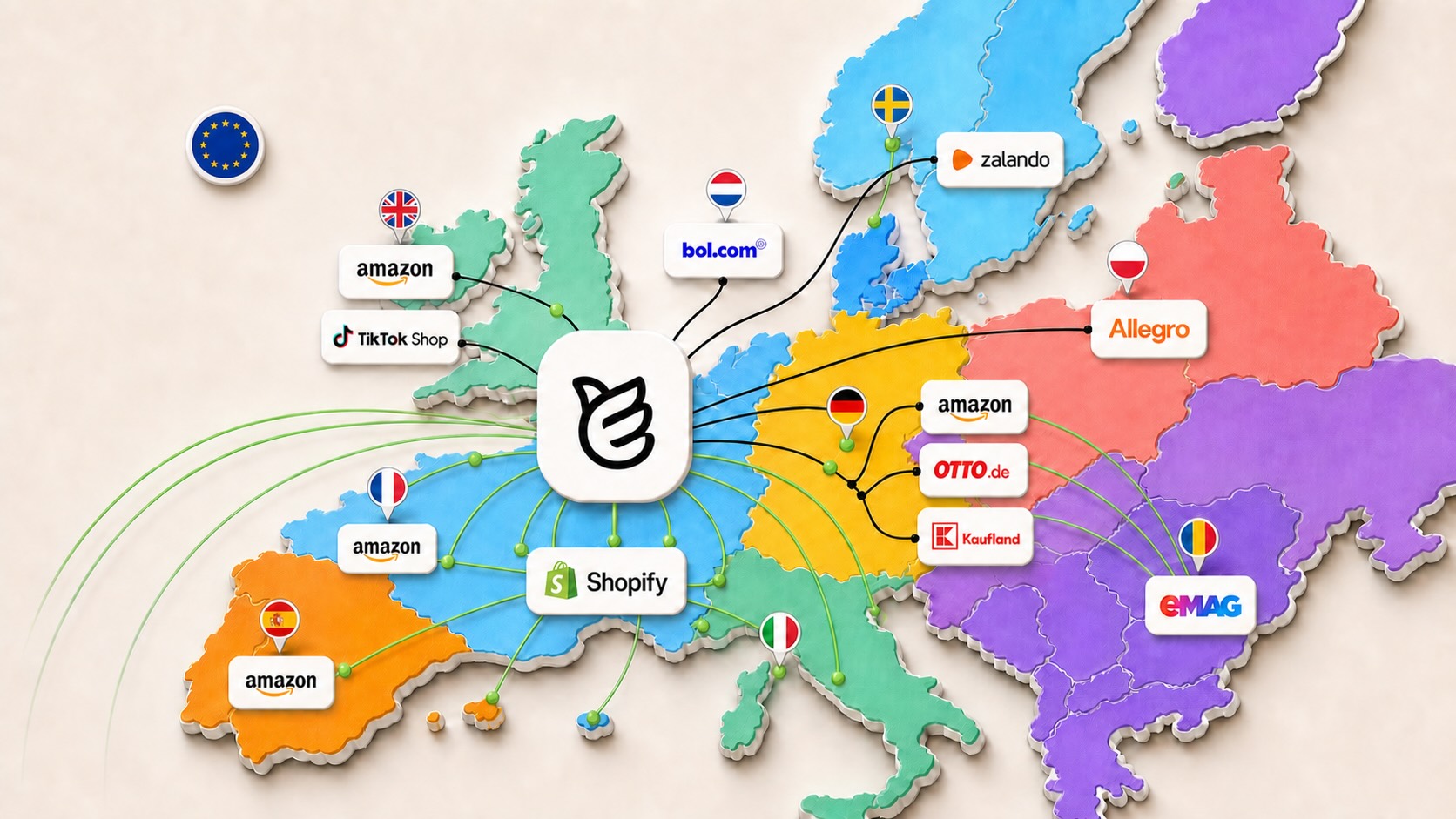
eBrands runs retail and pop-up activations alongside Amazon, twenty other marketplaces and D2C, as the seller and importer of record in each market — so the entity, VAT position and fiscal setup behind the till already exist before the stand goes up. If you want what sold at an event, on a marketplace and in your own store as one number rather than three exports, Apollo Intelligence is built for that.
Hardware prices, transaction fees, country coverage and fiscal requirements change frequently and vary by market and provider; figures here mix EUR and GBP pricing published in 2026 by third parties, including one comparison produced by a company selling a competing reader. Confirm current rates and compliance directly with each provider before an event. This article is general information, not tax or legal advice.
Sources: Viva.com on Tap to Pay country availability · Mobile Transaction on tap-on-phone providers · Hey Dom reader comparison · fiskaly on European fiscalisation

“ We are dedicated to assisting you; please contact us for any information or inquiries you may have. ”