What Is a POS System? A Brand's Guide to Selling in Physical Retail
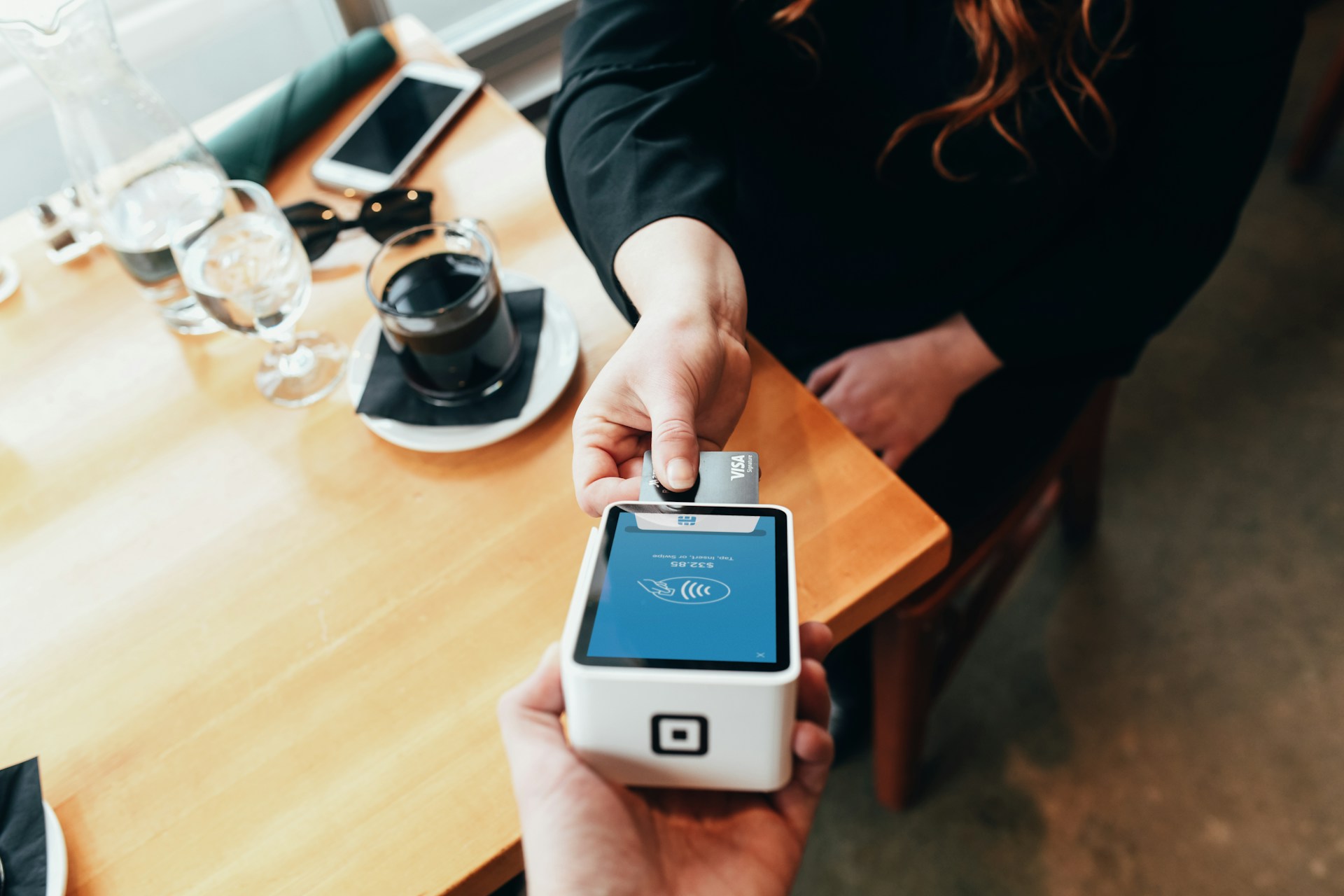
A POS system — point of sale — is the combination of software and hardware that takes payment from a customer standing in front of you, records what they bought, and updates your stock. The card reader is the part people picture, but it is the smallest part. The system is the till software, the inventory record it writes to, and increasingly the compliance layer that proves to a tax authority that the sale happened as reported.
That last part is why most guides to this question are not much use to a European brand. Nearly everything ranking for "what is a POS system" is written for a US audience, where choosing a POS is a commercial decision about features and processing rates. In Germany, France, Italy, Spain, Austria, Sweden, Belgium and Portugal it is also a legal one, and picking the wrong system means your till is not compliant from the first sale.
Here is what a POS system actually is, what it costs, and the European rules that decide whether yours is allowed to operate.
Key takeaways
- A POS system is software plus hardware plus, in much of Europe, a certified fiscal component. A card terminal on its own is not a POS system.
- Software runs roughly $0–300 per month per terminal; in-person card processing is typically 2.4–3.5% plus 10–15 cents, and processing is the dominant cost at any real volume.
- Eight European countries require certified or fiscalised POS, each with its own regime. A system that is legal in Ireland may be illegal in Germany.
- Spain's Verifactu applied to businesses from 01.01.2026. Belgium's GKS 2.0 applies to existing users from 01.07.2026.
- France reinstated self-certification on 21.02.2026 after abolishing it a year earlier. Fines run to €7,500 per non-compliant register.
- For a brand, the POS matters less as a till than as the thing that keeps in-store stock and online stock in one number.
What is a POS system, exactly?
Four things have to happen when someone buys something in a shop. The POS system is whatever makes all four happen together.
It takes the money. Card, contactless, wallet, cash, increasingly a QR code or a local method. This is the payment layer, and it is the part most often confused with the whole.
It records the sale. Which SKU, at what price, with what discount and what VAT rate. This is the transaction record, and it is what your accounts are built from.
It updates the stock. One unit leaves the shelf and the inventory count drops — ideally in the same system that knows what you have in a warehouse and on a marketplace.
It produces a compliant receipt and audit trail. In most of Europe this is not a formality. The receipt has required content, the data has to be tamper-evident, and it has to be exportable in a specified format when an auditor asks.
A payment terminal does the first of those. A POS system does all four. The distinction matters commercially, because a brand that buys a card reader and a spreadsheet has solved the easy part and left the expensive parts for later.
What's inside one?
The software is the actual system: the till interface, the product catalogue and pricing, discounts and promotions, inventory, staff permissions, and the reporting that tells you what sold. Almost all of it is cloud-based now, which means it syncs rather than sitting isolated on one machine.
The hardware is whatever the software runs on and talks to. At minimum a screen — frequently now just an iPad — and a card reader. Beyond that, a receipt printer, a barcode scanner, a cash drawer, and in some countries a separate certified security device.
The fiscal component is the European addition. Depending on the country this is a hardware module, a cloud service, or certified software, and its job is to sign each transaction so it cannot be altered afterwards. Germany calls it a technical security system, Italy uses a registratore telematico or a cloud equivalent, Sweden requires a certified control unit. It is not optional where it applies.
What does a POS system cost?
Those figures are from US vendor pricing and are indicative rather than a quote; European pricing is broadly comparable, with fiscal-compliant software generally costing more than the equivalent US tier.
The useful way to read this table is to ignore the monthly fee. At $30,000 a month in card sales, half a percentage point on processing is about $150 a month — more than most software subscriptions. A vendor advertising a free plan and a 3.2% rate is more expensive than one charging $89 at 2.5%, and the gap widens with every good month you have. Compare on effective cost at your actual volume.

Why a POS system in Europe is not the same as one in the US
This is the part that makes the decision different, and it is missing from almost every guide to this question.
Across much of Europe, tax authorities require that till systems be certified, tamper-evident, or connected to a fiscal device that signs each transaction. The rules are national, not EU-wide, so each market you enter adds its own regime.
Three things follow from that table.
The penalties are per register, not per company. France sets a fine of €7,500 for each non-compliant till, renewable until fixed. A brand running six pop-ups with the wrong software is exposed six times.
The rules move. France abolished self-certification in February 2025, set a deadline of September 2026 for accredited certificates, then reinstated self-certification in February 2026 under the Finance Law. Anything you read about French POS compliance written between those dates is wrong now.
Regional variation is real. Spain is not one market for this purpose: Verifactu applies nationally, the Basque Country runs TicketBAI, and Navarra has its own regime still being written. Treating Spain as a single configuration will fail in two regions.
The practical consequence for a brand expanding into European retail is that "which POS do we use" cannot be answered once. It is answered per market, and the answer constrains which vendors you can even consider. Confirm current requirements with the national authority or your tax advisor before committing — the regimes above are summarised from industry sources, not legal texts.
Which type of POS fits which situation?
Fixed terminal. A counter, a screen, a drawer, a printer. Right for a permanent store with steady footfall, and the usual choice where a country requires specific certified hardware.
Cloud POS. Software-first, running on a tablet or standard computer, syncing continuously. Now the default for most retail because it connects to everything else you run and updates without a site visit.
Mobile POS. A phone or tablet with a reader, or increasingly a phone accepting contactless directly with no reader at all. Low difficulty to set up and genuinely useful for queue-busting in store, markets and events.
Pop-up and event setups. The case most relevant to brands rather than retailers. A temporary presence still triggers the same fiscal requirements as a permanent one, and in several countries it also raises VAT registration questions depending on how long you trade and what you sell. We have mapped this market by market in the EU pop-up compliance map, and the practical sequencing in the pan-European brand roadshow checklist.
How POS connects to everything else you sell through
For a retailer with one shop, the POS is the business. For a brand selling across marketplaces, D2C and physical retail, it is one node in something larger, and its value is mostly in what it connects to.
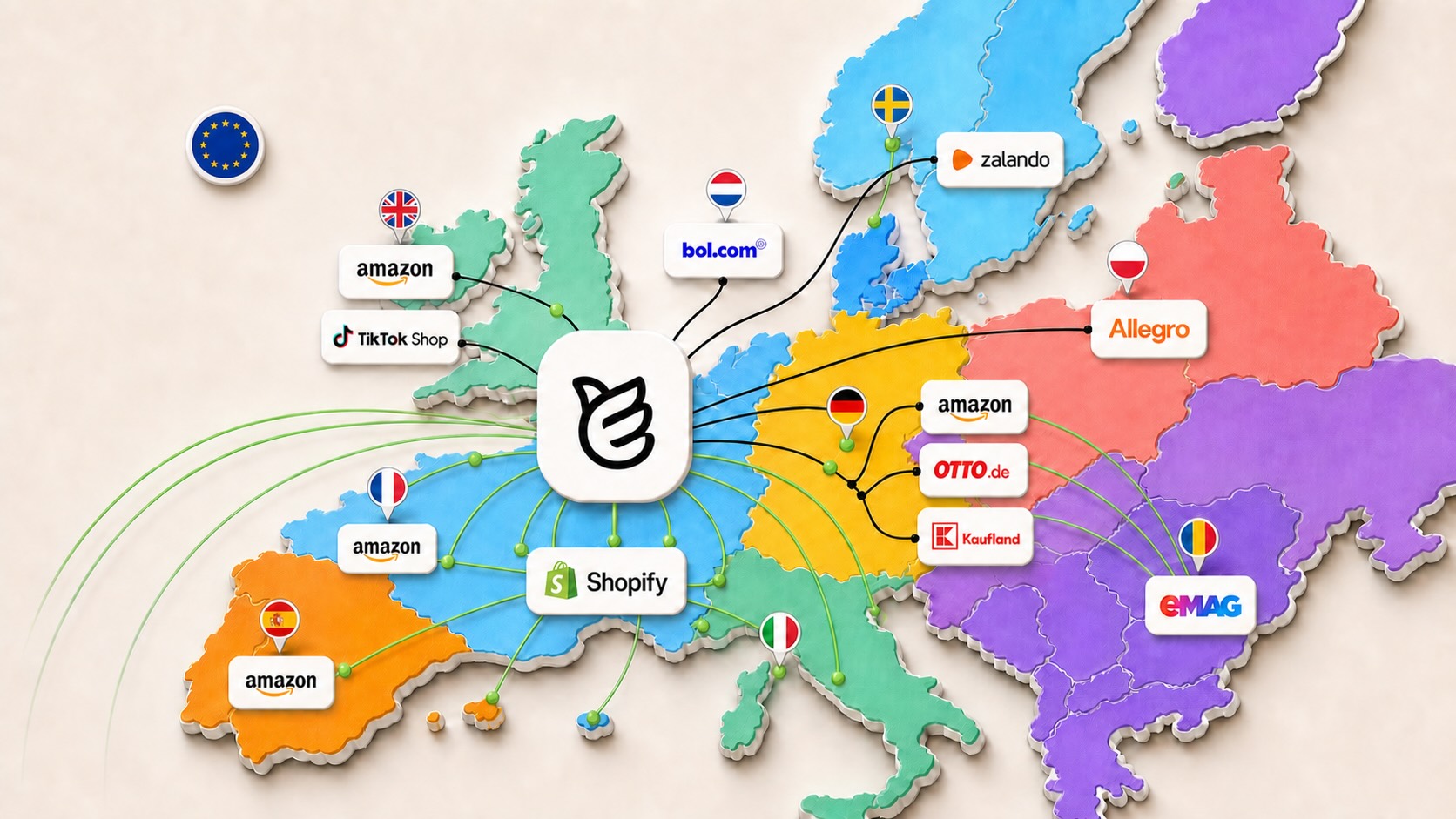
The failure that costs real money is stock drift. A unit sells in a pop-up in Berlin, the POS records it, and nothing tells Amazon, your Shopify store or your 3PL. You oversell online against stock that physically left the building days ago, and the first you hear of it is a cancelled order and a performance metric. This is the same discipline we cover in multichannel inventory management, and retail is the channel where it breaks first, because the sale happens somewhere with no API unless you gave it one.
Two other connections worth getting right from the start. Payment methods in store should match what the market actually uses, which is not the same across Europe — the same logic that applies to local payment methods online. And whoever is the legal seller in the market is the entity whose details appear on the receipt and whose VAT number the fiscal system signs against, which is a question to settle before the first sale rather than after. We cover that in retail merchant of record in Europe.
If you already run Shopify, Shopify POS for cross-border retail covers how that specific stack behaves across markets.
Frequently asked questions
What is the difference between a POS system and a card machine?
A card machine takes payment. A POS system takes payment and also records what was sold, updates inventory, produces a compliant receipt and keeps an auditable transaction record. In countries with fiscalisation requirements, a card machine alone does not meet the legal obligation.
Do I need a POS system for a pop-up shop?
In most of Europe, yes — a temporary shop is still a point of sale, and the same certification and receipt rules apply. Trading for two weeks does not exempt you from a regime that applies to the sale. Check the specific market, since thresholds differ and some regimes only bite above a turnover or cash-sales level.
How much does a POS system cost per month?
Software typically runs $0–300 per terminal per month, with extra registers at $10–40 each. The larger cost is card processing at roughly 2.4–3.5% plus a fixed amount per transaction, which at any real volume exceeds the subscription. Fiscal compliance adds a country-specific cost on top.
Can I use the same POS system across several European countries?
Only if the vendor is certified or compliant in each one. Some vendors support several regimes; many support none outside their home market. This is the first filter to apply when shortlisting, before features or price, because it eliminates most options for a multi-market brand.
Does a POS system handle VAT?
It applies the VAT rate to the sale and records it, which is not the same as handling your VAT position. Registration, filing and remittance remain yours, and selling in a market physically can create obligations that online selling did not. Our guide to OSS, IOSS and postponed VAT accounting covers the online side; physical retail in a market is a separate question for your tax advisor.
Is a free POS system good enough?
For a single till at low volume, often yes. Two things disqualify free tiers: processing rates that cost more than a paid plan saves once volume rises, and the absence of fiscal certification in the markets that require it. Check both before the price.
Where this fits
For a brand, choosing a POS is rarely really about the till. It is about whether physical retail in a given country is a channel you can run without creating a compliance problem and a stock problem at the same time — and the answer changes at every border.
eBrands operates retail alongside Amazon, twenty other marketplaces and D2C, as the seller and importer of record in each market, so the entity, VAT position and fiscal setup behind the till are already in place. If you want one view of what sold in a pop-up, on a marketplace and in your own store as a single number rather than three, that is what Apollo Intelligence was built for.
Fiscalisation rules, thresholds and deadlines are national, change frequently, and are summarised here from industry sources rather than legal texts. Cost figures are drawn from published US vendor pricing in 2026 and are indicative only. Confirm current requirements with the relevant national authority or your tax advisor before choosing a system. This article is general information, not tax or legal advice.

“ We are dedicated to assisting you; please contact us for any information or inquiries you may have. ”