Do you need a merchant of record to sell digital products?

Selling a course, an e-book or software abroad without a merchant of record is legal. The tax in each buyer's country is then yours to charge and file.
Take a €100 course sold to a consumer in Germany. If you are based outside the EU, German VAT of 19% is due on it from the first sale, and you are the one who owes it. It often comes up late, when an accountant goes through the year or a buyer asks for a proper VAT invoice.
Tax on a digital sale follows the buyer
With physical goods the trigger is easy to see, because a parcel crosses a border. A download crosses nothing, so tax law goes by where the buyer is, and a consumer in Germany pays German VAT wherever the seller sits.
The UK, Norway, Switzerland, Australia, Canada and most US states work on the same idea. Each has its own registration and returns, most of them above a sales threshold.
Selling into the EU
A seller outside the EU has no starting threshold. The first sale to a consumer in France or Spain creates a VAT obligation there, and the UK treats overseas sellers the same way.
The filing itself is manageable, because you register once, in one member state, under the non-Union one-stop shop scheme (the version for sellers outside the EU), and file one return a quarter that covers all 27 countries. You still have to charge each country's rate and keep two pieces of evidence of where each buyer is.
An EU business with a valid VAT number should not be charged VAT by a seller abroad, yet most course checkouts have no field to enter one, so the buyer pays tax they should not. Ours asks for the number and checks it against the official register before the payment goes through.
An e-book carries a reduced rate in most EU countries and a course does not, which is why we approve every product with its tax category before it sells.
(A seller based in one EU country gets a small allowance. While its sales to consumers in other EU countries stay under €10,000 a year before VAT, home-country VAT applies. Above that, each buyer's country rate applies, and it can be filed through the EU's one-stop shop.)
Selling into the US from Europe
The US has no federal sales tax. Forty-five states and the District of Columbia run their own, and each decides for itself whether a digital product is taxable at all.
Here thresholds do exist. A state where you have no office or staff can ask you to collect once your sales there pass a set level. In most that is $100,000 a year, in California and Texas $500,000, and some states also count orders, often 200. A seller of $15 e-books can reach 200 orders in a state long before $100,000. Once one state tips over, you register there and start filing, and keep an eye on the rest.
Why not just keep selling from home?
Nothing stops the checkout from working, but the tax is owed whether you charged it or not. With VAT, the tax office treats the price the buyer paid as including it.
Take the €100 course again, sold to a German consumer with no VAT added. Germany reads that €100 as €84.03 plus €15.97 VAT, and the €15.97 is yours to pay on every such sale in the years the tax office can still reopen. A thousand such sales comes to about €16,000 before interest and penalties.
A merchant of record covers sales from the day you switch. The earlier ones stay yours to register and pay, and that is a job for your accountant.
What a merchant of record changes
A merchant of record is the company that legally sells to your buyer. It buys the product from you and resells it, so its name is on the receipt and the tax invoice. The VAT and sales tax registrations are its own, and it files the returns and handles refunds and chargebacks as the seller. (Your sale to the merchant of record is still yours to book, like any other business sale.)
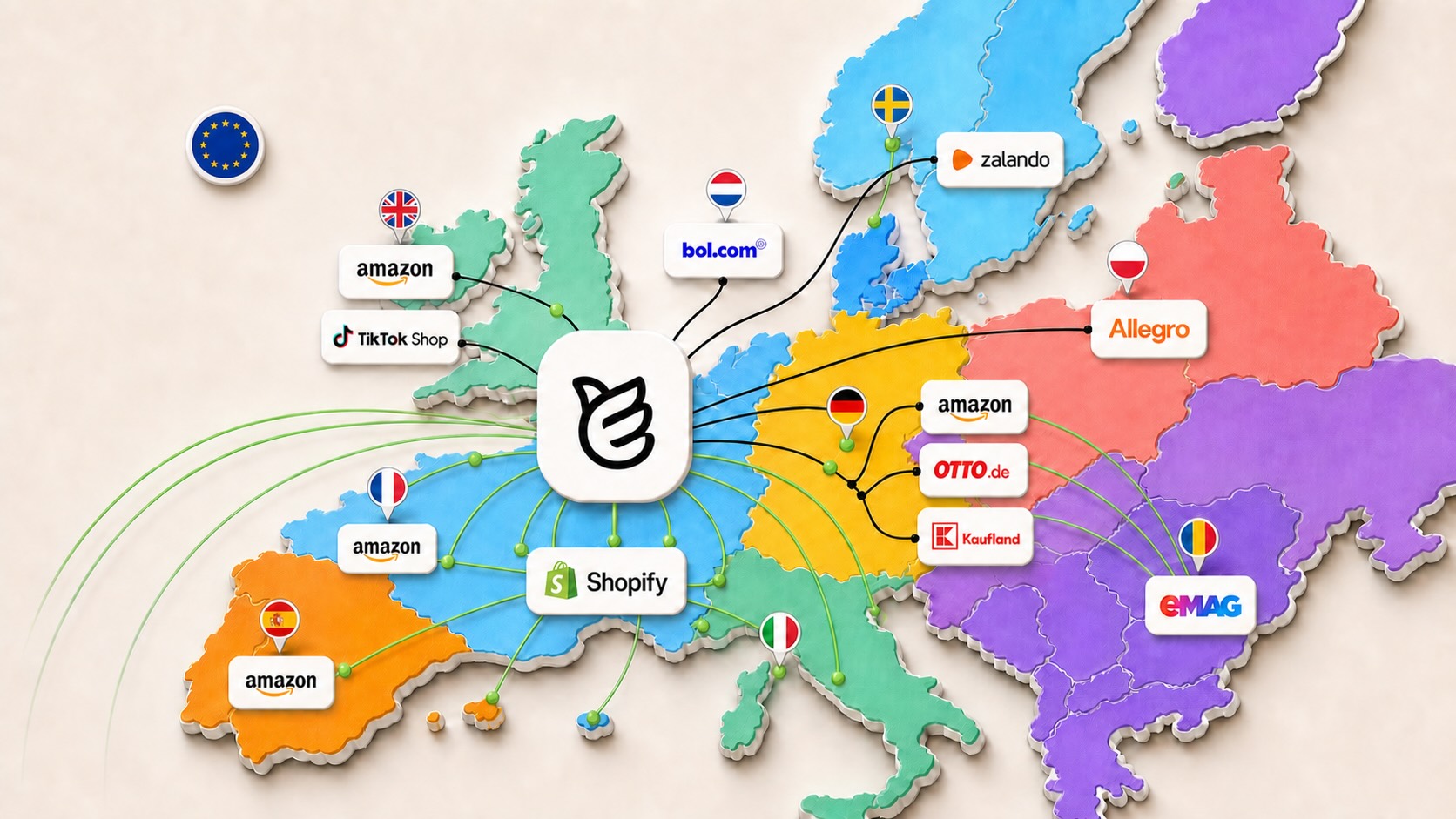
That is how eBrands Pay works. The buyer buys from eBrands Global Oy and we charge the tax due where they live, today in the EU, the UK, the US, Canada and Australia. Your store and prices do not change, and the customers are still yours. With us, a refund comes off your next payout.
When you do not need one
If you sell only to EU or UK businesses with valid VAT numbers, the buyer accounts for the VAT and your exposure is small. The same goes for an EU seller whose buyers are nearly all at home. And if you have a finance person who can run the EU return with a tax tool and pick up US state registrations as they come, doing it yourself costs less per sale.
A merchant of record earns its fee when you sell to consumers in many countries and nobody on the team wants to own the tax filings. To see which side you are on, count the countries and US states you sold into last year and ask who files in each today.

“ We are dedicated to assisting you; please contact us for any information or inquiries you may have. ”