WooCommerce vs Shopify: Which One Actually Works for Selling Across Borders?
Nearly every comparison of these two platforms scores them on themes, page builders, ease of setup and how many apps are in the store. Those things matter for about a month. What matters for the next five years, if you sell in more than one country, is which platform makes cross-border selling cheaper and less legally exposed — and almost nobody compares them on that.
The short version: Shopify is faster to get selling internationally and charges you for the privilege in ways that are easy to miss. WooCommerce is cheaper per transaction and hands you every integration and compliance problem to solve yourself. Neither one makes you tax-compliant in the markets you sell into, which is the cost that dwarfs both.
Here is the comparison on the things that actually decide it.
Key takeaways
- Shopify charges a surcharge of up to 2% for using any gateway other than Shopify Payments. WooCommerce has no equivalent — this is the single biggest structural difference.
- That surcharge bites hardest in Europe, where the payment methods that convert often need a non-Shopify provider.
- Currency conversion costs roughly the same on both: 1.5–2%.
- Shopify has a native merchant-of-record option, Managed Markets, at 3.5% per international order — but it is reported as open only to US, Canada and UK stores.
- WooCommerce has no equivalent at all, at any price.
- Neither platform registers, files or remits your VAT. That cost is identical on both and usually larger than the software.
What each one actually is
Shopify is a hosted platform. You pay monthly, and hosting, security, updates, PCI compliance, support and a payment relationship arrive bundled. You customise within what the platform allows, which is a lot but not everything.
WooCommerce is a free plugin for WordPress. You arrange hosting, security, updates and payments yourself, and you can change anything because you have the code. The plugin costs nothing; the assembly costs time and money.
That difference produces every other difference. Shopify sells you a predictable monthly number and takes a cut of how you transact. WooCommerce sells you nothing and leaves you to buy the pieces, which is cheaper if your requirements are ordinary and expensive if they are not. We broke the WooCommerce side down in what WooCommerce actually costs, and the Shopify side in what it really takes to build a global D2C business on Shopify.
Side by side on what matters abroad
Shopify plan pricing is contested between published sources — some report Basic and Grow materially lower than the figures above. Check Shopify's own pricing page for your region before modelling anything, since prices also differ between USD and EUR billing.
The gateway surcharge nobody explains
This is the line in that table that should change your decision, and it almost never appears in a comparison article.
If you use any payment provider other than Shopify Payments, Shopify charges a transaction fee on top of whatever that provider charges you. It runs about 2% on Basic, 1% on Grow, 0.6% on Advanced and 0.2% on Plus. So a Basic-plan store using an external gateway at 2.9% is effectively paying close to 4.9% before any cross-border surcharge lands.
WooCommerce has no equivalent. You pick a provider and pay that provider's rate, full stop.
In a single-country business this rarely matters, because Shopify Payments is usually fine and the surcharge never applies. It matters enormously in Europe, and here is why: in several markets the payment method that converts is not a card. iDEAL is how the Netherlands pays. Bancontact dominates Belgium. SEPA direct debit is normal across the eurozone. If the provider that gives you proper local coverage is not Shopify Payments — and frequently it is not — you are choosing between worse conversion and a permanent surcharge on every order.
That is a structural tax on local payment optimisation, and it compounds with every market you add. We go into which methods matter where in local payment methods in Europe, and into the WooCommerce gateway options in WooCommerce payment gateways for international selling.

Who can be your merchant of record?
The deeper question behind both platforms is who is legally selling to the customer, because that decides who registers for VAT, files returns, remits tax, and carries consumer-law liability in each market.
On WooCommerce, it is you. Always. There is no native alternative, and the plugin marketplace does not offer one — you either take on the obligations in each market or contract a third-party merchant of record separately.
On Shopify, there is a native option. Managed Markets puts Global-e in as merchant of record for international orders, handling duties and tax remittance, at around 3.5% per international order and 3.25% on Plus. That is a genuine structural advantage over WooCommerce — the platform ships with an answer.
With one large caveat, and it is the one that matters for European brands: Managed Markets is reported as available only to stores in the US, Canada and the UK. A brand registered in Finland, Germany or Spain cannot simply switch it on. So for most EU-registered brands, the native advantage is theoretical, and both platforms land in the same place — the compliance burden is yours unless you bring your own merchant of record.
If that is the route you are weighing, we compared the providers in merchant of record companies compared, and set out how the model works for physical goods in what is a merchant of record.
The cost that is identical on both
Worth stating plainly, because the platform comparison distracts from it: selling B2C into the EU means charging VAT at the customer's local rate, registering somewhere, and filing returns. Through the One-Stop Shop you can report qualifying cross-border sales through a single Member State of identification rather than registering in each country. IOSS covers imported consignments of €150 or less, with non-EU sellers generally needing an intermediary.
Neither platform does any of that. Shopify Tax and WooCommerce tax plugins both calculate and display — they do not register you, file for you or remit on your behalf. An accountant handling EU filings typically costs more per month than the entire software stack on either platform.
Which means that if cross-border compliance is your real problem, the WooCommerce-versus-Shopify question is not the one to spend a week on. It barely moves the number.
So which one?
Shopify, if you want to be selling internationally in weeks rather than months, you do not have development resource, Shopify Payments covers your markets properly, and the predictability of a monthly fee is worth more than per-transaction efficiency. It is also the right answer if you are a US, Canadian or UK store that can use Managed Markets, because a native merchant of record at 3.5% is a serious offer.
WooCommerce, if you have or can hire development capability, your payment needs are unusual enough that gateway freedom is worth real money, you want to own the stack without platform constraints, or you are running meaningful volume where a 1–2% surcharge on every order outweighs any amount of convenience.
Neither, if the actual blocker is that you have no entity, VAT registration or compliance capability in the markets you want to sell into. That is not a platform problem and no platform choice fixes it.
One practical note on the cost comparison: below roughly $10,000 a month in sales, software and subscriptions dominate your costs, and WooCommerce usually wins. Above it, payment processing dominates, and the question becomes which platform lets you access the cheapest effective processing in each market — where the gateway surcharge decides it.
Frequently asked questions
Is WooCommerce cheaper than Shopify?
At small scale, usually yes, especially if you do the technical work yourself. At mid-market scale with subscriptions, multiple currencies and several markets, the gap narrows once hosting, extensions, maintenance and development are counted honestly. The comparison turns on whose time is doing the integration work and whether Shopify's gateway surcharge applies to you.
Can I use Stripe or Mollie with Shopify?
Yes, but Shopify adds a transaction fee on top of that provider's rate — around 2% on Basic, falling to 0.2% on Plus. On WooCommerce you pay only the provider's own rate. This is the most consequential difference between the two for a brand that needs local European payment methods.
Which handles multi-currency better?
Shopify, for speed — Markets is built in and works across plans, with conversion at 1.5–2%. WooCommerce needs an extension or gateway-level support, at around $149 a year, though it then gives you free choice of provider. Shopify's multi-currency requires Shopify Payments or Adyen, which interacts with the surcharge question above.
Does either platform handle EU VAT for me?
Neither registers or files for you. Both calculate and display VAT. Shopify Tax is free to $100K in global sales then charges roughly 0.35% per order capped at $0.99; WooCommerce needs a plugin or external service. Registration, filing and remittance stay with you on both unless you use a merchant of record.
Is migrating from WooCommerce to Shopify worth it?
Only if the reason is specific. Migrating to escape maintenance burden or to reach international markets faster can be justified. Migrating because the platform feels dated rarely is — you inherit a monthly fee, a gateway surcharge and less control, and the compliance work that was probably the real problem comes with you unchanged.
Which is better for SEO?
Both are capable, and the difference is far smaller than either community claims. WooCommerce gives more technical control over URLs, markup and performance, which matters if you have someone able to use it. Shopify has fewer levers and fewer ways to ruin your site speed. Content and links decide rankings far more than the platform does.
Where this fits
Both platforms are good. Neither solves the part that actually stops brands from selling across borders, which is being a legal seller in each market with the VAT position, compliance and payment coverage to match.
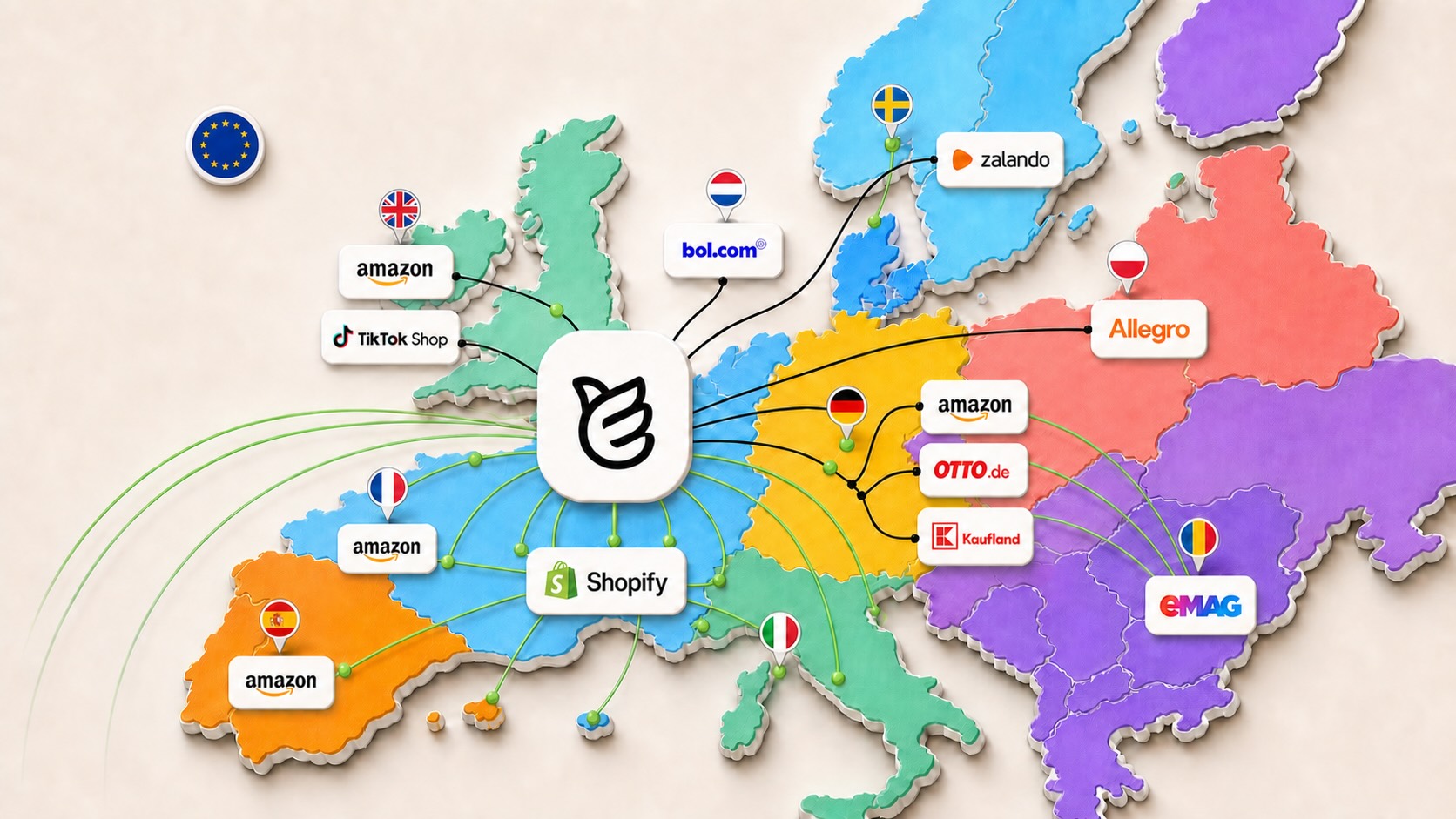
eBrands operates D2C alongside Amazon, twenty other marketplaces and retail, as the merchant and importer of record in each market — on Shopify or WooCommerce, since the storefront is the part that matters least. If you want to see what each channel and market actually costs to run rather than what the platform bills say, Apollo Intelligence is built for that.

“ We are dedicated to assisting you; please contact us for any information or inquiries you may have. ”